
Furnace Installation in Evansville, IN
A new furnace here will run from October through April every year. Tell us about the house, and a licensed contractor who covers Vanderburgh County will get in touch.
Tell us about the job
It takes about a minute.
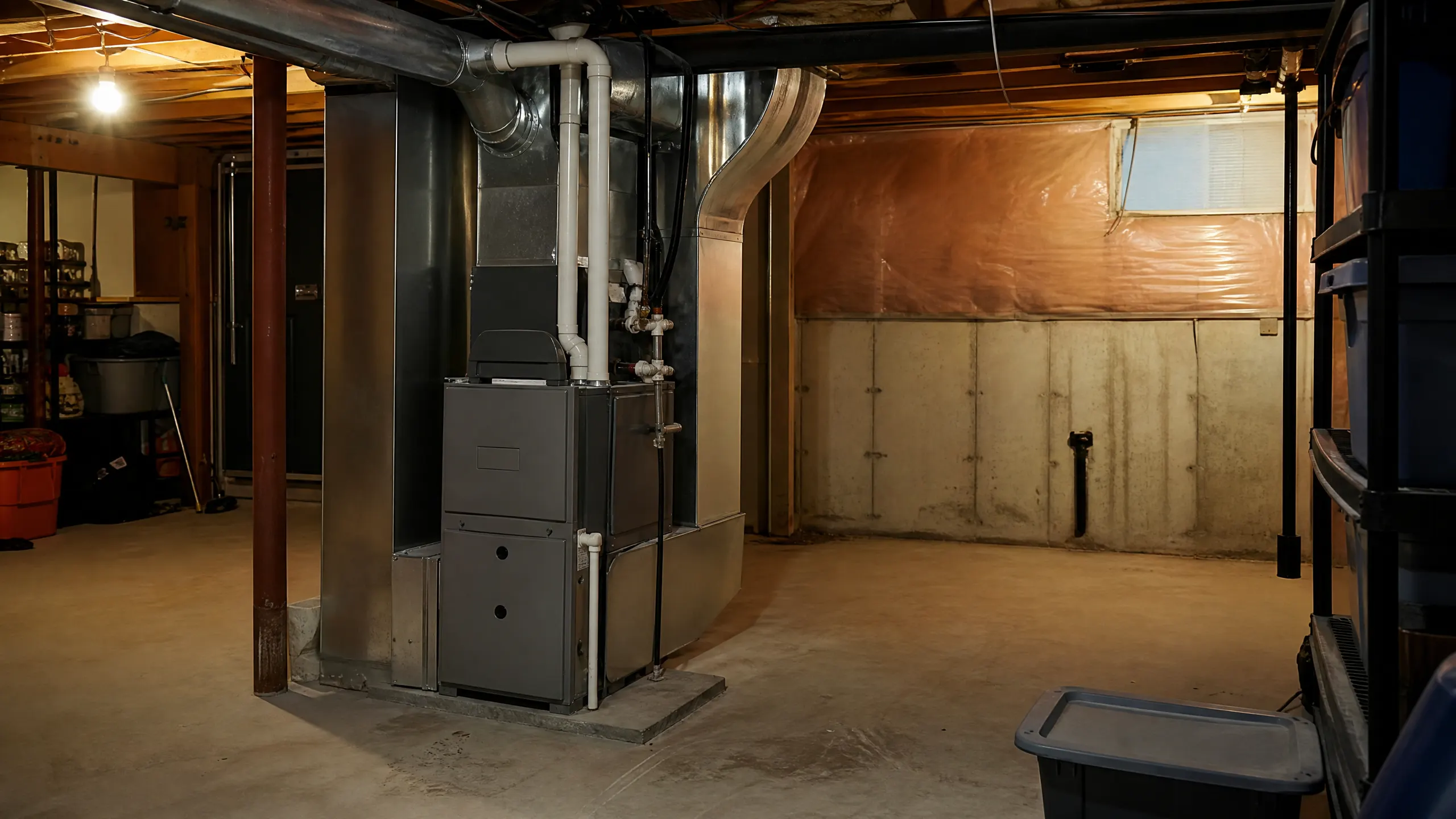
Seven months of heat, and nights near 27°F
Evansville homes need a working furnace from October through April. That's seven months out of the year, with winter nights averaging 27°F. A furnace here isn't idle equipment for a few cold snaps. It's running most of the year, and most homes in Vanderburgh County ask it to do that job with gas.
Any non-weatherized gas furnace built after November 19, 2015 has to hit at least 80.0 percent AFUE. That's the floor, not a feature, so a new install should already clear it. What matters more here is what happens when the power goes out. Vanderburgh County sees its share of winter storms and wind, and a gas furnace still needs electricity to run its controls and blower. When the power's out, so is the heat, storm or no storm.
- 7 months
- October through April, your furnace is on duty
- 27°F
- the average winter night it heats against
- 60%
- of homes here heat with gas, so most furnaces here burn gas
- 80% AFUE
- the federal minimum any new unit must meet
NOAA nClimDiv, 1991–2020 normals

A high-efficiency gas furnace would save about $70 a year to run in Vanderburgh County compared with a gas furnace.
Estimates for a typical Vanderburgh County home, from EIA household energy data, Indiana fuel prices and NOAA climate normals. Your home will differ.
In Indiana, HVAC licensing for homes is left to the counties and cities.
Vanderburgh County sets its own rule on who can do HVAC work, since Indiana leaves that to the counties and cities. Whatever license or registration the county requires, it applies here because of the address, not because the state stands behind it. There is no state license number to check and no state board keeping a file on the contractor.
Most cities and counties require a permit for a furnace installation, along with an inspection once the work is done, and that is most likely true here too. The building office's inspection is what catches a bad gas connection, which is the dangerous part of this job. Sixty percent of homes in Vanderburgh County heat with gas, so that inspection is the point where someone with no stake in the job checks it.
Sources: Indiana Department of Workforce Development · State of Indiana
- What size furnace does my house need?
- A contractor has to work this out with a load calculation, not a chart based on square footage. That calculation looks at how much insulation you have, how many windows, your ceiling height, and how your house is oriented, then figures out how much heat it loses on a cold night. Get this wrong and you either end up with a furnace that short cycles because it's too big, or one that runs constantly because it's too small. With winter lows averaging 27°F here, a furnace sized right for your house matters more than one with a bigger number on the box.
- How do I know it's time to replace my furnace?
- Age and behavior are the two things to look at. If your furnace is getting old and it's cycling on and off more than it used to, blowing air that doesn't feel as warm, or needs a repair call every winter, replacement usually makes more sense than fixing it again. A contractor can look at its condition and tell you honestly whether it's worth another repair. Since homes here need heat 7 months out of the year, a system that's already struggling has more months to fail in than it would somewhere with a shorter heating season.
- Is a high-efficiency furnace worth it?
- It depends on how long you plan to stay in the house and what furnace you have now. Every non-weatherized gas furnace made since November 2015 already has to hit at least 80 percent AFUE, so if yours was installed after that, you're not starting from a wasteful system. High-efficiency models go higher than that, meaning less of the gas you burn escapes unused out the vent. With 60 percent of homes here heating with gas and a 7-month heating season, that difference shows up on more bills than it would somewhere warmer, but a contractor can tell you what makes sense for your specific furnace and house.