Is duct cleaning worth it in Carmel, IN

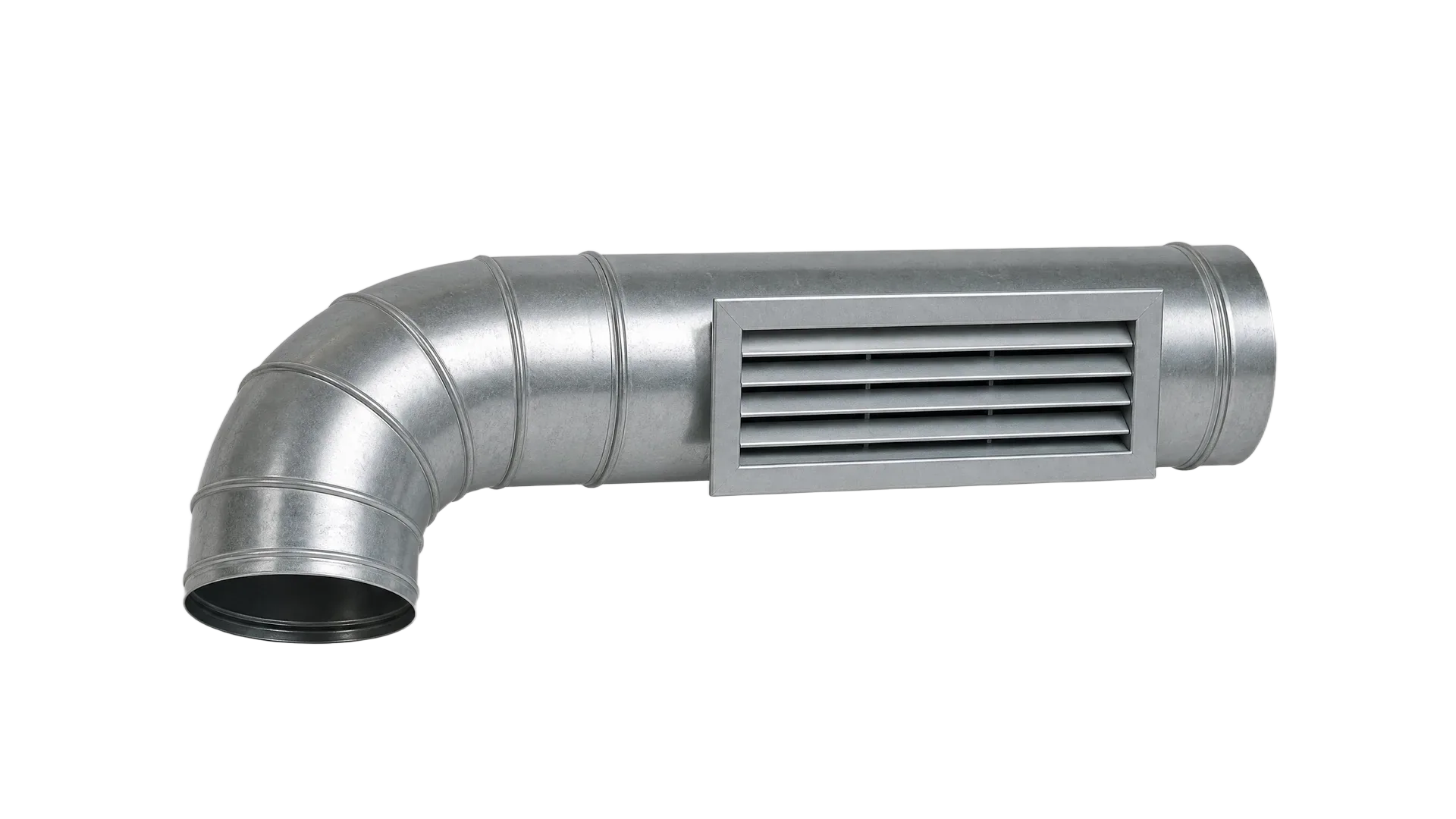
A galvanized steel round duct section with a 90-degree elbow and a rectangular louvered grille on its straight run, shown against a plain gray background.
Fill out one form

For most homes in Carmel, duct cleaning is not something you need on a schedule. Dust and pet hair build up in ducts over the years, but that buildup alone doesn't hurt your air or your system's performance. It's worth doing if you can see dust kicking out of the vents, if someone in the house has allergies that flare up at home, or if you've had rodents, a pest problem, or recent remodeling work that left drywall dust in the system. It's also worth checking before you buy a house, so you know what the previous owner left behind. Outside of those cases, running your furnace and AC with a clean filter, changed on schedule, does more for your air than a one-time duct cleaning will. If your ducts have a real reason to need it, a local contractor can look at what's actually in there and tell you straight whether it's worth doing.

A smiling bearded man in a dark green sweater sits at a dinner table with a glass of red wine, a bowl of salad and a lit candle in the foreground, in a dimly lit room with a framed picture, lamp and potted plants behind him.
A woman in a cream knit sweater reclines on a sofa with her eyes closed and a slight smile, a closed dark book resting on a blanket in the foreground and a lit lamp and small potted plant behind her.

A duct cleaning crew works the system under suction, not open air. Every register gets sealed off one at a time so nothing stirred loose inside the ducts ends up back in your living room. A brush or an air whip knocks debris free, and a vacuum pulls it out through the one branch that's open. Most of what builds up isn't spread evenly through the ductwork. It collects at the furnace coil and the blower wheel, past where your filter catches things. Before any of that starts, a camera run through the ducts shows what's actually in there. Surface dust gets vacuumed. Anything wet, or signs of mold, calls for a different fix first. If there's evidence of rodents or something dead in the line, that gets pulled and the duct sanitized rather than just cleaned out with the rest of the dust. Some contractors will reseal a few loose joints while the system is already open, which cuts down on how fast dust finds its way back in after the job is done.

How a duct cleaning actually works

  • A duct cleaning job loosens debris with a brush or air whip, then pulls it out with a vacuum set to negative pressure so nothing blows back into the room.
  • The technician seals off supply and return registers one at a time so the whole system stays under suction while each branch is cleaned.
  • Dust that sits past the filter usually collects at the furnace coil and the blower wheel, not evenly through the whole duct run.
  • A camera check before the job shows whether the buildup is surface dust or something wet, since mold needs a different fix than vacuuming.
  • If the ducts carry signs of rodents or a dead animal, that gets removed and the line sanitized, not just vacuumed with the dust.
  • Sealing a few loose joints while the ducts are already open stops some of that dust from coming right back after the cleaning.
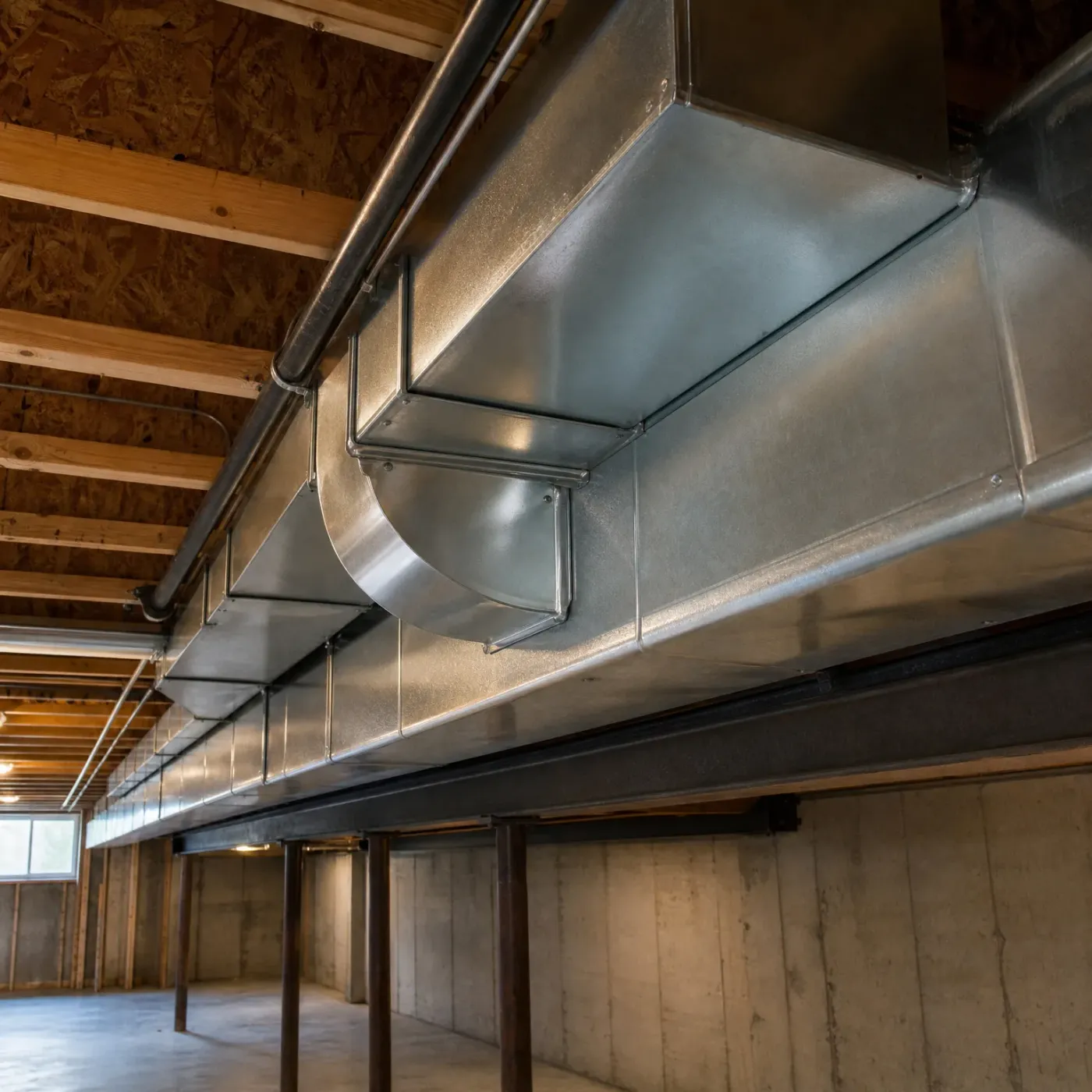
Empty basement with bare concrete walls and floor, with galvanized sheet-metal HVAC ducts, a round duct elbow, and pipes running along the wooden joists of the ceiling.
Before you get your ductwork cleaning
An empty unfinished basement with concrete floor and walls, exposed wood joists, steel beams and support posts, galvanized ductwork and pipes, and a single bare bulb light.
After you get your ductwork cleaning

How much does your Carmel duct system actually run each year?

  • Half the homes here were built by 2001

    Half the homes in Hamilton County were built in 2001 or earlier. An older duct system has had more years to collect dust, so it's worth a look if yours came with the house.

  • Heat runs October through May

    Heat runs October through May here, about eight months. That's eight months of air moving through the same ducts, carrying whatever dust is sitting in them.

  • Cooling runs June through August

    Cooling runs June through August. Those three months push just as much air as winter does, so ducts rarely get a real break.

ACS 2020-2024 · NOAA nClimDiv 1991-2020

What actually gets pulled out

Most of what comes out of a duct system is dust, pet hair, and whatever has settled in the runs since the house was built. That's true whether you're in a condo near the Monon or a house out toward West Carmel. It's not usually mold, and it's not usually a sign your furnace or coil is failing. If a technician finds something unusual while the system is open, like a disconnected run or a gap at a boot, that's worth knowing about on its own, separate from the cleaning itself. The cleaning addresses what's built up. It doesn't fix a duct that was never sealed right.

Why sealing matters during the job

Negative pressure only works if the rest of the system stays closed while one register is open. If a return or supply is left uncovered, the vacuum pulls air from there instead of from the duct being cleaned, and debris that's loosened can end up settling somewhere else in the system instead of coming out. That's the reason a technician works register by register rather than opening up the whole house at once. It's a slower way to do the job, but it's the only way the dust that gets knocked loose actually leaves the ducts instead of resettling a few feet down the line.

A woman in a beige V-neck sweater laughs while seated at a white marble counter with a glass of white wine, with a living room containing a gray sectional sofa, lamp, and dark windows behind her.
A woman with long dark hair in a cream sweater laughs while seated at a light stone counter with a glass of red wine, with a blurred dining table and living room behind her.
A woman in a dark green sweater laughs while seated at a marble kitchen island with a glass of red wine, with open shelving, cabinets and a living room visible behind her.
A smiling woman with dark shoulder-length hair in a cream V-neck sweater sits at a marble counter with a glass of red wine, with a kitchen and softly lit living room behind her.
Galvanized sheet metal HVAC trunk ducts and branch takeoffs running below a wood-joist ceiling in an unfinished basement with concrete walls, steel support columns and a concrete floor.

Describe it once

The pro who gets in touch is licensed in Indiana and works in Hamilton County.

Fill out one short form instead of calling around.

Skip the search

No charge to send it. You decide if you hire them.

Why does your house feel dustier than it should?

You dust the shelves on Sunday and by Wednesday there's a film again. Vents near the floor have gray streaks below them. The air coming out of a supply register smells a little stale when the system first kicks on, or you can see dust puff out when it does. Someone in the house sneezes more at home than anywhere else. None of this means the ducts are making anyone sick. It usually means dust is moving through the system and settling where you can see it. If a filter gets skipped for a few months at a stretch, that buildup has an easier path to the ducts and back out into the rooms you spend your evenings in.

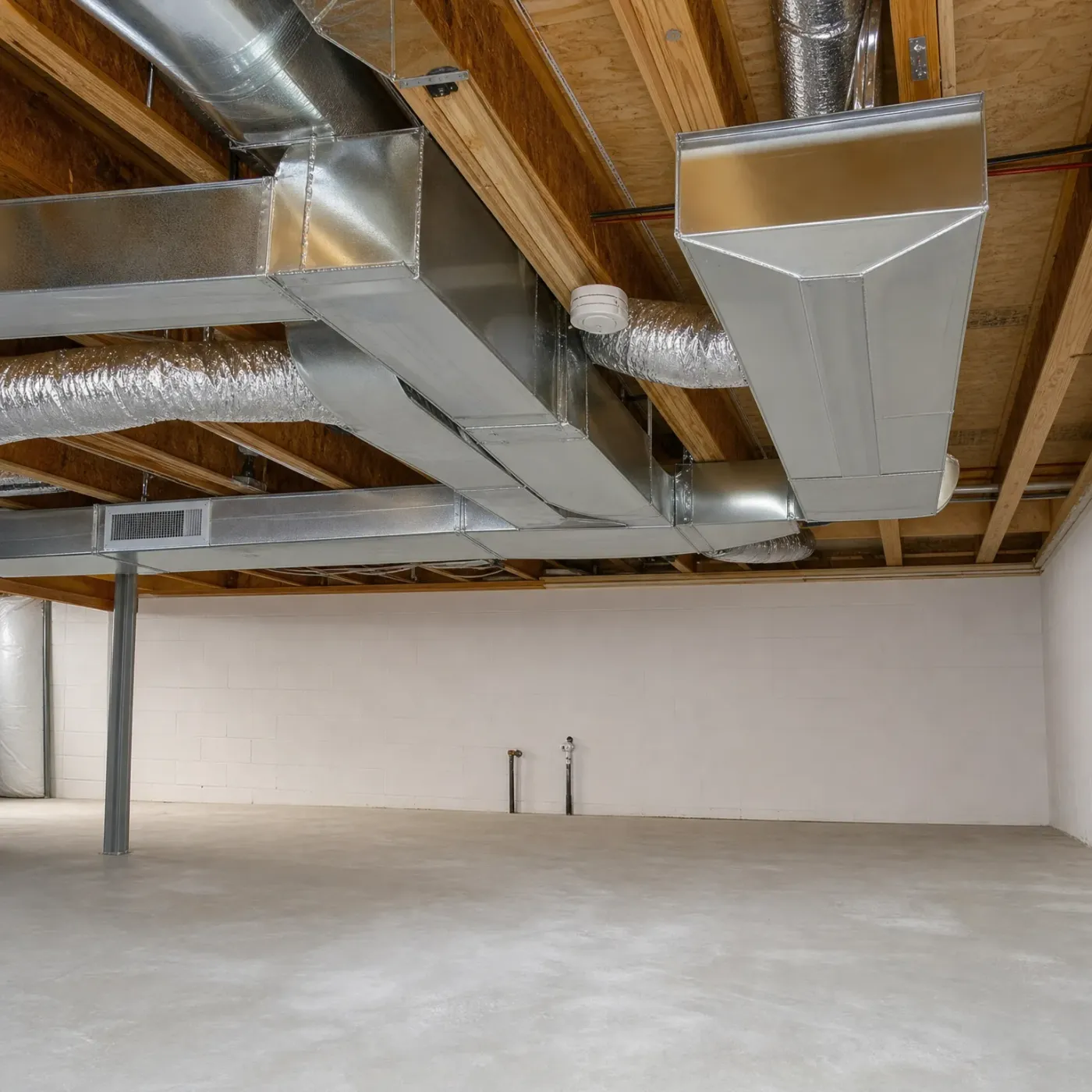
Empty basement with bare concrete floor, painted block walls, and an exposed wood-joist ceiling with sheet-metal and insulated flexible ductwork and a steel support column.

Ductwork doing its job

This is what a duct system looks like when there's nothing to fix. The metal trunk and the flex runs overhead are clean, the joists above them are clear, and air is moving through without picking up anything extra on the way to your rooms.

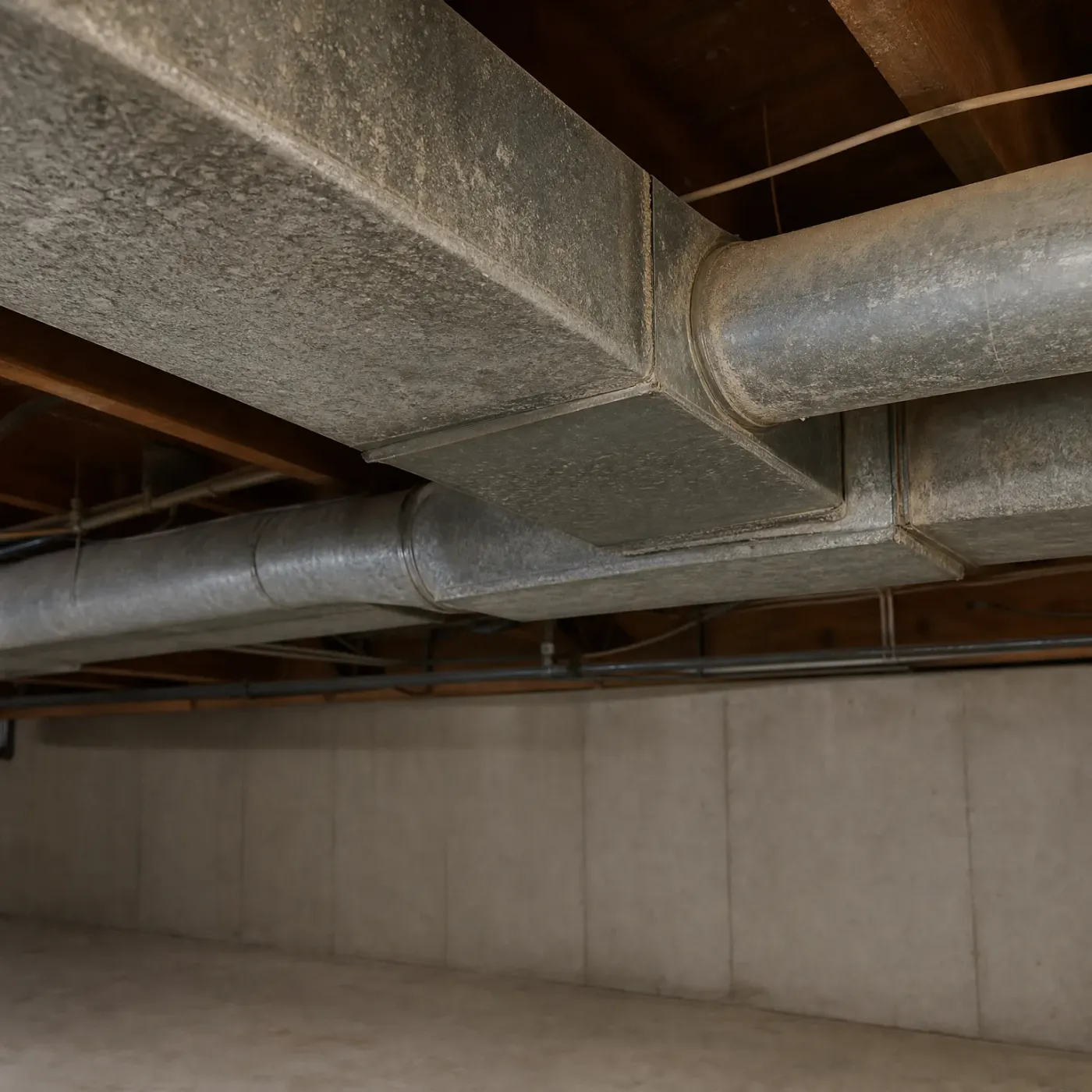
Galvanized rectangular and round sheet-metal ductwork running beneath a wood-joist ceiling in a basement with concrete walls and floor, with pipes and wiring alongside.

Ductwork that needs a look

Here the trunk line and the branch feeding off it are coated gray, and the dust has spread to the joists and the foundation wall around it. Air moving through a system built up like this carries more of that dust straight into your rooms.

How does a technician know if your ducts actually need cleaning?

You've seen the trucks and the ads, but you want to know what actually happens before someone tells you your ducts need work. You don't want a sales pitch dressed up as an inspection. You want to know what a technician looks at and what separates a system that's fine from one that isn't.

A camera down the main trunk and a look at the return

A technician runs a camera into the main trunk line and checks the return duct, since that's where dust collects first and settles the fastest. They're looking for a layer of dust thick enough to feel with a hand, not just a thin film on the metal. They'll also pull the return grille and look behind it, since that's usually the first place buildup shows. If there's pet hair matted in the runs or debris sitting in the trunk from a renovation, that shows up on camera too. A system with a thin coat of dust and nothing else usually gets left alone. One with matted buildup or blockage gets flagged, and that's the difference that matters, not the age of the ductwork by itself.

Empty unfinished basement with concrete walls and floor, exposed wood joists, metal HVAC ducts and pipes overhead, and a steel support column near a framed wall.
Ducts running clean, nothing to chase down or seal off.
Empty basement with bare concrete walls and floor, a steel support column, and galvanized sheet-metal ductwork and pipes running along the exposed wood joist ceiling.
Ducts loaded with years of dust, the kind that needs a brush and a vacuum to clear.

What the cleaning actually involves

  • A technician checks for signs of rodents or mold before cleaning, since those change how the job is done.
  • Flexible duct runs get brushed by hand because the whip can tear the thin inner liner.
  • Metal trunk lines get the whip treatment first, then a final vacuum pass to catch loosened dust.
  • The furnace or air handler itself gets cleaned separately, since the blower wheel and coil collect their own buildup.
  • A camera can confirm the ducts are clear before the registers go back on.
  • Cleaning doesn't fix a duct that's leaking air into the attic or crawlspace, that's a separate repair.

Not every part of a duct system gets treated the same way. Flexible runs have a thin inner liner, and a whip can tear it, so those get brushed by hand instead. The metal trunk lines can take the whip, and that's usually where it's used, followed by a vacuum pass to pull out what got knocked loose. Before any of that starts, a technician looks for rodent droppings or mold growth, because either one changes the approach. Mold means containment and a different cleaning method. Rodents mean the job isn't just dust anymore.

The furnace or air handler isn't part of the ductwork, but it collects its own buildup on the blower wheel and the coil, and a thorough job cleans that separately rather than skipping it. Once the runs are brushed and vacuumed, some technicians run a camera through the system to confirm it's actually clear before the registers go back on the wall. That's the only way to know for sure the debris came out instead of just moving to the next bend.

None of this fixes a duct that's leaking air into the attic or the crawlspace. A disconnected joint or a torn run stays disconnected or torn after cleaning. If that's part of what's going on, it's a separate repair, and a technician should tell you that rather than let you think a cleaning solved it.

Power here costs 14.96 cents per kilowatt-hour

At 14.96 cents per kilowatt-hour, running your blower longer than it needs to costs you something real over a year. Clogged ducts don't push your bill up on their own, but if dust is choking off airflow at the registers, your system works harder to move the same air.

EIA-861 2025

A closed laptop and a ceramic mug of coffee on a wooden table, with a blurred kitchen counter, cutting board, utensil jar and plant in the background.

So is it worth doing

Duct cleaning in Carmel isn't something your system needs on a fixed timeline. It's worth doing when you've got a real reason: dust kicking out of the registers, streaks below the floor vents, a duct system that came with an older house and has never been looked at. Short of that, you're not fixing anything by cleaning ducts that are already doing their job.

If you've gotten this far, you probably have one of those reasons, not just a hunch. Rather than calling around to a handful of duct cleaning companies, sitting through different pitches, and trying to tell a real inspection from a sales visit, you can get matched with one licensed contractor working in Hamilton County who looks at ducts like yours all year and can tell you straight whether yours need it.

Interior corner of a living room with a beige upholstered armchair holding a textured pillow and throw, a eucalyptus arrangement in a ceramic vase on a wooden table in the foreground, a blurred glass-front cabinet behind, and a potted plant on a sunlit window sill.
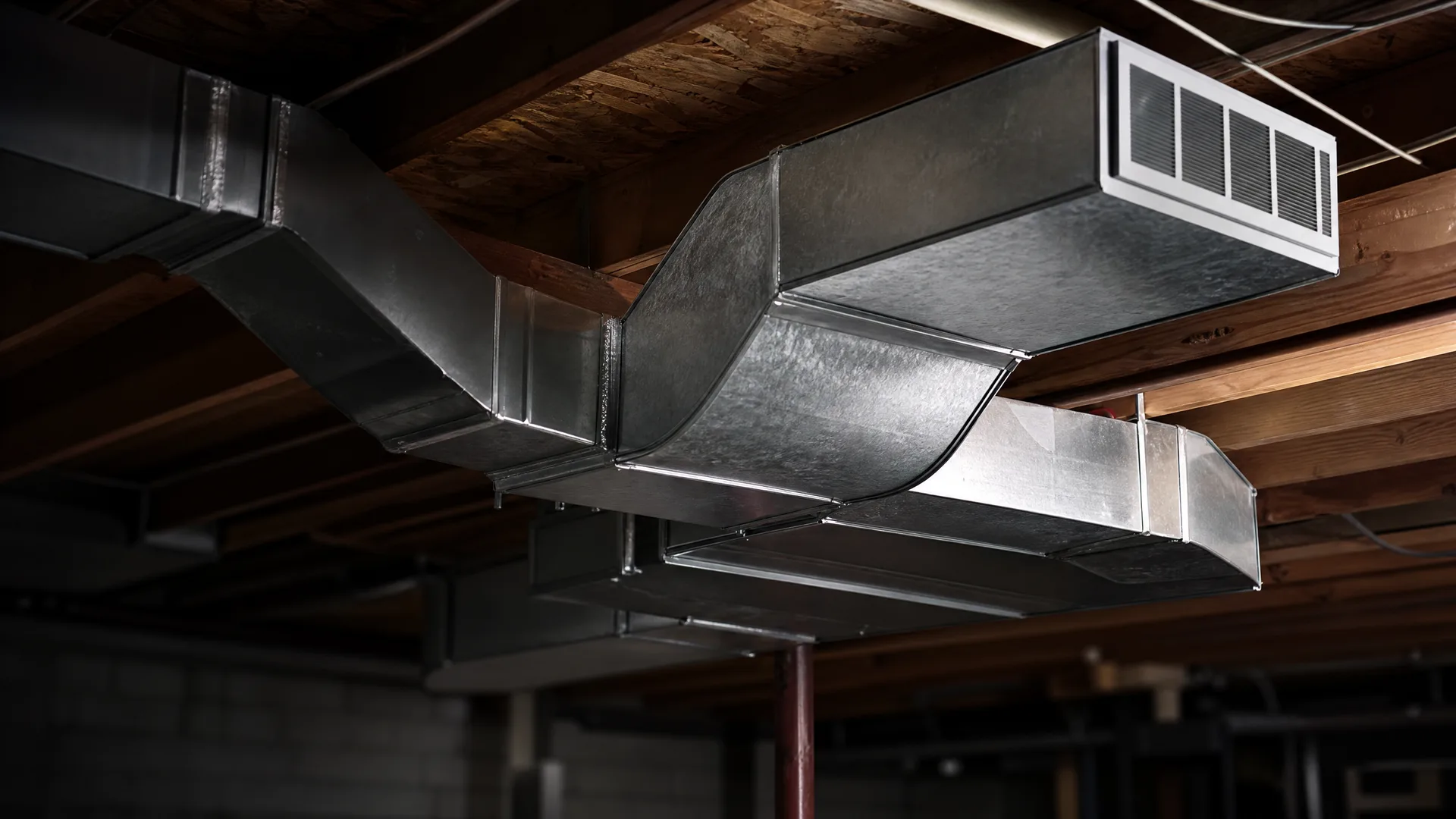
Galvanized sheet metal HVAC ductwork with a white vent grille, mounted against wooden floor joists in a dim basement with concrete block walls.

No calling every shop in Hamilton County

Duct and vent cleaningDucts or ventsHamilton County, IN
Step 1 of 2

What ZIP code is the job in?