

Clear vent, cool room
When the vent is clean, the flap opens, the air goes outside, and it takes the heat and moisture with it. Your laundry room stays close to the temperature of the rest of the house, even after a full load.
Send it once and finding someone is no longer on you.
Hand it offA hot laundry room usually means your dryer vent is clogged, not just with lint but with the moisture it's supposed to carry outside. The dryer pushes out hot, humid air with every load, and that air is meant to travel through the vent and exit the house. When lint builds up along the way, the vent can't move that heat out fast enough, so it backs up into the room instead. In Indiana, summer already runs hot and sticky, and a gas dryer adds its own heat on top of that while it burns through a cycle. A room with a weak or blocked vent holds onto both. You'll notice it most on wash day, the air feeling heavier and warmer than the rest of the house, sometimes with a damp, musty smell if lint has been sitting in there a while. A full vent also means the dryer runs longer to dry the same load, which keeps that heat coming for longer than it should.

When the vent is clean, the flap opens, the air goes outside, and it takes the heat and moisture with it. Your laundry room stays close to the temperature of the rest of the house, even after a full load.

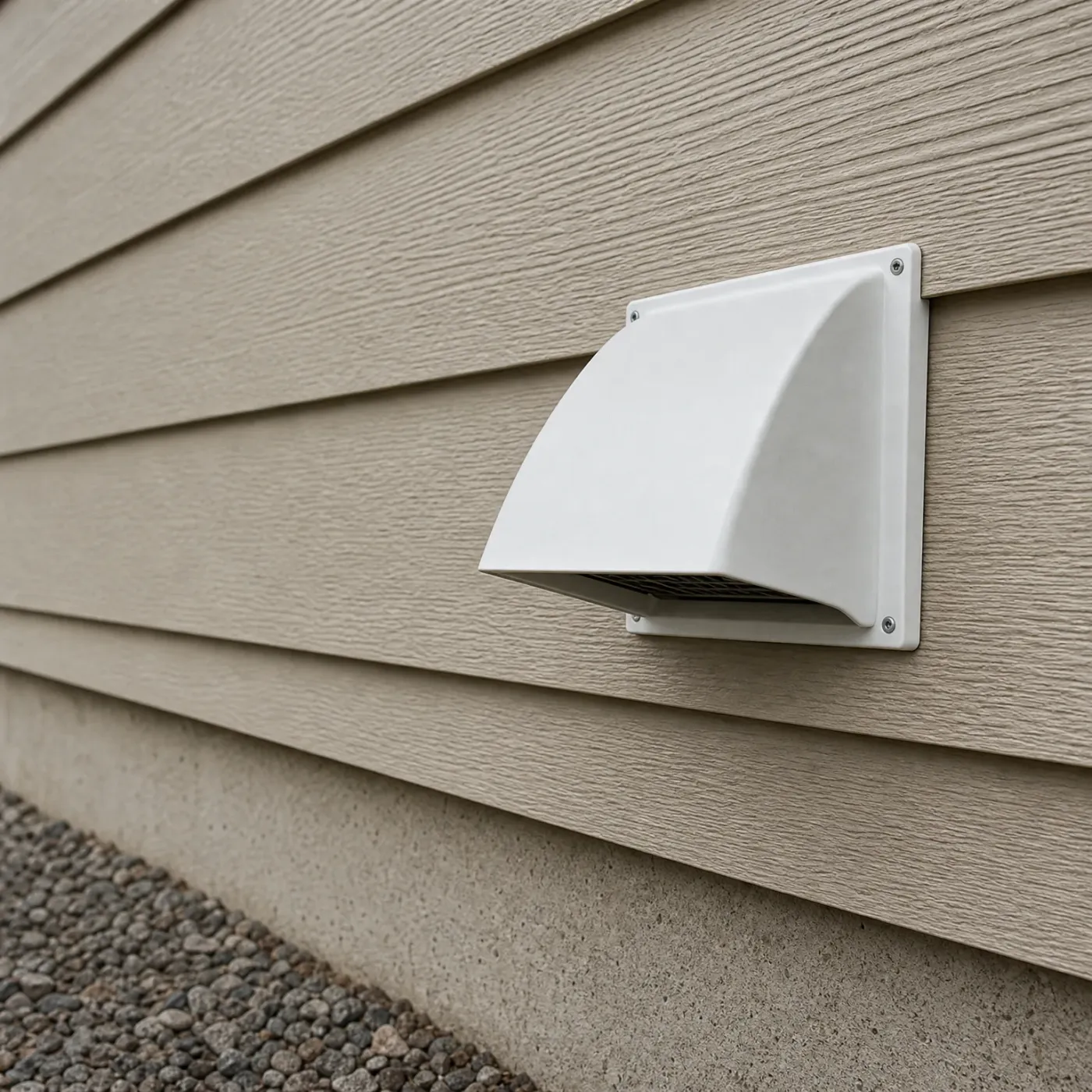
Lint has built up in the hood until the flap can't close. Hot, wet air backs up into the vent instead of leaving the house, and some of it pushes right back into the room with the next load. That's the heat you're feeling.
Lint builds up along the inside of the vent tube.
Airflow slows, so hot, humid air can't escape outside.
Heat and moisture back up into the laundry room instead.
Cleaning clears the tube so air exits the house again.
You clean the lint trap every load, so it's a fair question why the vent still fills up fast. The answer has to do with what the trap can't catch. Indiana's summer humidity makes the buildup worse, since damp lint sticks to the inside of the tube instead of blowing through, and it doesn't take many loads before that changes how the room feels.
The trap in the door catches most lint, but a fraction always slips by and rides the airflow into the vent tube. On its own that wouldn't amount to much. The trouble is the moisture. Every load pushes humid air through the vent, and in Indiana's summer that air is already carrying a lot of water. The lint that gets past the trap picks up that moisture and sticks to the inside of the tube instead of blowing on through. Each load adds a little more, and the buildup narrows the path for air to leave. It's not one bad load doing it. It's the same small amount of lint and moisture collecting in the same spot, load after load, until the vent can't move air the way it did when it was new.


Your dryer vent cleaning request goes to one local pro.
Send the form and finding a dryer vent cleaner is handled.
You're not committing to anything by asking.
At 15.96 cents a kilowatt-hour, a dryer forcing hot air against a clogged vent is running longer than it should, and you're paying for every extra minute. Clear the vent and the dryer shuts off when the load's actually dry, not when it finally fights through.
EIA-861 2025 statewide residential average
A clogged vent doesn't just slow the air down during the cycle. It holds heat in the tube itself, and that tube runs through your laundry room wall or ceiling. Once the dryer shuts off, the trapped air has nowhere to go but back into the room, along with whatever moisture didn't make it outside. That's why the room can still feel warm twenty minutes after the buzzer goes off, long after the dryer's drum has stopped turning and the heating element has switched off.
The dryer's heating element only runs as long as the drum senses damp air moving past it. With a clear vent, that air exits fast, the sensor reads dry sooner, and the element cuts off. With a blocked one, humid air lingers in the drum, so the element keeps firing longer than the load actually needs. Every extra minute it runs, it's pushing more heat into a room that already can't vent itself. Clearing the lint out restores that exit path, and the drum goes back to shutting off on schedule instead of fighting the backup.


The heat in your laundry room traces back to one place: a dryer vent that can't move air the way it's supposed to. Every load pushes hot, humid air through that vent, and lint along the walls of the tube narrows the path it travels. The dryer doesn't stop working when the path narrows. It just works longer, forcing air through a smaller opening, and some of that heat stays put in the tube instead of reaching outside. That's why the room is still warm twenty minutes after the dryer shuts off. The tube runs through a wall or ceiling in your laundry room, and a clogged one holds its heat right there until it finally dissipates on its own.
Indiana summers don't cause this, but they make it harder to ignore. The air outside is already heavy with moisture from May through September, and a vent that's half blocked is adding more heat and humidity to a room that's already fighting both. Once the vent is clear, that air has somewhere to go. It exits the house the way it was designed to, and the room settles back to roughly the same temperature as the rest of the house between loads.
A contractor who handles this work through the summer has usually seen the same clog in the same spot more than once, often near a bend in the run or close to the outside hood, and knows what to check first.




It's off your list after this
Only one pro gets your request, so you hear from one company.