Why your furnace rattles in Indiana

Get the furnace repair search off your mind today.

Send it today

Why does my furnace rattle?

A rattling furnace is unsettling when you're counting on it to keep the house warm through an Indiana winter. It's usually not silent failure, it's a sound with a cause, and most of those causes are things a furnace tech sees over and over once the cold settles in and the system is running for hours at a stretch.

Something loose is vibrating against metal, or the blower is struggling

Most rattling comes from a loose panel, duct screw, or a blower wheel that's out of balance or dirty. The furnace cabinet flexes a little every time it heats up and cools down, and over months that can work a screw loose or let a panel sit just slightly off. A rattle can also mean the blower motor's mount has worked loose, or that the heat exchanger has a crack moving air in a way it shouldn't. With a gas furnace running for hours at a time through an Indiana winter, that flexing happens a lot, which is why the noise often shows up partway through the season rather than on the first cold day. Some causes are a quick fix. A cracked heat exchanger is not, and it's worth having someone check which one you're dealing with.

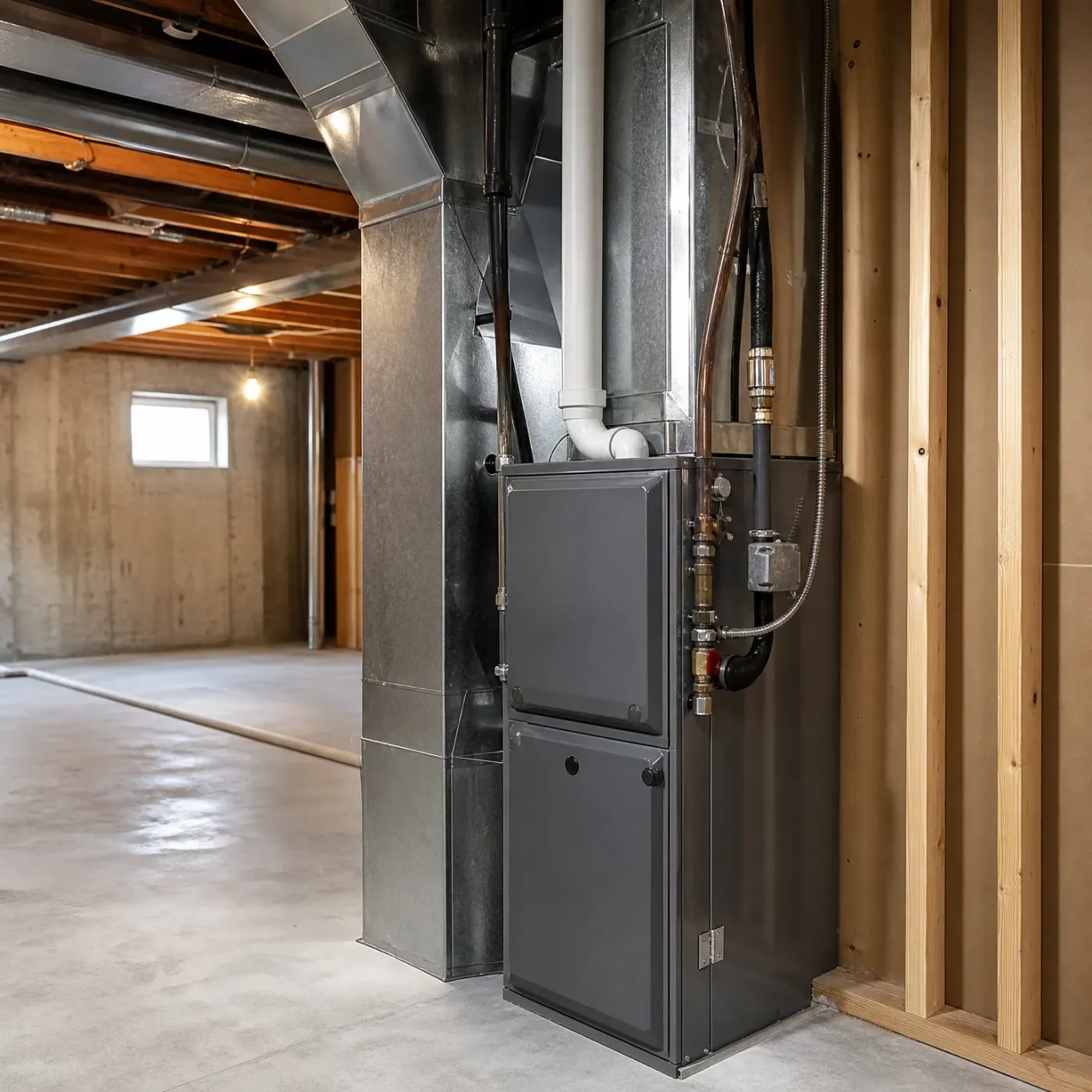
A gray high-efficiency furnace with white PVC vent pipes stands against a concrete basement wall beside sheet-metal ductwork, a small condensate pump on the floor, and exposed wood framing at left.

Running quiet

A furnace that's bolted down tight and sitting level on the floor hums along without much noise. The panels sit flush, the ductwork is secure, and the blower spins without hitting anything loose. This is what yours sounded like when it was new.

A gray sheet-metal furnace with flue pipe and adjacent ductwork stands against a stone basement wall on a concrete floor, with white PVC and metal pipes running nearby.

Loose and rattling

Panels that have worked themselves loose buzz against the cabinet every time the blower kicks on. Ductwork flexing off its hangers, a cracked mount, or a wheel out of balance all add their own rattle. In an older mechanical room like this, age gives more parts the chance to work loose.

Is this rattle something to worry about?

You probably hear it most when the furnace kicks on, a buzz or rattle that settles once it's running, or one that keeps going the whole cycle. Maybe it's louder upstairs, or it's loud enough you've started closing the bedroom doors at night. A loose panel is just noise. A rattle from the blower or the burner area is worth paying attention to, because those parts failing can mean the furnace shuts itself off, or in rare cases, that combustion gases aren't venting the way they should. With an Indiana winter ahead, a furnace that quits on a cold night leaves the house with no backup plan.

A gray gas furnace stands on a concrete basement floor, connected to sheet-metal ductwork, white PVC vent pipes, and a yellow gas line, with plastic sheeting covering the walls.

A new install, sitting level and tight

This is what a furnace looks like when nothing is loose. The cabinet sits flat on the concrete, the ductwork is fastened square, and the gas line runs straight to the unit. There's nothing for the blower or the panels to knock against.

A metal furnace with louvered panels stands against a concrete basement wall, connected to sheet-metal ductwork and a round flue pipe, with wooden framing posts and a pipe nearby.

An older unit, loose with age

Years of running cycles the metal in and out, and the bolts and duct straps that held tight at install don't always stay that way. Dust on the cabinet is a sign nobody's had it open in a while. A rattle like this is worth a look before it points to something failing inside.

A woman in a knitted shawl sits in a living room with a fireplace, shelves, a sofa with cushions, and a lamp by a bright window, looking off to the side.
A woman with long brown wavy hair in a green shirt over a white top stands in a living room with built-in white shelves, a ceiling fan, a potted plant and a sliding glass door.
A woman with shoulder-length gray-streaked hair in a light gray knit sweater stands smiling and looking off to the side in a living room with a sofa, houseplant, framed picture, and sunlit sliding glass door.
A woman with shoulder-length curly gray hair wearing a gray knit sweater stands near a window with a sheer curtain, looking to the side, with a blurred interior room behind her.

A loose panel is the easy fix

A single sheet metal screw working loose on an access panel can turn into a rattle that runs the whole cycle. A tech can find it and tighten it fast.

Reach a local pro

Not every rattle stays cheap

A blower wheel knocking against its housing or a cracked heat exchanger can sound similar at first. A local tech who knows these furnaces can tell the difference before it gets worse.

Reach a local pro
A woman and a sleeping child wrapped together in a cream knitted blanket on a couch, with a potted plant, framed photo and lit lamp in the background.
An older woman with gray hair in a bun and glasses, wearing a beige knit sweater, smiles while looking to the side in a warmly lit kitchen, with a loaf of bread on the counter in the foreground and a snowy scene outside the window.
A gray furnace with copper and flexible piping stands against a wood-framed wall in an unfinished basement, connected to galvanized sheet-metal ductwork and PVC venting, with a concrete floor and exposed joists.

It's off your list after this

The pro who reaches out is licensed in Indiana.

After you send the request, you're done searching.

Find a licensed furnace pro

No charge to send it. You decide if you hire them.

A gray high-efficiency furnace in a basement with sheet-metal ductwork, white PVC vent pipes, metal plumbing lines, a condensate pump on the floor, and a window showing green trees outside.
Everything fastened down, the blower turns free, and the cabinet sits quiet on the concrete through a January cold snap.
An older metal furnace with PVC and metal pipes stands on a concrete basement floor beside galvanized ductwork, with wooden stairs and a water tank in the background.
Dust built up, panels loose, flexible gas lines crowded against the cabinet. That rattle has a cause, and it's still running.
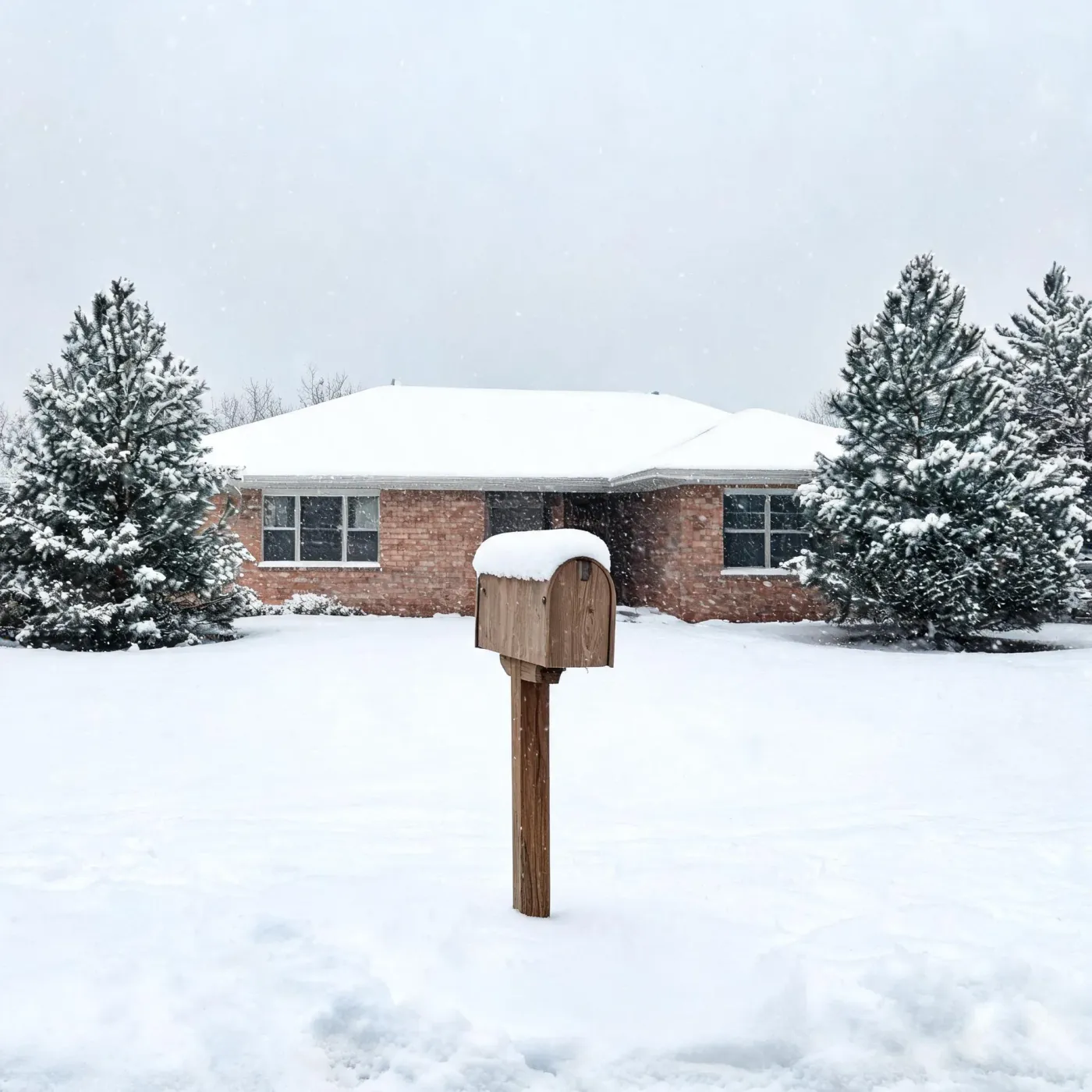
A snow-covered wooden mailbox on a post stands in a snowy yard in front of a single-story brick house flanked by snow-laden evergreen trees during falling snow.

Winter nights average 22°F statewide, according to NOAA climate data. That's cold enough that your furnace runs long stretches without shutting off, sometimes most of the night. A loose panel or a blower wheel that's drifted off balance only has to rattle a little bit to turn into something you hear every cycle, because there are so many cycles. The cold doesn't cause the rattle, but it gives the problem more hours to show itself, and more hours to get worse before anyone notices.

NOAA nClimDiv 1991-2020 county normals weighted by homes

A gray metal furnace with louvered vent panels stands on a concrete basement floor beside galvanized ductwork, gas and plastic pipes, and foil-faced insulation along the ceiling and wall.
Before you get your furnace repair
A basement utility area with a gray furnace, sheet-metal ductwork, pipes, plastic-covered walls, a concrete floor, and a black shelving unit holding storage bins.
After you get your furnace repair

You keep running it as is

The furnace still heats the house, so a lot of people let the rattle ride through the winter. Some loose panels and screws stay exactly that, a noise and nothing more, for the rest of the season. But a blower wheel that's rattling because it's out of balance keeps wearing on the motor bearing every time it runs, and an Indiana winter means it runs for hours at a stretch. What started as a noise you tuned out can end with a motor that won't start at all, usually on a night you need it most.

You get it looked at now

A tech who works on furnaces all winter can usually tell a lot from the sound itself, whether it's a screw working loose, a blower wheel out of balance, or a panel that's not seated right. Most of those are quick to find once someone's got a flashlight on the cabinet and the cover off. Catching it early means the fix is usually the cheap kind, a tightened panel or a cleaned and balanced wheel, rather than a replacement part ordered in the middle of a cold snap.

Winter nights average 22°F statewide

A night in the low 20s means the burners stay lit for hours at a stretch to keep the house warm. That's a long run for a blower wheel that's already out of balance or a panel that's worked loose, more time for the rattle to show up and more time for whatever's causing it to wear further.

NOAA nClimDiv 1991-2020 county normals weighted by homes

A dim unfinished basement with concrete walls, exposed floor joists, a small window, and a furnace connected to metal ductwork and PVC venting.

It's just past six on a November evening and the thermostat clicks the call for heat. Nothing answers. You're down in the basement with a flashlight because the rattle that had been showing up at the start of every cycle finally ran its course, and the furnace sits there dark, cold, quiet in a way it shouldn't be. There's a faint haze hanging near the cabinet, dust that got knocked loose and never settled. Upstairs the house is still warm from the afternoon, but that won't last long with it in the low 20s outside tonight. You crouch by the access panel and listen for anything, a hum, a click, something. There's nothing.


A rattle in your furnace has a cause, and most of the time it's something a tech can find by listening and looking: a screw that worked loose, a blower wheel that's drifted off balance, a panel that's not sitting flush anymore. None of that gets better by waiting through a cold snap. When you put in a request, it goes to one licensed furnace contractor near you, not a handful of companies competing for your callback. That matters on a repair like this, because the people who work on furnaces all winter in Indiana have heard this exact rattle before and know where to check first. You won't be explaining the sound from scratch or fielding calls from three different outfits trying to win the job. One contractor, already familiar with what tends to go wrong on a furnace running long stretches through the cold, takes it from here. The rattle has an answer. Getting it fixed is the next step, and it's no longer something you have to figure out alone.

A single-story stucco house at dusk with a lit paver walkway lined by low path lights, desert plants and boulders in front, and distant mountains under an orange and blue sky.

Furnace Repair

Hand off the search today

RepairFurnace or heatingIndiana
Step 1 of 2

What ZIP code is the job in?

  • A cream chunky cable-knit throw draped over a beige upholstered armchair beside a bright window, with a wooden side table holding a book and a vase of leafy branches at left.
    • Tell a local repair pro what your furnace is doing.
    • Say what's going on with your furnace, and a pro who works on them reaches out.
  • Living room corner with a gray sofa holding beige pillows and a knit throw, a round wooden coffee table with a dark planter and shallow bowl, a jute rug, a floor lamp, a framed landscape print on the wall, and a window showing trees.
    • Send the request and finding a pro stops being your problem.
    • After this form, you can stop searching for a furnace pro.
  • A living room corner with a cream sofa and cushion, knit throw, wooden coffee table holding a shallow bowl and dark ceramic vase with green foliage, a floor lamp, potted plant in a woven basket, and linen curtains at a window.
    • Describe what your furnace is doing once, in one form.
    • Fill out one short form instead of calling around.
  • A round reclaimed-wood coffee table with a black metal base sits on a woven rug in front of a cream sofa with cushions, with a lit built-in fireplace and a tall indoor tree in the background.
    • Your request stays with one local pro.