
What to do when the AC goes out in Indiana
My AC stopped working, what do I do now?
It's the middle of a sticky Indiana summer and the air conditioner just quit. The house is already warming up and everyone inside feels it fast. Before calling anyone, you want to know what to check yourself and what actually needs a repair tech, so you're not waiting around for nothing or missing something simple.
Check the thermostat and breaker first, then call for repair
Start with the thermostat. Make sure it's set to cool and the temperature is below the room's current reading, and swap the batteries if it's gone blank. Next, check your breaker panel. Indiana homes lose AC to a tripped breaker more than people expect, especially during a long stretch of heavy use. If the breaker's fine and the air still isn't cold, or the outdoor unit isn't running at all, the problem is inside the system itself, a bad capacitor, a stuck contactor, a refrigerant leak, something that needs a licensed tech to open the unit and test it. With summer humidity here, a house without working AC gets uncomfortable fast, so it's worth getting someone out before the heat builds up for days.






How Your AC Actually Runs
- The thermostat calls for cool, and a low voltage signal tells the outdoor unit to start.
- The contactor pulls in first, sending power to the compressor and the outdoor fan at the same time.
- The compressor squeezes refrigerant gas and sends it to the condenser coil outside to release heat.
- A capacitor gives the compressor and fan motor the jolt they need to get spinning.
- Inside, the blower pushes air across the indoor coil, where the cold refrigerant pulls heat and moisture out of it.
- If the contactor, capacitor or indoor blower fails, the system can go quiet or run warm with no cool air.
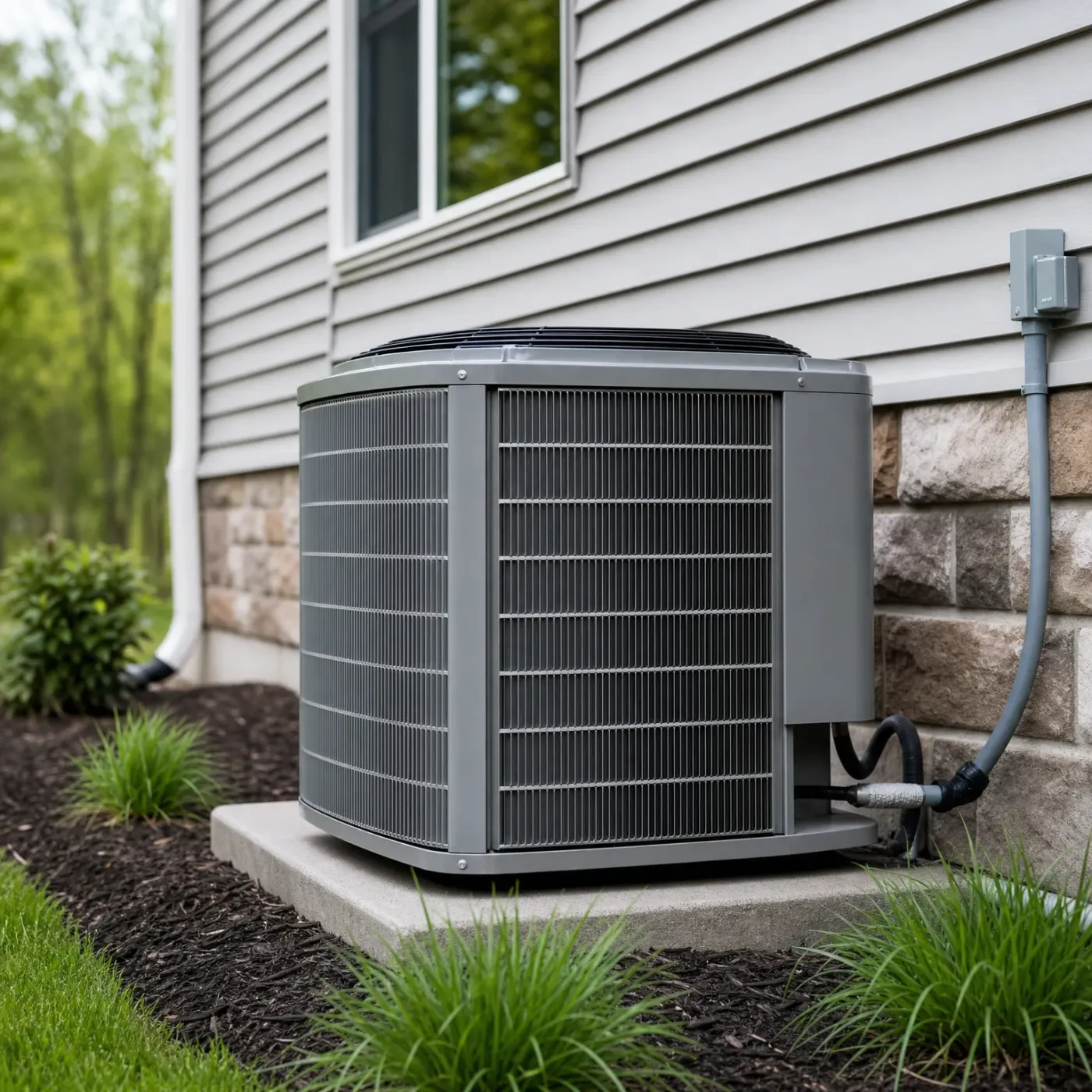
The thermostat is just a switch. Once it calls for cool, a low voltage wire carries that signal out to the condenser, the unit sitting outside your house. That signal lands on the contactor, a small relay that closes and sends full power to the compressor and the outdoor fan in the same instant. The compressor is the heart of the system. It squeezes refrigerant gas until it gets hot, then pushes it through the outdoor coil where the outdoor fan blows air across it to carry that heat away. Neither the compressor nor the fan motor can start spinning on its own. Both need a hard push from the capacitor, which stores a charge and releases it the moment the contactor closes. Once the refrigerant has dropped its heat outside, it travels inside as a cold liquid to the indoor coil. The blower, a motor and wheel inside your furnace or air handler, pushes your house air across that cold coil. The coil pulls heat out of the air and pulls the moisture out with it, which is why the air coming back through your vents feels cool and dry instead of just cool. Every part in that chain has to do its job for the next one to work. A contactor that's stuck or burnt won't send power anywhere. A weak capacitor can leave the compressor humming but never starting. A blower that quits means the coil gets cold but no air moves across it to carry that cold into your house.


A pro who works on air conditioners
Send the request today and stop worrying about who to call.
A local pro who knows air conditioners gets your details and gets in touch.
Sending the form costs nothing.
Why does the house feel worse than it should by afternoon
By early afternoon the upstairs rooms are hot and the air coming from the vents feels barely different from the room air. You might hear the outdoor unit clicking and shutting off instead of running, or not hear it at all. Some homes smell something warm or electrical near the thermostat or the outdoor disconnect. A humid feel in rooms that are usually fine is common too, since a unit that isn't cooling right also stops pulling moisture out of the air. Left alone through a stretch of Indiana's sticky summer days, a system that's struggling tends to strain further, and anyone in the house sensitive to heat feels it first.

Why the compressor won't start
A compressor that hums without starting is usually fighting a weak capacitor or a bad run contactor. Both are small, cheap parts, but a compressor isn't built to run without them for long. If it keeps trying and failing to start, the motor windings heat up each time, and that's what turns a simple part swap into a compressor replacement if it goes on too long.

What low refrigerant actually does
Refrigerant doesn't get used up the way gas in a car does. If your system is low, it's leaking somewhere, usually at a coil or a line connection. A unit running low will often ice up the indoor coil, which is why warm air from the vents sometimes comes with a block of ice on the line outside. Running it that way stresses the compressor further.
Wait It Out or Call Now
Wait it out
- If the outdoor unit is just cycling slower than usual, waiting a day costs nothing but comfort.
- A tripped breaker you reset yourself might hold, and that saves a service call entirely.
- Warm air inside gets worse by the hour in an Indiana summer, not better, especially upstairs.
- If anyone at home is older, very young, or has a health condition, the heat adds real risk the longer it sits.
- A refrigerant leak or electrical fault left alone can turn into a bigger repair, or damage the compressor outright.
- You lose nothing checking the breaker and the thermostat batteries first, but past that, waiting is a bet.
Get it looked at now
- A contractor can tell you in one visit whether it's the capacitor, the contactor, or something bigger.
- The house stops heating up the moment the system is running again, so the sooner someone's out, the shorter the discomfort.
- A problem caught early, like a failing capacitor, is usually a smaller fix than one left to take out the compressor.
- Once you send the request, finding someone to call is off your plate and the contractor reaches out to you.
- A working system matters most for whoever's most sensitive to heat in the house, and that doesn't wait well.
- You don't have to diagnose it yourself first, a technician sorts out what's actually wrong once they're there.

Thermostat calls for cool but the outdoor unit stays silent
Breaker or disconnect gets checked before anything else
Filter and vents get checked for blocked airflow
Contractor tests the capacitor, contactor and refrigerant charge
Power costs 15.96 cents per kilowatt-hour statewide
At 15.96 cents per kilowatt-hour, running a struggling air conditioner costs you more than a healthy one. A unit low on refrigerant or fighting a weak capacitor pulls power without cooling the house, so that bill climbs while the rooms stay warm.
EIA-861 2025 statewide residential average
A quiet condenser, warm air at the vents, a breaker that won't hold: whatever brought you here, the fix is the same next step. Someone licensed needs to look at the unit and tell you what part failed. You don't have to figure out whether it's the capacitor or the charge or the contactor before you call, and you don't have to wait around hoping it fixes itself while the house climbs into the 80s. Fill out the form and the job of finding someone becomes someone else's job instead of yours. Indiana summers don't let up once they get going, and a house that's uncomfortable at 2pm is worse by 6. Getting matched with a contractor who handles this kind of repair is the one step that moves things forward today, not the troubleshooting, not the guessing. The unit stays broken until someone with the right tools gets hands on it. That part is settled now.





Get your air conditioner to the right pro
Send the request today and let an air conditioner pro reach out to you.
You're not committing to anything by asking.