Signs of leaky ductwork in Fort Wayne, IN

A galvanized steel round duct with a 90-degree elbow and a white louvered vent cover on one end, shown against a plain gray background.
Find my pro

What are the signs of leaky ductwork in my house?

Your energy bills feel high for what your house actually needs, or some rooms never get as warm or cool as the rest. Maybe you noticed dust piling up faster than it should, or the furnace runs longer than it seems like it ought to. You're wondering if the ductwork itself is the problem, and whether it's something you'd even be able to tell from inside the house.

Uneven temperatures, high bills, and dust are the main signs

Rooms far from the furnace that stay too warm or too cold, a gas bill that climbs even though you haven't changed how you run the system, and dust settling on furniture faster than before all point to ducts that are leaking air before it reaches the room. Leaks happen at the seams and joints, where sections of duct connect or where a flexible run meets a metal trunk. Air escapes into the attic, the crawlspace, or the walls instead of your living space. In Allen County, where most homes heat with gas and winters run cold for months, air lost in the attic or crawlspace means the furnace works longer to hit the same temperature, and that shows up on your bill before it shows up anywhere else.

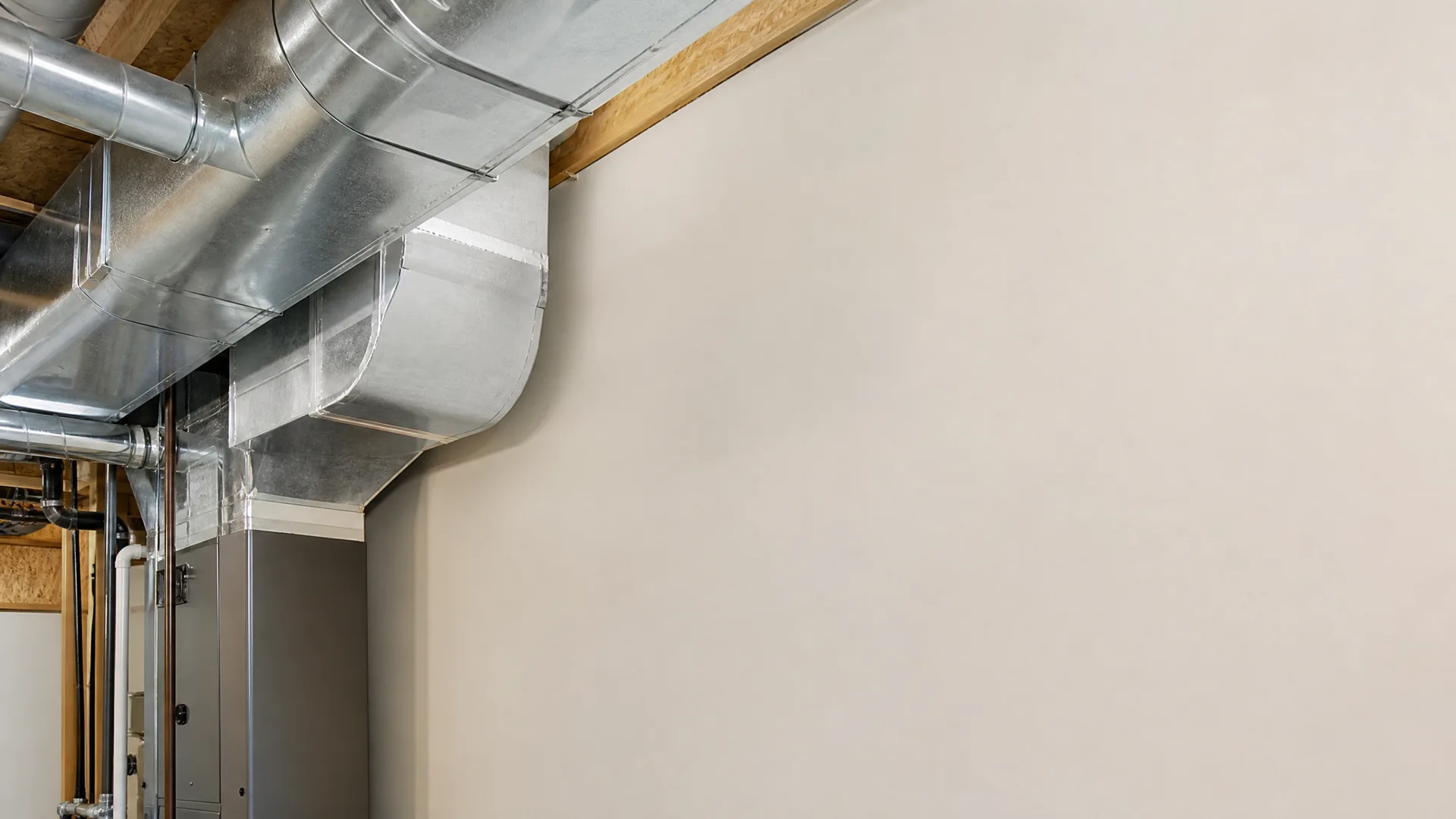
Galvanized sheet-metal ductwork and pipes running along an unfinished basement ceiling beside a plain beige wall, with a gray equipment cabinet below.

Why ducts split at the seams

Ductwork gets fastened together in sections, usually with sheet metal screws and a layer of tape or mastic at each joint. That joint is the weak point. The metal expands and contracts every time your furnace or air conditioner cycles on and off, and over enough winters and summers the tape dries out, cracks, and pulls loose. Once that happens, conditioned air slips into your attic, crawlspace, or basement instead of your living room.

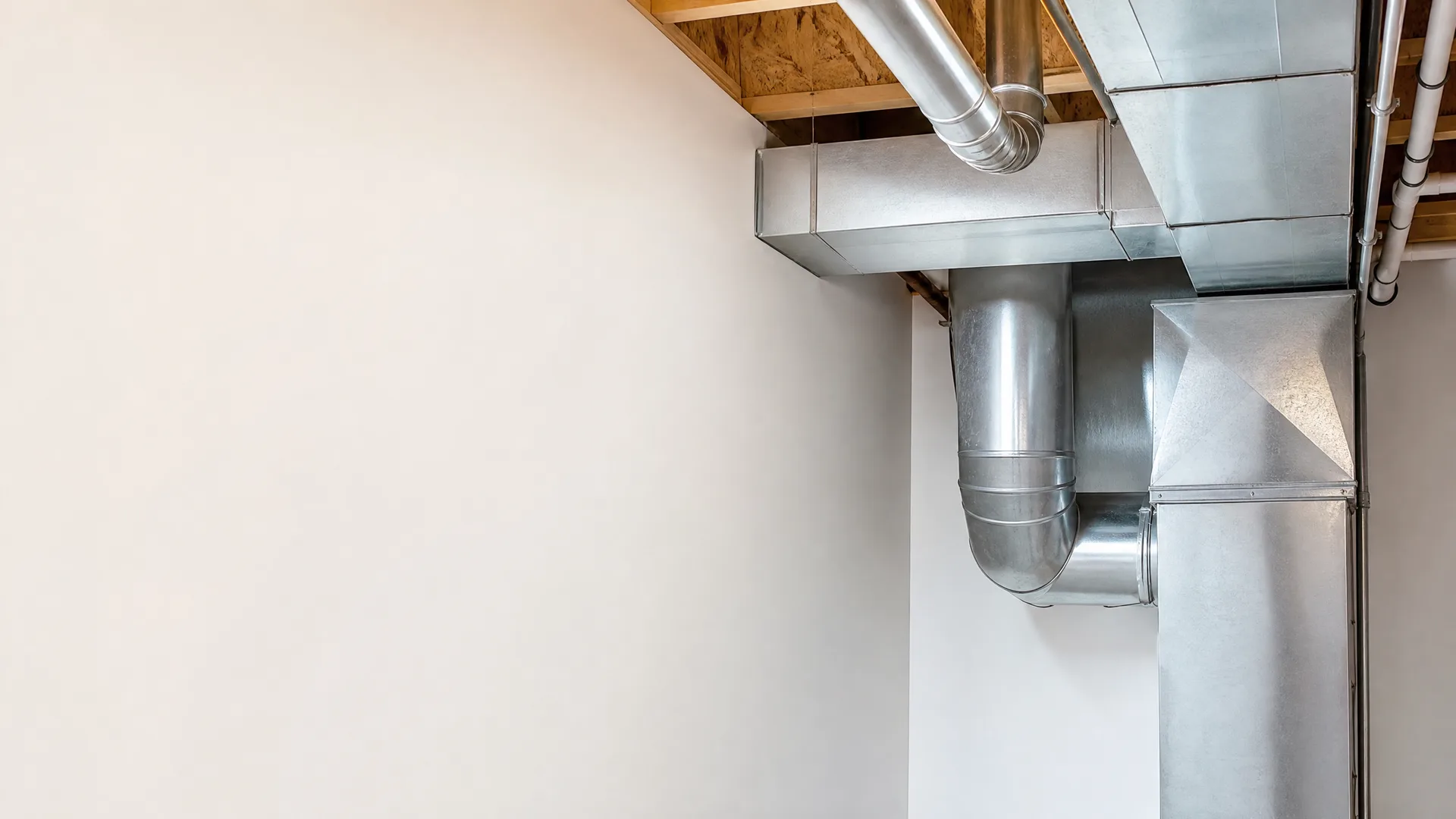
Galvanized sheet metal rectangular and round HVAC ducts running along a ceiling and down a white interior wall, with exposed wood joists and subfloor above.

What a pressure test shows

A contractor can check a duct system with a pressure test, sealing off the vents and registers and measuring how fast air escapes the sealed system. It gives a real number instead of a guess, and shows which runs are losing the most air. In a system with no leaks, nearly all the air your furnace or AC pushes out should reach the vents in your rooms. A big gap between what's pushed and what arrives points straight at the ducts.

Why would ductwork in my house be worse for leaks?

  • Half the homes here were built by 1976

    Half the homes in Allen County were built in 1976 or earlier. Older duct joints have had more years of expanding and contracting, and more chances for the seal to give out.

  • Heat runs October through May

    Furnaces here run about eight months a year, October through May. That is eight months of air pushing through every joint and seam, looking for a way out.

  • Cooling runs June through August

    Air conditioners here run about three months, June through August. Shorter than heating, but it's the same ducts, so a leak costs you in both seasons, not just one.

ACS 2020-2024 · NOAA nClimDiv 1991-2020

A leak you can find yourself

Some leaks give themselves away. Hold your hand near a duct joint in the basement or attic while the furnace is running and you can feel air moving where it shouldn't. A section of flex duct might have come loose from a collar entirely, or you can see a gap in the foil tape at a seam. Rooms far from the furnace stay cold while the room closest to it runs warm. If you can get to the ductwork and look at it with the system running, a leak this size usually shows itself without any tools.


A leak that stays out of sight

Most leaks aren't in a spot you can reach or see. They're inside a wall cavity, above a dropped ceiling, or in a joint buried under insulation in the attic. The only evidence is what shows up elsewhere: a gas bill that climbs without a reason you can name, a thermostat that says 72 while the air coming out of the vent feels barely warm, or a furnace that runs for most of an hour to do what it used to do in twenty minutes. Finding this kind of leak means testing the system, not looking at it.

An older man with gray hair and a beard, wearing a dark coat flecked with snow, stands smiling in a dimly lit home hallway with lamps, a framed picture, and a wooden door.
A gray-haired, bearded man in a dark coat dusted with snow stands just inside an open door of a warmly lit home, looking off to the side.
An older bearded man in a dark snow-dusted coat and gray scarf stands just inside a dimly lit home entry, with a framed picture, lit table lamp, and an adjoining room with a fireplace behind him, and snow visible through the open door.
A gray-haired bearded man in a dark coat and scarf dusted with snow stands smiling in a dimly lit entryway with a white front door, a side table with a lit lamp, an oval mirror, and a patterned rug.

Get matched with a duct system pro in Allen County

A furnace running eight months a year puts a lot of hours on every joint in your duct system, and in a house built before 1976, those joints have had decades to work loose. You can feel some leaks for yourself with a hand near a basement or attic duct. What you can't feel is how much conditioned air is leaking into a crawlspace or attic you never see, or whether a loose return is pulling in dust and bad air from somewhere it shouldn't. Sealing ductwork right means testing the whole system, not just the joint you can reach, and that calls for someone who does this work in Allen County homes regularly and knows where these systems tend to fail. Getting matched with a licensed contractor near you means someone looks at your actual ducts, not a general description of what might be wrong. One contractor, working from what they find in your house, is what turns a guess about your energy bills into an answer.

What a leaky duct does to your bill

Air you paid to heat or cool is landing in your attic or crawlspace instead of your living room. Your furnace or air conditioner has to run longer to make up for what never arrives, and that shows up as a higher bill every month, not just in January or July. If one room runs colder than the rest in winter or warmer in summer, check which duct feeds it. A loose joint or a disconnected flex line in that run is often the reason that room never catches up, no matter how you set the thermostat.

What it does to the house over time

Supply ducts that leak into a crawlspace or attic can pull dusty, sometimes damp air back through return leaks elsewhere in the system, which is part of why dust settles faster in some houses than others. A furnace working harder to cover for lost air also runs longer on each cycle, which adds wear to the blower motor and the rest of the system over the years. None of this happens overnight. It builds the way a small leak always does, slowly enough that you notice the bill and the dust before you ever think to look at the ducts themselves.

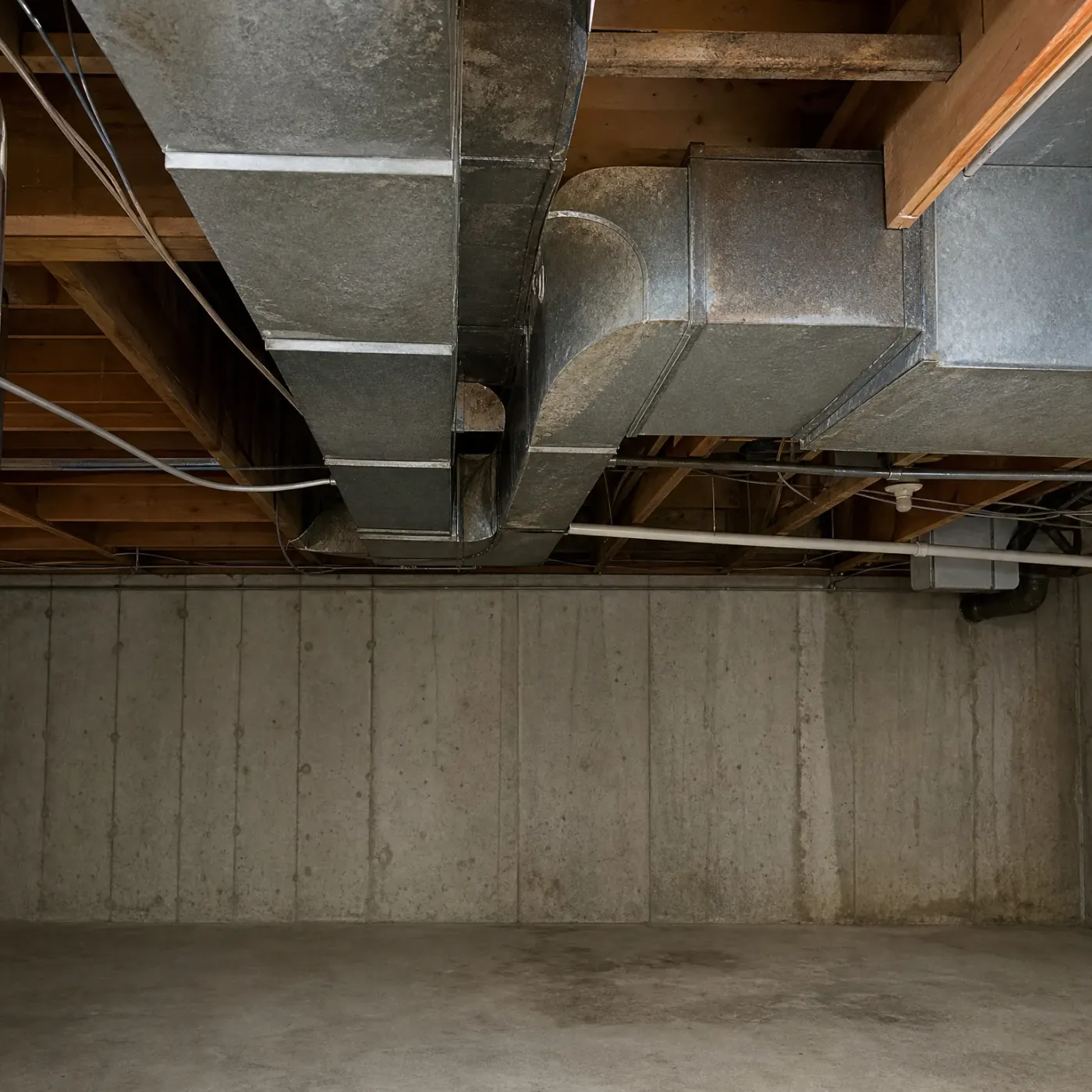
Unfinished basement with bare concrete walls and floor, and galvanized sheet-metal HVAC ducts, pipes and wiring running along the wood-joist ceiling.
Before you get your ductwork cleaning
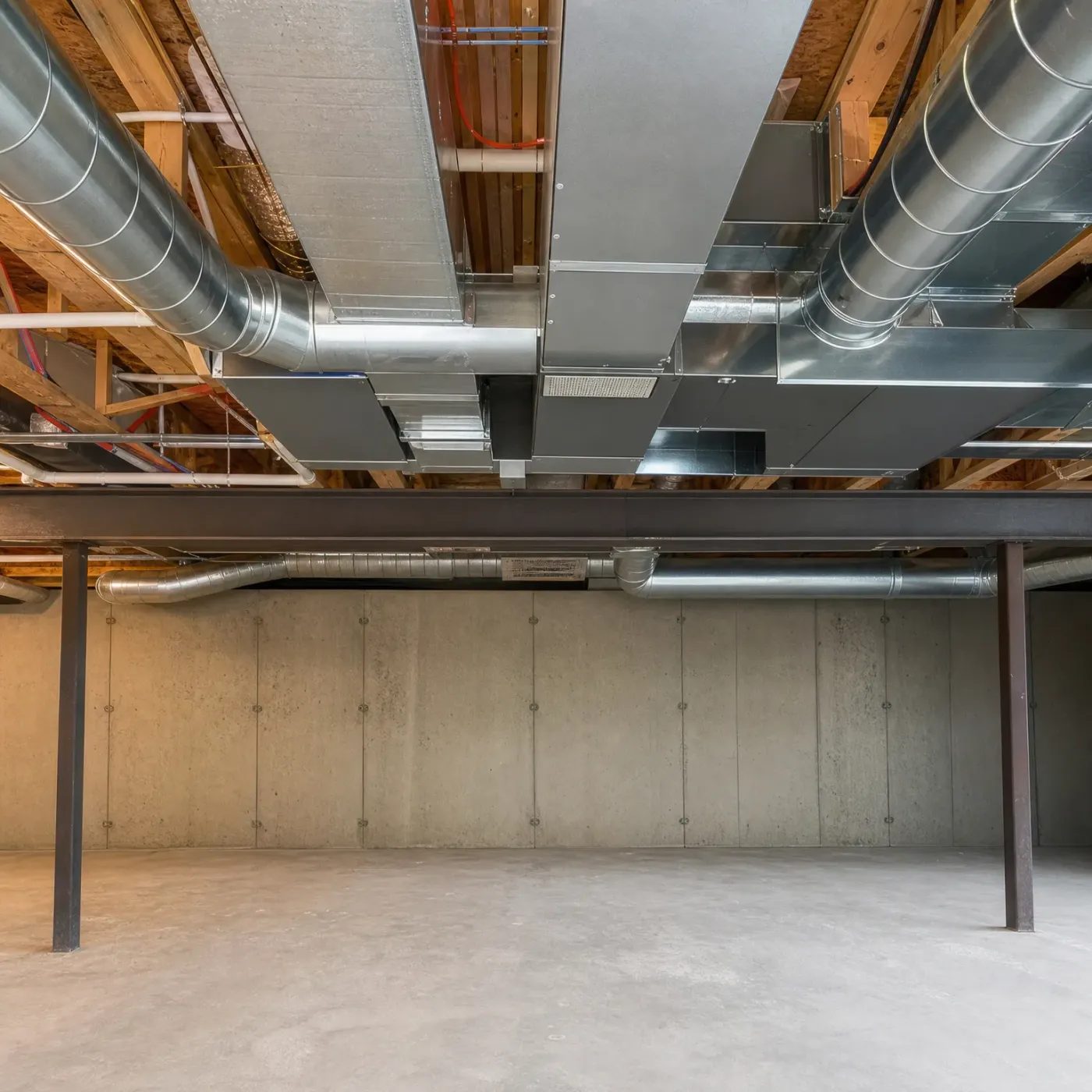
Unfinished basement with concrete walls and floor, a steel beam on posts, and exposed wooden joists with sheet-metal ductwork and piping overhead.
After you get your ductwork cleaning

Before you get your ductwork looked at

You're covering for the leak with higher settings and longer run times, paying for air that never reaches the register, and still guessing which rooms are losing it.

Find a licensed ductwork pro

After you get your ductwork sealed

Air goes where the furnace or AC sent it. Rooms even out, run times drop back down, and the bill reflects what your house actually needs.

Find a licensed ductwork pro
A woman stands in the open front doorway of a single-story house with a dark hipped roof and light siding, while a man in a navy jacket and cap is seen from behind in the foreground on the paved walkway.

How a duct leak shows up room by room

Supply ducts and return ducts do different jobs, and a leak in one shows up differently than a leak in the other. A supply duct carries heated or cooled air from the furnace to a room. A leak there means that room runs short, so you'll notice one bedroom colder than the rest or a register barely pushing air. A return duct pulls air back to the furnace to get reheated or cooled again. A leak on the return side pulls in air from wherever the duct runs, often a dusty attic or crawlspace, and sends it straight through your system. That's the duct work pulling in attic dust rather than losing conditioned air.

Knowing which side is leaking tells you something about where to look and what you're dealing with, but finding the actual joint usually means getting into the attic or crawlspace with the system running. A contractor who works on duct systems around Fort Wayne every week can tell a supply leak from a return leak by the symptoms you describe before ever opening a panel, and narrow down where to look once they're on site. If you request a match through this page, you'll hear from one contractor local to your area, not a handful competing for the job.

A shallow dark wooden bowl and a stack of books rest on a wooden table in front of a beige sofa with linen and green cushions, with a tall ceramic vase of thin branches beside a window in the background.
  1. Air leaves the furnace or AC through the supply plenum.

  2. Duct sections joined with screws and mastic carry it onward.

  3. Joints flex with every heating and cooling cycle.

  4. Tape and mastic dry out and crack over years of use.

A woman with dark shoulder-length hair sits wrapped in a gray fleece blanket on a sofa with an open book on her lap, beside a lit lamp and a dark window.
An older woman with short gray hair in a cream cable-knit turtleneck sweater smiles while looking to the side in a wooden kitchen, with a round loaf of bread on a board in the foreground and a lit candle by a dark window.

Power here costs 16.78 cents per kilowatt-hour

At 16.78 cents per kilowatt-hour, every bit of conditioned air that leaks out of a duct joint before it reaches a register still cost you to make. A leak that wastes a fifth of your airflow wastes a fifth of what you spend heating and cooling the house.

EIA-861 2025

What to do with what you've found

  • Uneven rooms, high bills, extra dust, and a furnace that runs long all point back to the same leaking joints.
  • Once you can name which signs you have, matching them to a supply leak or a return leak tells you roughly where to look.
  • A local contractor who services furnaces and ductwork in Allen County all winter has seen which joints in which homes give out first.
  • Sealing a leak doesn't move the walls of the house around it, so a room that runs cold now should hold heat once the duct behind it is fixed.
  • You'll be matched with one licensed contractor for your situation, not a handful of companies competing for the same call.
  • Whether the fix is a loose flex connection or a cracked seam at the plenum, finding it starts with someone who can see what you can't reach.

High bills, a cold bedroom, dust on the sills, a furnace that won't shut off. Each one by itself could mean something else, but together they point at the same thing: air leaving the ducts before it reaches where you need it. You don't have to figure out which joint or which room on your own. A contractor who works on furnaces and ductwork in Allen County through a full winter has crawled enough attics and basements to know which joints tend to go first in homes like yours, especially if yours was built in 1976 or earlier like half the houses in the county. They can find a leak you'd never reach, whether it's a flex connection that worked loose or a cracked seam at the plenum.

Fixing it doesn't change the size of the room or the layout of the house. It changes whether the air you paid to heat or cool actually gets there. A room that's run five degrees cold all winter should stop running cold once the duct feeding it is sealed. A furnace that's been running long should start cycling the way it was meant to.

When you request a match, it goes to one licensed contractor local to your area, not a batch of companies bidding for the same job. That's who shows up, and that's who you talk to about what they find.

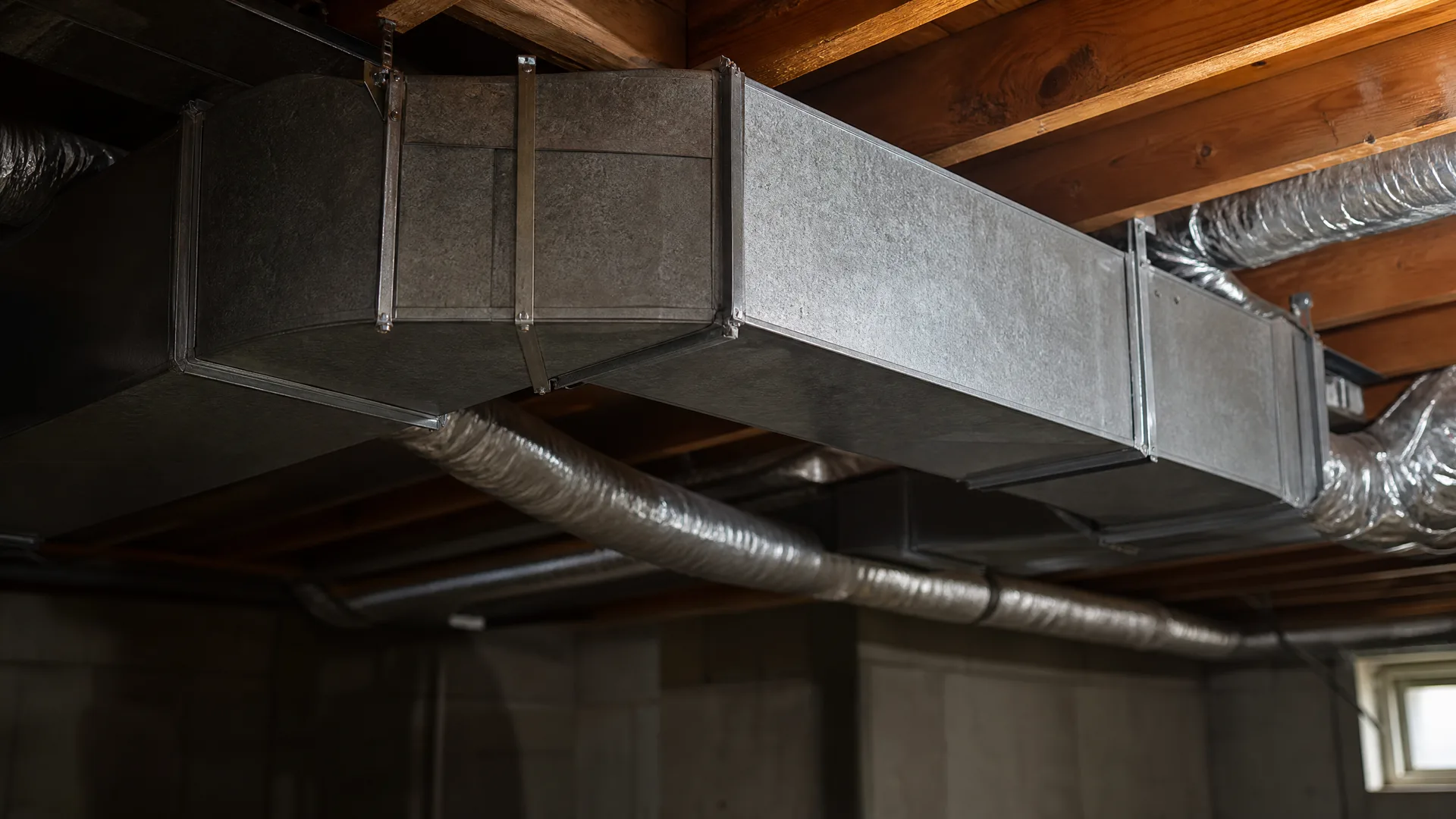
Rectangular sheet-metal HVAC trunk ducting and insulated flexible ducts running along wooden floor joists in an unfinished basement ceiling above concrete block walls.

Get the right pro for your ductwork

Duct and vent cleaningDucts or ventsAllen County, IN
Step 1 of 2

What ZIP code is the job in?