Mini Split Installation in Indianapolis, IN
A new system here will heat from October through May and cool from June through September every year. Tell us about the house, and a licensed contractor who covers Marion County will get in touch.
Tell us about the job
It takes about a minute.
Marion County asks a mini-split to work most of the year
Your mini-split needs to heat from October through May and cool through the summer, eight months of heating against four of cooling. On winter nights averaging 23°F, the heat pump has to pull warmth from air that's genuinely cold, not just cool. On summer afternoons near 83°F, it runs the other direction.
Any mini-split installed new has to meet the federal minimum for a split-system heat pump, 14.3 SEER2 for cooling and 7.5 HSPF2 for heating. Marion County has also logged 12 winter storms and 140 damaging wind events over the past ten years, and across Indiana, 17% of households lost power for at least 24 hours in 2024. A mini-split with a standard outdoor unit needs that power to run, same as a furnace or central air system would.
- 8 months
- October through May, your system heats
- 4 months
- June through September, it cools
- 23°F
- the average winter night it heats against
- 83°F
- the average summer afternoon it cools against
NOAA nClimDiv, 1991–2020 normals
In Indiana, HVAC licensing for homes is left to the counties and cities.
Marion County sets its own rule rather than following a state license. Whether this installer needs to be registered, and what that registration checks, depends on the local building office rather than a state board.
For a mini-split installation here, most cities and counties require a permit from that local building office, with an inspection once the work is done. That inspection is what checks the work, not a license number.
Sources: Indiana Department of Workforce Development · State of Indiana
- Is a mini split worth it?
- For the right space, yes. A mini split heats and cools without ductwork, so it works well for a room addition, a garage, or a house that relies on window units and space heaters now. Indianapolis winters average 23°F overnight through the coldest months, and a mini split rated for cold climates keeps working at those temperatures. Whether it makes sense for your house depends on how it's built and heated now, and a contractor can walk through that with you.
- How many rooms can a mini split cover?
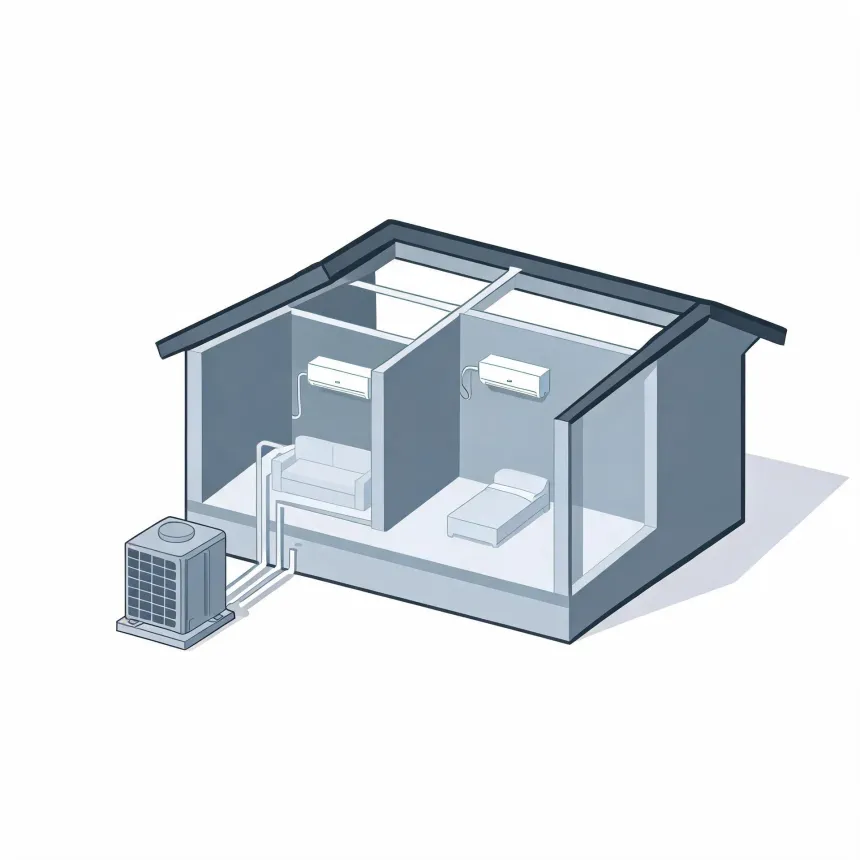
- A single outdoor unit can run one indoor head or several, depending on the system. Single-zone systems cover one room or open area. Multi-zone systems tie one outdoor unit to multiple indoor heads, each with its own thermostat, so you can heat or cool separate rooms independently. The number a given house can support depends on the sizing, and that's a job for whoever designs the system.
- Can a mini split heat a whole house?
- It can, if the system is sized and placed for the whole house rather than one or two rooms. That usually means a multi-zone system with an indoor head in each area that needs heat, or ductless heads paired with the existing setup in parts of the house that already have ductwork. Indianapolis homes need heat from October through May, so the system has to hold up on the coldest nights of the year, not just take the edge off in fall. A contractor can tell you whether your house is a good fit and how many zones it would take.