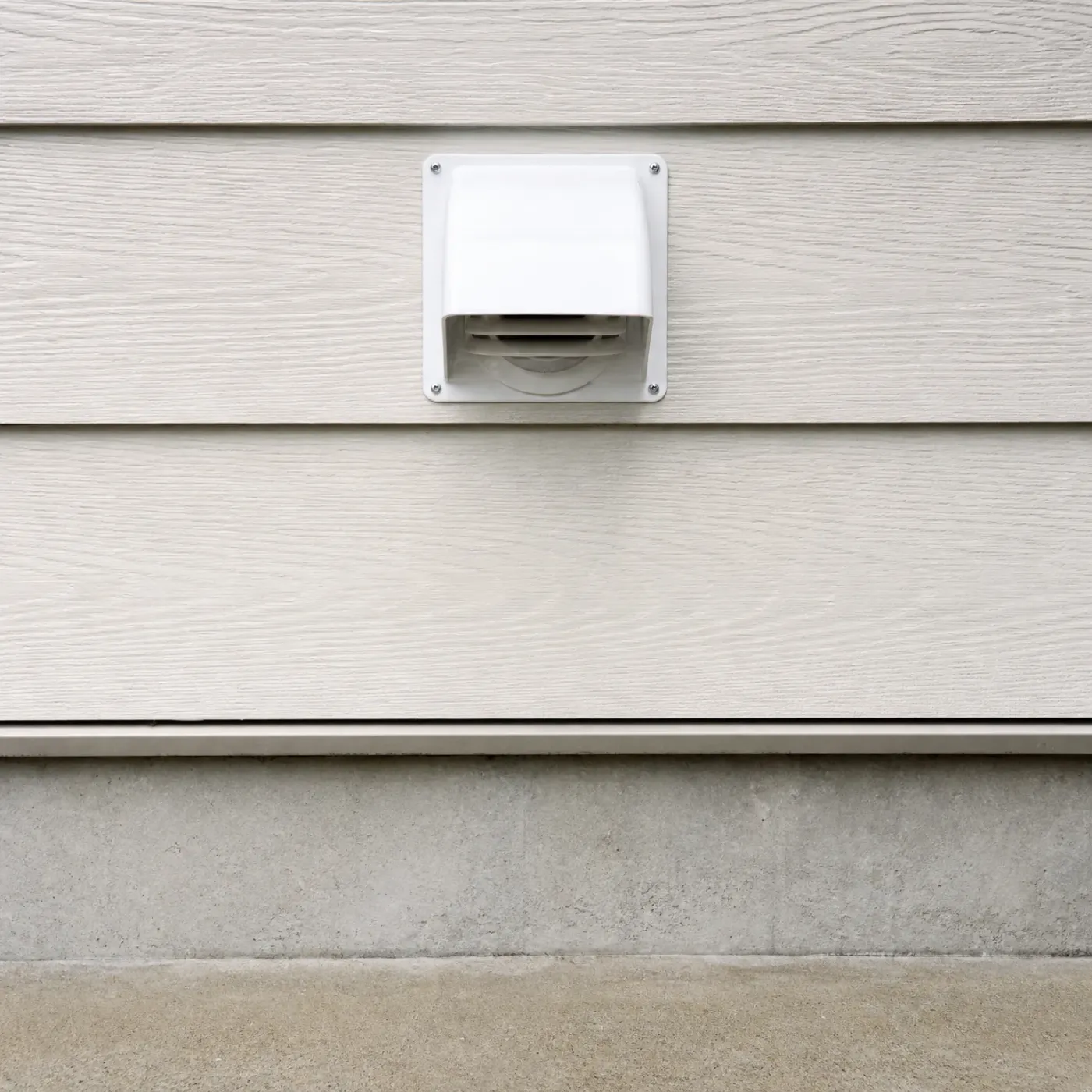
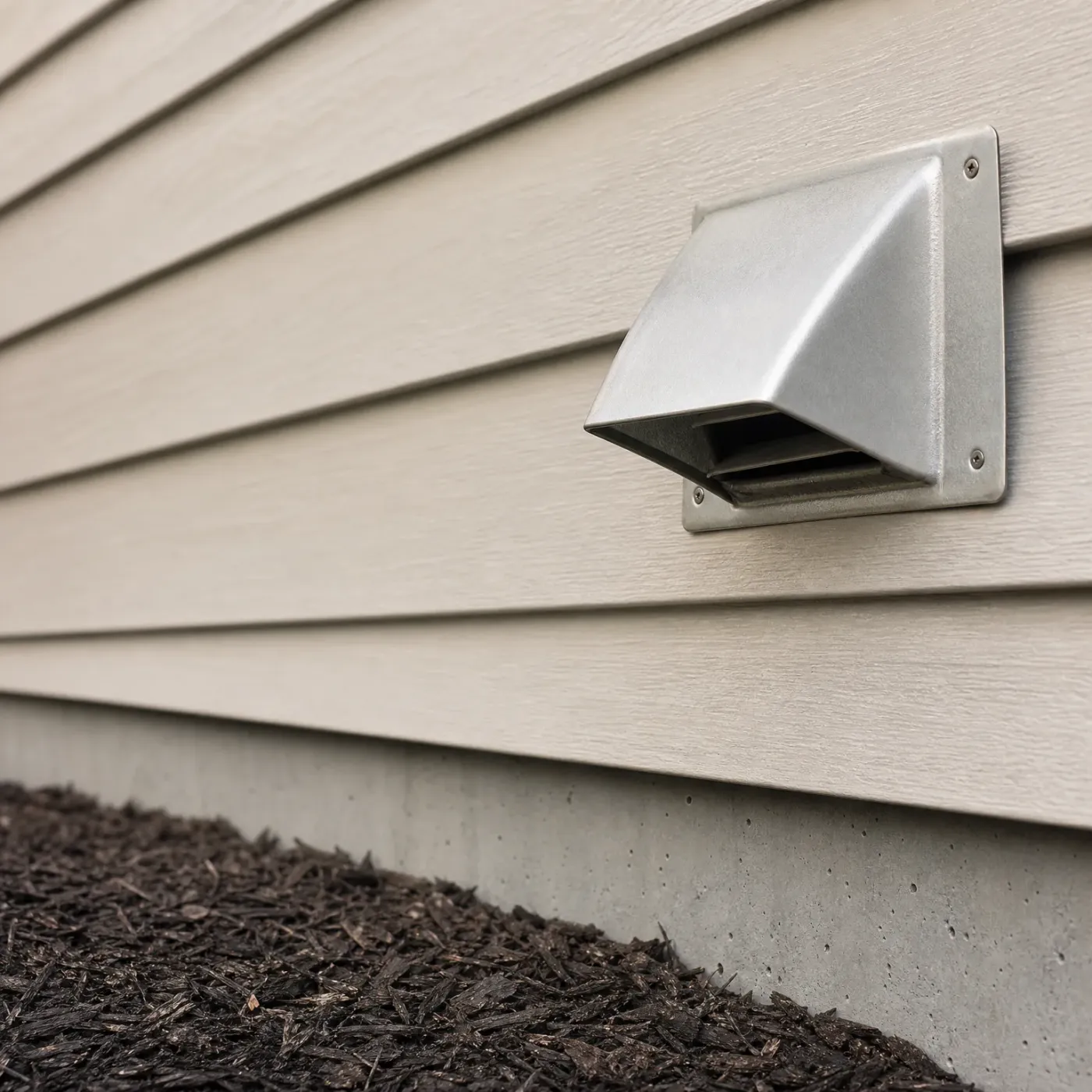
How often to clean a dryer vent in Hammond, IN

A square stainless steel wall vent with four corner screw holes and a hinged flap cover, partly open to reveal a dark circular duct opening, shown against a plain light gray background.
Send my request

Clean your dryer vent once a year. That's the standard most manufacturers set, and it's the right pace for a typical household in Hammond. Lint builds up inside the vent duct every time you run a load, and it doesn't travel the full distance to the outside hood. It collects along the way, narrowing the path hot air needs to escape. Once that path narrows enough, your dryer has to work harder to push air through, which means longer dry times and a motor running hotter than it should. If you run more laundry through your machine than a typical household, say a larger family or a home with a rental unit attached, cut that to every six months. A long vent run, one with several bends getting from the dryer to the outside wall, also fills with lint faster than a short straight one. A dryer that suddenly takes two cycles to dry a load that used to take one is telling you the vent is due now, regardless of the calendar.

A white hooded dryer vent with a square mounting plate screwed onto light gray horizontal vinyl siding, above a gray stucco-textured lower wall.
The hood flap moves freely and the air pushes out strong when the dryer runs, a sign the duct is clear from the drum to the outside wall.
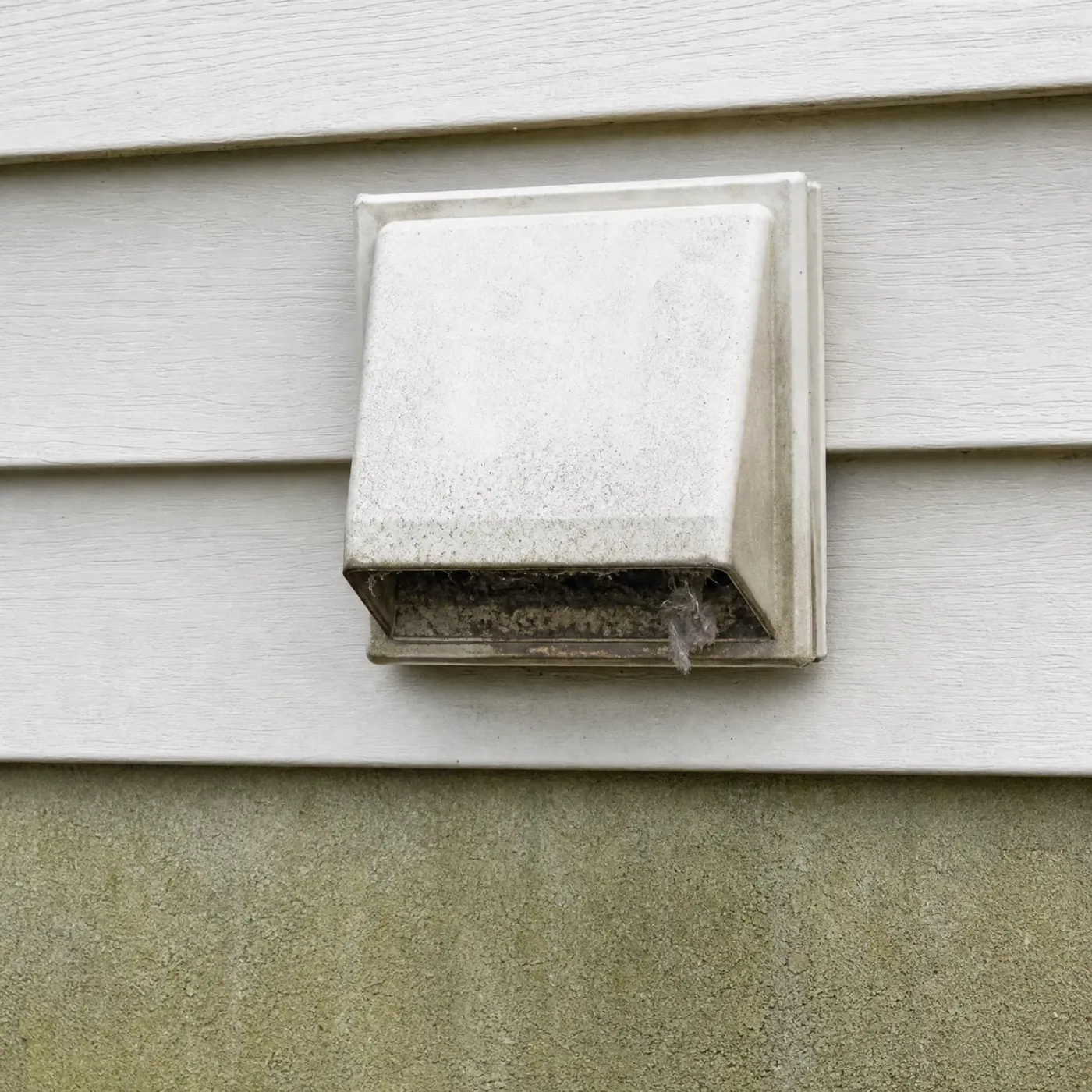
A white plastic dryer vent hood mounted on light-colored horizontal lap siding, with lint caught in its lower opening and a green-stained foundation wall below.
When lint packs the hood like this, the dryer has to push harder to vent, and that strain is what a once-a-year cleaning prevents.

How often should a household like yours clean the dryer vent?

  • 2.54 people per household on average

    With 2.54 people in the average Lake County household, laundry runs often enough that lint fills the duct back up well before a year is out.

  • Half the homes here were built by 1968

    Half the homes in Lake County were built in 1968 or earlier, and their duct runs tend to have more bends, which catch lint faster than a straight shot out.

  • Power here costs 21.86 cents per kilowatt-hour

    At 21.86 cents per kilowatt-hour, a dryer working against a lint-packed vent costs more to run every load until the duct is cleared.

ACS 2020-2024 · EIA-861 2025

A metal hooded dryer vent with a louvered opening mounted on gray horizontal lap siding, next to a plain off-white wall.

Why lint backs up so fast

Every load sends warm, damp air down the duct, and lint rides along with it. The bends where the duct turns toward the outside wall are where it catches first, long before the hood itself shows any sign of trouble. A duct that runs longer or turns more than once fills in faster than a short, straight run, which is why two homes on the same block can be due for cleaning at different times.

A stainless steel hooded dryer vent screwed to light gray horizontal lap siding, with a blank white wall occupying the left side of the frame.

What a clogged vent costs the dryer

A dryer pushes a fixed amount of air no matter what's in its way. When lint narrows the duct, the motor and the heating element both work harder to move that same air through a smaller space. Clothes take longer to dry, the outside of the dryer runs hotter than it should, and the extra strain on the heating element is the kind of wear that shortens how long the machine lasts.

Is your dryer taking longer than it used to?

You load the same amount of clothes you always have, but now it takes two cycles to get them dry, or the top of the dryer feels hot to the touch when it's running. The laundry room smells faintly of warm lint even after you've cleaned the trap. Clothes come out hotter than usual, and sometimes still a little damp at the end of a cycle. Outside, the vent hood flap barely lifts when the dryer is running, or doesn't move at all. These are signs the duct is packed with lint rather than just the trap. A blocked duct makes the dryer run hotter and longer than it should, and that heat has nowhere to go but back into the duct itself, which is how house fires start.

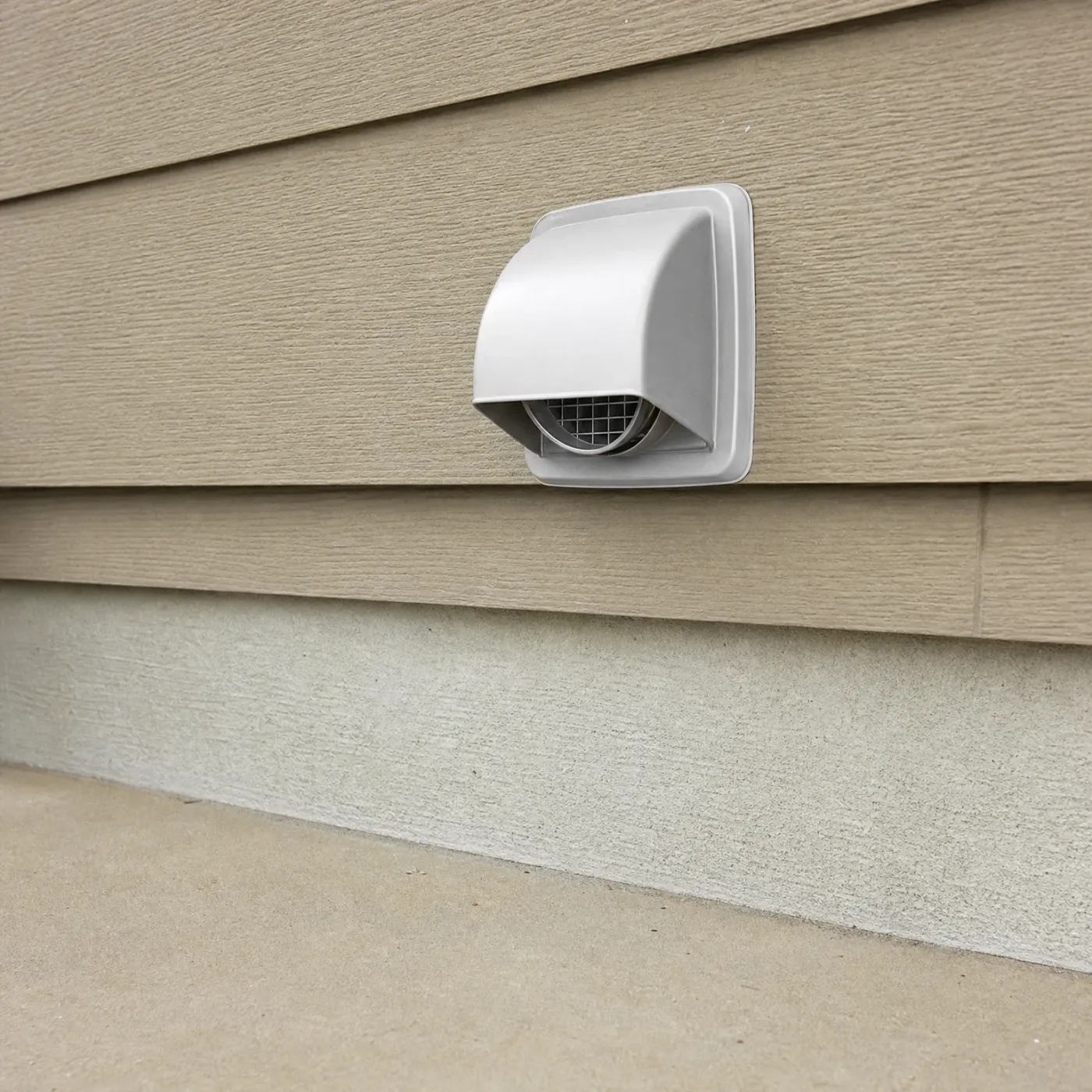
A white hooded dryer vent with a grille mounted on tan horizontal lap siding above a concrete slab.

Clear and venting well

The hood sits flush against the siding and the flap swings open on its own when the dryer starts. Air pushes out in a steady stream you can feel from a few feet away. That strong flow means the duct is open from the drum all the way to this wall.

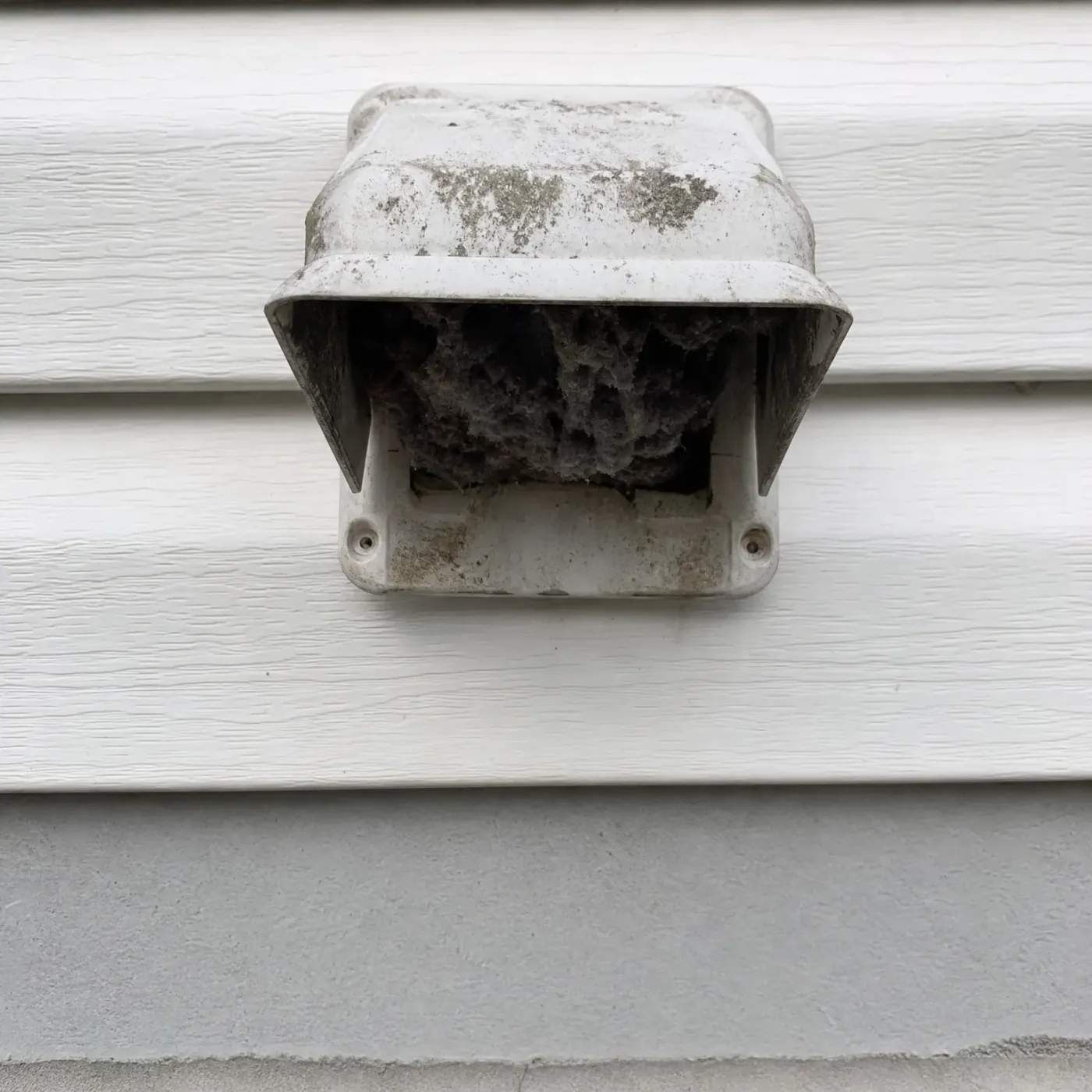
A white plastic dryer vent hood with a hinged flap mounted on light grey horizontal lap siding, with lint clogging the opening beneath the flap and a concrete foundation wall below.

Choked with lint

The flap can't close because lint has packed in behind it and spilled out around the edges. Air still escapes, but weakly, which means the dryer is working harder to push it through. Left alone, that buildup backs up further into the duct.

Can I clean the dryer vent myself or do I need a pro?

You can buy a brush kit at any hardware store, and running one through the vent from the dryer side feels doable. But most dryers in Hammond sit against an interior wall, which means a duct run with at least one or two bends before it reaches the outside. A straight push rod only clears a straight line.

A short straight run you can handle. Anything with bends or distance needs a pro.

If your dryer sits on an exterior wall with a short, straight shot outside, a vent brush kit can pull out what's within reach. Where the duct turns a corner or runs any real distance, a push rod from the inside won't reach the lint sitting past the bend, and pushing it from the hood end just packs lint deeper into the duct. A contractor uses a rotating brush system sized to the duct that clears the full run, bends included, and checks the hood flap and seal at the wall while out there. That matters more in Hammond, since a duct that isn't fully clear is also a duct that's working harder through a hard winter.

A man in a gray knit sweater stands smiling and looking off to the side beside a white marble kitchen island, with a dining table, pendant light, and open shelving in the background.
A smiling man with short dark hair and stubble in a gray sweater sits at a stone-topped counter with a white ceramic mug, in a room with a framed picture, a plant, and shelves holding bowls.
A smiling man in a dark navy sweater sits at a wooden kitchen counter with a light ceramic mug, with white tile backsplash, open shelving and a window with potted plants behind him.
A smiling man with dark hair and a beard, wearing a dark green knit sweater, stands at a kitchen counter with a ceramic mug, with an open living room, sofa, armchair and large windows behind him.
  1. Lint coats the inside of the duct with every load run.

  2. Bends and joints catch lint first and start to narrow.

  3. Airflow weakens, so the dryer runs hotter and longer.

  4. A brush and vacuum pass the duct end to end to clear it.

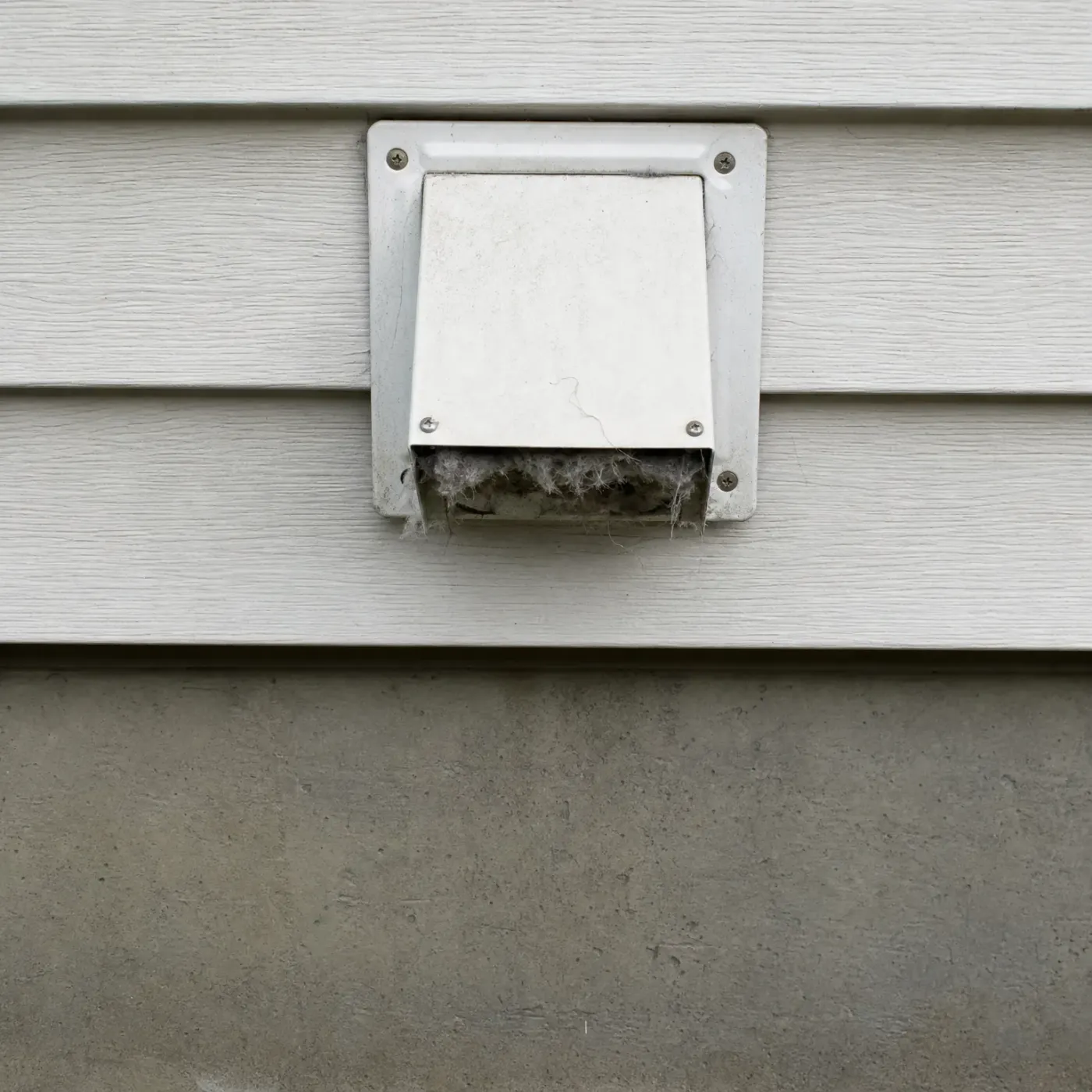
A white plastic dryer vent hood on horizontal lap siding, clogged with thick gray lint and dirt, above a lighter concrete foundation wall.
Before you get your dryer vent cleaning
A white hooded dryer vent with a louvered flap mounted on beige horizontal lap siding above a concrete foundation wall.
After you get your dryer vent cleaning
A metal hooded exterior dryer vent with louvered opening mounted on beige lap siding above a concrete foundation bordered by dark mulch.

Send one request and you're done looking

The pro who gets in touch is licensed in Indiana and works in Lake County.

Send it once and finding someone is no longer on you.

Let a pro reach out

No fee to send it, and nothing to sign.

2.54 people per household on average

At 2.54 people, most households here run close to a load a day. That keeps the dryer going often enough that lint has every chance to build up in the duct, which is why letting a year pass between cleanings is already asking a lot of the vent.

ACS 2020-2024

A pile of beige and navy towels sits on top of a white top-loading laundry machine in a dim room with a dark wall, wood floor, and a wooden shelf holding baskets and a plant.

It's almost nine on a Tuesday and you still haven't moved the towels. You switched them over after dinner, figuring forty minutes, same as always. Now the cycle's done twice and they're still damp at the folds, heavy and a little warm, piled on top of the dryer because the basket's already full of the next load. Outside the Lake County air has gone thick and sticky the way it does most summer nights, and the laundry room holds onto that same closeness, warmer than it should be with the dryer running. You press a hand against the towels again, hoping this time they'll be dry enough to just call it.

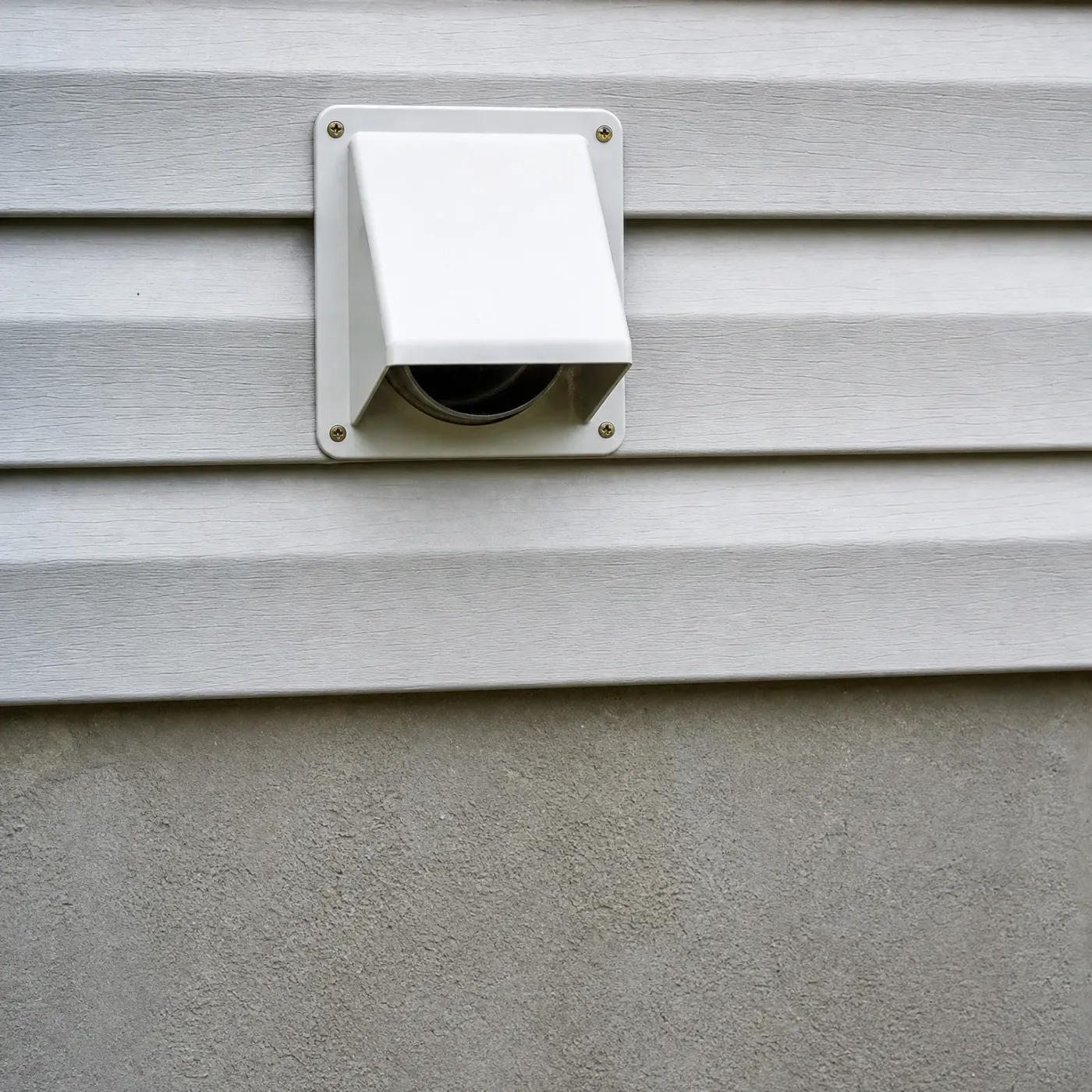
Clean on Schedule or Wait for Signs

Clean on schedule

  • A once-a-year clean keeps the duct open from the drum to the outside wall, so the dryer never has to fight its own exhaust.
  • You know the duct's condition going in, since the last clean set a clear starting point instead of a guess.
  • A scheduled clean happens before the dryer shows any strain, so you avoid the stretch of months where drying times creep up without you noticing.
  • It costs the same whether the duct is lightly coated or nearly packed, since the job is the same either way.
  • You pick the timing, which means it can happen on a weekend that suits you rather than when the dryer forces the issue.

Wait for signs

  • You save a visit in any year the duct turns out to still be clear, since you're only acting when there's a reason to.
  • Longer drying times, a hot top panel, or a burnt smell tell you plainly when the duct needs attention, so you're not guessing.
  • Waiting means the lint has longer to pack the bends near the hood, where it catches first and narrows the duct most.
  • A dryer running hot for months before you notice puts more strain on the heating element and the motor than a duct that's kept clear.
  • By the time the signs show up, the clean may take longer and cost more, since there's more lint built up to clear out.
A smiling man with short dark curly hair and stubble, wearing a navy T-shirt, sits on a beige sofa looking down toward a dark object in the foreground, with a living room, round mirror, lamp and bright window behind him.
A man with graying hair and a beard in a plaid flannel shirt stands indoors looking out a frosted window at snow-covered trees, with a ceramic mug on the sill.

Once a Year, One Call

  • Once a year clears the duct before lint narrows it enough to slow the dryer down.
  • A contractor who works Lake County homes every season already knows which duct runs clog first.
  • One licensed local contractor takes the job, so you're not fielding calls from several companies at once.
  • A dryer that's taking two cycles to dry a load is already telling you the vent needs attention now, not later.
  • Once the duct is clear, you'll feel it in the next load: shorter time, less heat at the top of the dryer.
  • Sending the request is the last step on your end; finding someone to do the work stops being your problem.

A once-a-year clean is the right pace for a dryer vent in a Lake County home, and now you know why: lint catches at the bends before it ever reaches the hood, and a year is already close to the limit before that buildup starts slowing the dryer down. If yours is taking two cycles to dry what used to take one, the vent is past due now, not next month. That's the state of things. What happens next is simpler than the diagnosis. A contractor who services dryer vents in Hammond and the towns around it has seen this same duct layout many times over, the same interior wall runs, the same joints that clog first, and knows where to look before taking the brush out of the truck. You send one request, and it goes to one licensed local contractor, not a handful of companies competing for the callback. No sorting through quotes, no explaining the problem five times over. Once that contractor clears the duct end to end, the difference shows up in the next load: the cycle finishes on time, the top of the dryer doesn't run hot, and the hood flap swings open the way it should when the dryer kicks on. From there the only thing left to track is the date, so next year's clean comes before the duct has a chance to narrow again. Sending the request is the last step that's yours to take.

A metal hooded dryer vent with a louvered opening mounted on dark gray horizontal lap siding, with leafy shrub foliage in the lower left corner.

Finding a pro stops being your job

A licensed pro who works in Lake County gets your request.

Duct and vent cleaningLake County, IN
Step 1 of 3

What kind of equipment?