
Furnace Installation in Plainfield, IN
A new furnace here will run from October through May every year. Tell us about the house, and a licensed contractor who covers Hendricks County will get in touch.
Tell us about the job
It takes about a minute.
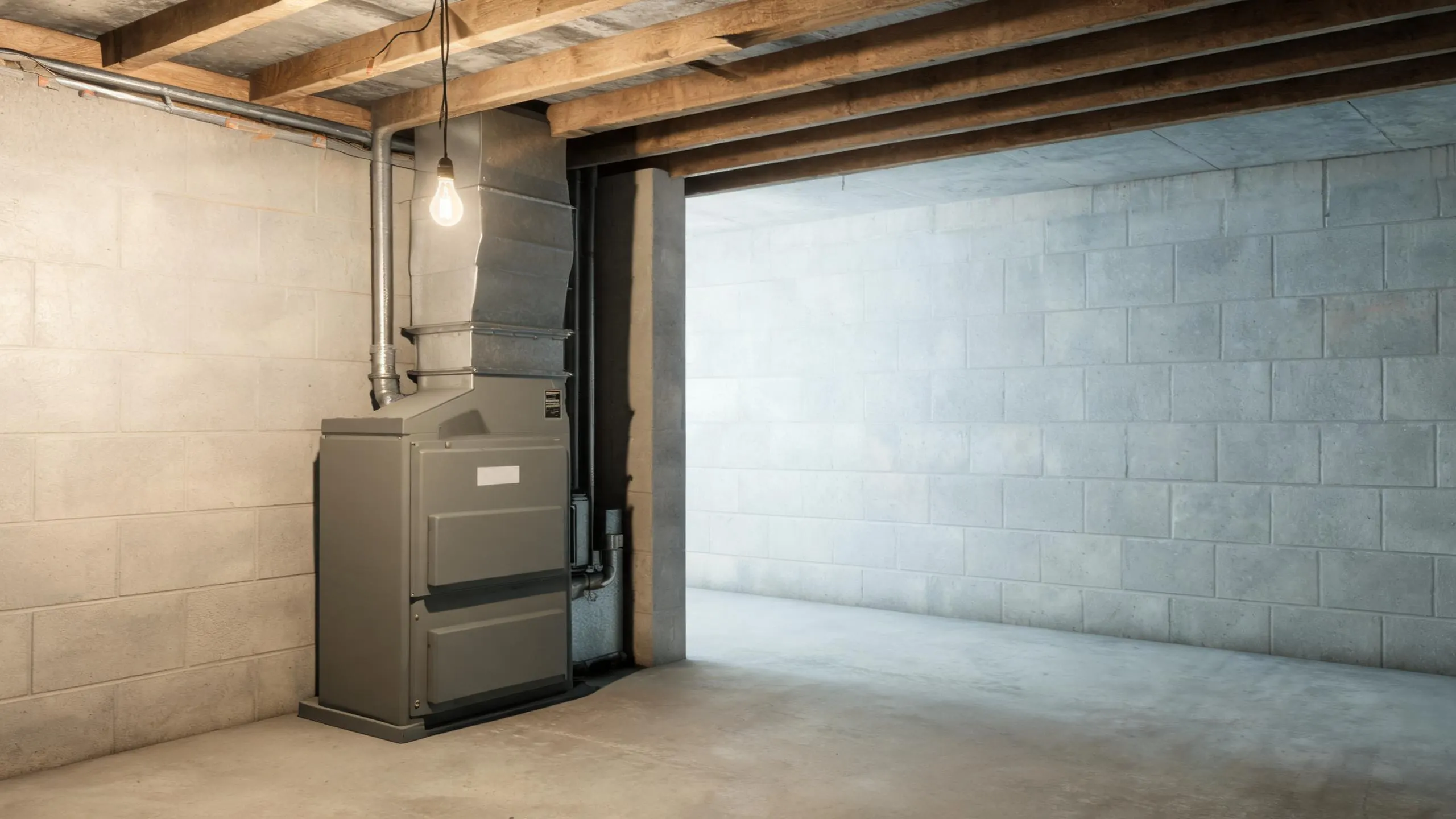
Eight months of heat, most of it in the cold
Plainfield needs a working furnace from October through May. That's 8 months a year, and the nights in the middle of it average 22°F. A new furnace here has to start reliably at that temperature, night after night, for most of the year.
55.1 percent of homes in the area heat with gas, and any non-weatherized gas furnace built since November 2015 has to hit at least 80 percent AFUE. That's the floor a new install has to clear. The county has also seen 10 winter storms and 71 damaging wind events over the past ten years, and in 2024 about 17 percent of Indiana households lost power for 24 hours or more. Whatever furnace goes in should be one that comes back on by itself once the power does.
- 8 months
- October through May, your furnace is on duty
- 22°F
- the average winter night it heats against
- 55%
- of homes here heat with gas, so most furnaces here burn gas
- 80% AFUE
- the federal minimum any new unit must meet
NOAA nClimDiv, 1991–2020 normals

A high-efficiency gas furnace would save about $90 a year to run in Hendricks County compared with a gas furnace.
Estimates for a typical Hendricks County home, from EIA household energy data, Indiana fuel prices and NOAA climate normals. Your home will differ.
In Indiana, HVAC licensing for homes is left to the counties and cities.
Hendricks County sets its own rule rather than following a state license, so what applies to this job depends on the local building office rather than a state board. No state agency tests or records HVAC contractors in Indiana, so that record, if it exists at all, is a county or city one.
For a furnace installation, the protection here comes from the permit process. Replacing a furnace in most cities and counties calls for a permit from the local building office and an inspection once the work is done, and that inspection is what checks the gas connection, the vent, and the wiring rather than a license number. In a county where 55.1% of homes heat with gas, that inspection is doing real work.
Sources: Indiana Department of Workforce Development · State of Indiana
- What size furnace does my house need?
- That takes a load calculation, not a square footage chart. A contractor measures your walls, windows, ceiling height, and insulation, then figures out how much heat your house actually loses on a cold night. Two homes the same size can need different sized furnaces if one has more windows or less insulation. With winter lows here averaging 22°F, getting this number right matters more than it would somewhere milder. A furnace that's too big cycles on and off too often, and one that's too small will run constantly and still struggle to keep up.
- How do I know it's time to replace my furnace?
- Watch for a furnace that cycles on and off more than it used to, rooms that stay cold no matter what the thermostat says, or a heating bill that keeps climbing without a reason. Age matters too. A furnace working hard for 8 months out of the year here, October through May, wears down faster than one running a few months in a milder climate. If a contractor is telling you the same part keeps failing, or the heat exchanger is cracked, that's a sign the furnace is done rather than in need of another patch. A contractor can look at the actual unit and tell you whether repair still makes sense or if it doesn't anymore.
- Is a high-efficiency furnace worth it?
- It depends on how many months your furnace runs and what fuel it uses. Homes here need heat from October through May, eight months of the year, so a furnace here works harder over its life than one in a place with a short winter. Since 2015, every new non-weatherized gas furnace has to hit at least 80 percent AFUE, so even a standard model wastes less fuel than older units did. A high-efficiency furnace pulls more heat out of the same amount of gas than that minimum allows, which matters more the longer your heating season runs. A contractor can walk through the options and what fits your house.