
Dryer Vent Cleaning in Plainfield, IN
Tell us about your home, and a licensed contractor who covers Hendricks County will get in touch.
Tell us about the job
It takes about a minute.

Cold vents make lint stick
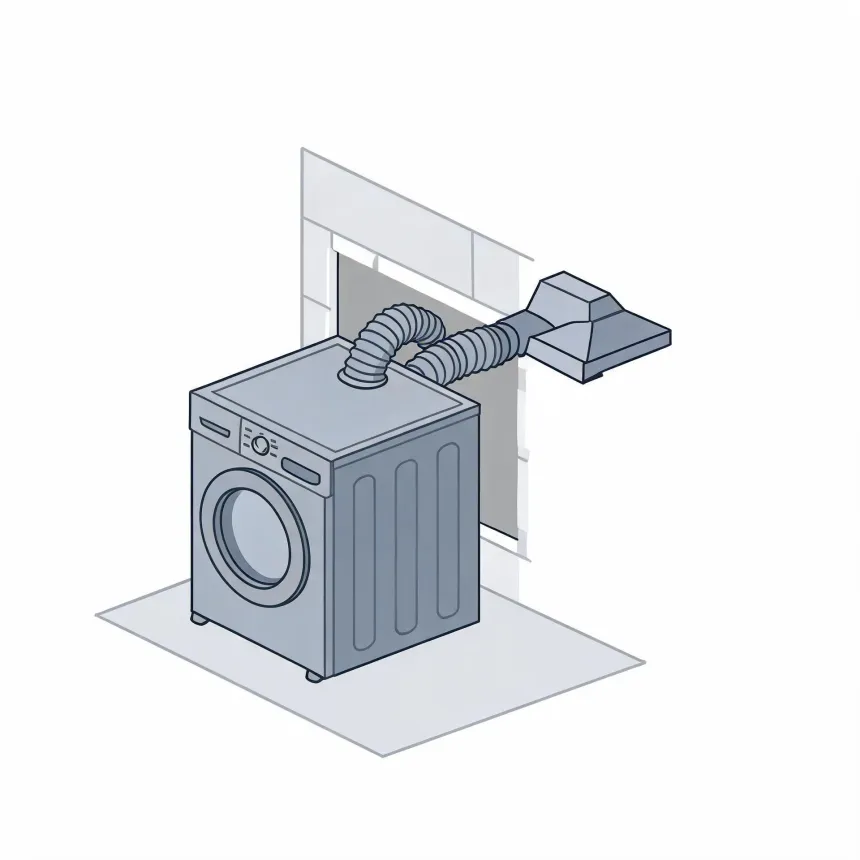
Your dryer pushes out warm, damp air, and that air has to travel through a vent that runs through cold space before it reaches outside. From December through February, nights here average 22°F, and the vent picks up that cold fast. Warm air hits those cold walls and cools down, and the moisture in it clings to the metal instead of carrying the lint straight out. Lint sticks to a damp wall far more than it sticks to a dry one.
Over a winter that runs eight months, that buildup doesn't get a break. Each load adds a little more to what is already stuck there, and the vent narrows from the inside out.
- 22°F
- the average winter night, and cold vents catch damp lint
- 8 months
- October through May, the vent stays cold
NOAA nClimDiv, 1991–2020 normals
- How often should a dryer vent be cleaned?
- Once a year is the standard advice for most households, and it's worth sticking to whether or not you notice a problem. Lint builds up along the inside of the duct even when the lint trap looks clean, and that buildup is what slows the dryer down and raises the risk of fire. A contractor can tell you if your setup needs it more often once they've seen the vent run.
- Can I clean my dryer vent myself?
- You can clean the first few feet yourself, but you likely can't reach the whole run. A vent brush kit will get lint out near the dryer and near the outside hood, but most homes have several feet of duct in between, sometimes with a bend or two, and that middle section is where lint tends to collect. A contractor uses a rod and brush system built to clear the full length and check that the outside hood flap opens freely.
- What are the signs of a clogged dryer vent?
- Clothes that take more than one cycle to dry is the clearest sign. Others include the outside of the dryer feeling hot to the touch, a burning smell during a cycle, and little to no airflow at the outside vent hood when the dryer is running. If you see lint gathered around the hood flap outside, that's a sign the duct behind it is holding lint too.