AC Repair in Jeffersonville, IN
Air conditioners here run from May through September. If yours quits, tell us what it's doing and a licensed contractor who covers Clark County will get in touch.
Tell us about the job
It takes about a minute.

Five months of Jeffersonville heat, plus what the storms leave behind
From May through September your air conditioner is working most days, with summer afternoons averaging 86°F. That kind of steady run time wears on the capacitor and the contactor, the parts that get the compressor started and keep it running. When one of those goes, the unit hums but the compressor won't kick on, or it shuts off on its own before the house cools down.
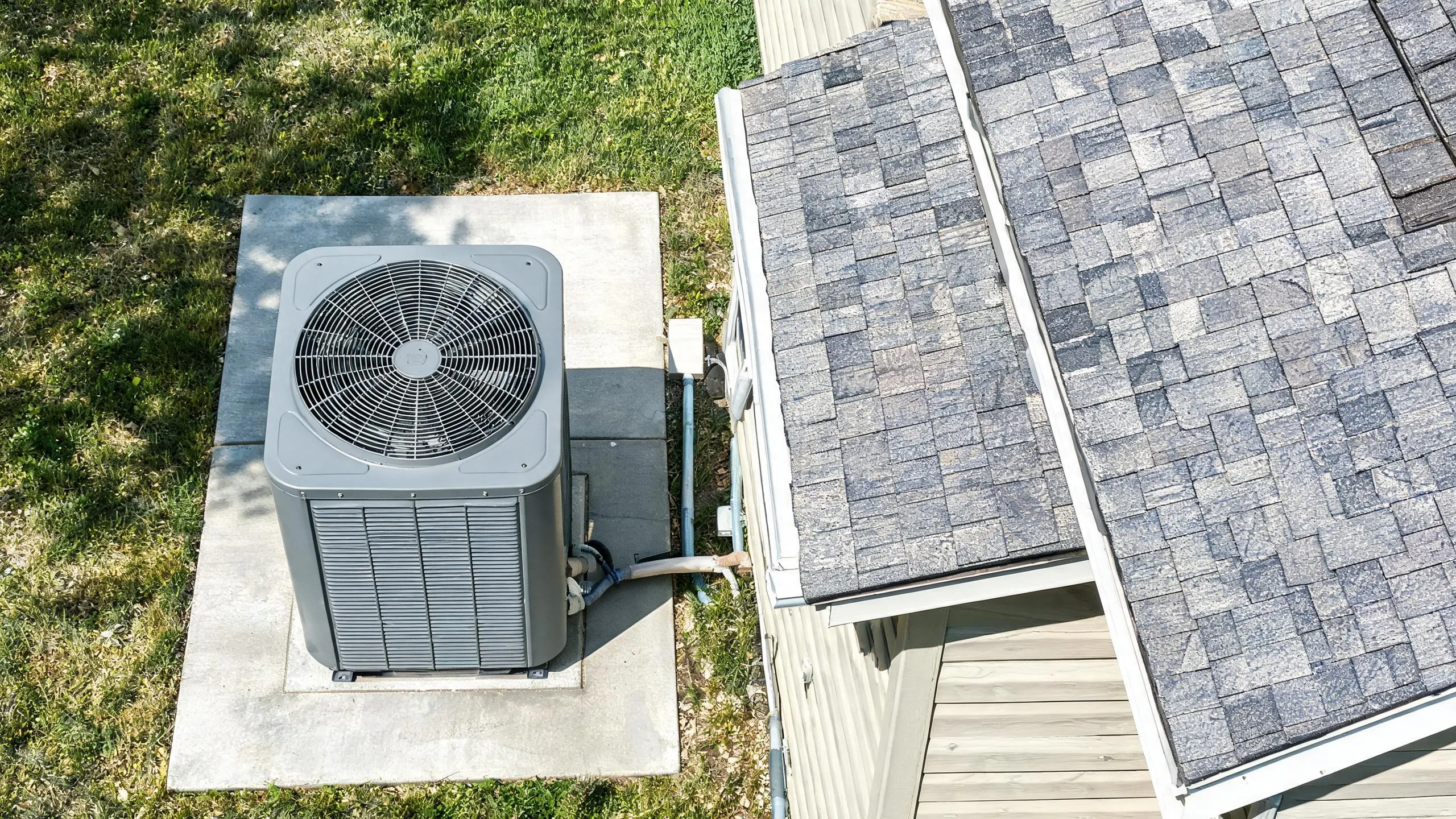
Clark County has also seen 38 hail events and 79 damaging wind events over the past ten years, with hail up to 1.75 inches. That kind of storm bends the thin fins on the outdoor coil and can knock the unit out of alignment. If your air conditioner started struggling right after a storm came through, the outdoor unit is where to look first.
- 5 months
- May through September, your air conditioner is on duty
- 86°F
- the average summer afternoon it cools against
- 38 hail events
- in ten years, and hail bends the fins on outdoor coils
- 79 wind events
- in ten years, and wind drives debris into outdoor units
NOAA nClimDiv, 1991–2020 normals

A new air conditioner would cut about $30 a year off cooling for a typical Clark County home.
Estimates for a typical Clark County home, compared with an older unit built to the previous federal minimum, from EIA household energy data, Indiana fuel prices and NOAA climate normals. Your home will differ.
Repair makes sense when a part like a capacitor or contactor has failed.
Replacement makes sense when the compressor has failed or the system uses R-22 refrigerant, which is no longer made.
In Indiana, HVAC licensing for homes is left to the counties and cities.
Clark County sets its own rule for who can do HVAC work on a home there, since Indiana leaves that decision to local government. Whether a contractor needs a local license, and what that license checks, depends on what the county or city requires. There is no state record to fall back on either way.
What does apply everywhere, including Clark County, is the EPA Section 608 certification. Your air conditioner has a sealed refrigerant circuit, and federal law requires anyone who opens it to hold that certification, regardless of what the county does or does not require. That is not a local license and it is not proof of general skill. It is the one credential that follows the refrigerant, not the address.
Sources: Indiana Department of Workforce Development · State of Indiana
- Why is my AC not blowing cold air?
- The most common cause is a dirty air filter choking off airflow across the coil. Once that happens the coil can ice up, and iced-over air coming through the vents turns warm or weak. Low refrigerant from a leak causes the same symptom, but that needs a gauge and a licensed hand to check and fix. Start by pulling the filter and looking at it in the light. If it's gray and packed with dust, that's likely your answer, and a new one takes care of it. If the filter is clean and the air is still warm, the problem is inside the system and it's time to call someone.
- Why is my AC leaking water?
- Water around your indoor unit almost always means the condensate drain line is clogged. Your AC pulls moisture out of the air while it runs, and that water is supposed to travel out through a drain line to the outside. Algae and dust build up inside that line over months of use, and once it clogs, the water backs up and drips out of the unit instead, sometimes into the drain pan and sometimes onto the floor or ceiling below it. A frozen coil that's now thawing can also leak more water than the pan can hold. Either way, shut the system off if you see standing water and have someone clear the line before it damages the floor or ceiling.
- Why won't my AC turn on?
- Start with the thermostat. Make sure it's set to cool and set below the room temperature, and check the batteries if the screen looks dim or blank. If the thermostat looks fine, go check the breaker panel. A tripped breaker will shut the whole system down, and outdoor units can trip one during a bad storm. If the breaker is fine and the thermostat is set right and the system still won't respond, the problem is inside the unit and needs a contractor to look at it.