







Indiana HVAC Guide

Why your house is so dusty in South Bend, IN

Skip the search

Dust that keeps coming back usually means the duct system is feeding it into every room. In St. Joseph County, where the furnace runs hard through a long winter and the AC works through a sticky summer, that system is moving air through your house for most of the year. Figuring out why takes someone who can actually look at your ducts, your filter setup and your equipment, not a guess over the phone. Finding that person usually means searching around, calling a few companies, explaining the same problem to each one, then sorting through quotes that are hard to compare. This page connects you with one local contractor who works on duct systems around South Bend every season and knows what tends to cause this here. No other companies calling you about the same job. Tell them what you're seeing once, and let them take it from there.

Why is my house so dusty all the time?

You dust the shelves on Saturday and by Wednesday there's a film on them again. It's not just this week either, it's been like this for months, no matter how often you clean. Something is putting that dust back into the air, and it's worth knowing what before you keep fighting it by hand.

Your ducts are likely spreading it room to room

Every time the furnace or the AC kicks on, air moves through the same ducts, in and out of every room, all day. If there's dust built up inside them, or a return pulling in air from a dusty basement or attic space, that dust rides along and gets delivered right back into your living room and bedrooms. In St. Joseph County, the furnace runs for months on end through the winter and the AC runs hard all summer, so that air moves constantly for most of the year. A dirty filter makes it worse, but even a clean one won't catch what's already loose inside the ducts themselves.

A dimly lit living room corner with a gray wall, framed picture, a table lamp on a wooden side table, a beige sofa with pillows, a ceiling vent, and windows showing flowering trees outside.

You notice it on a Saturday afternoon in April, sun coming low through the window. Looking up at the ceiling vent, you see the grille has a gray edge around it, like a shadow that shouldn't be there. You wipe the end table below it and the cloth comes back dull after an hour. Outside, South Bend is finally warming up, windows cracked for the first time since fall. Inside, the furnace clicked off a while ago and the air feels still. You run a finger along the grille slats and it comes away coated. The table will need wiping again before dinner.

Why does dust build up in your home so fast?

  • Half the homes here were built by 1968

    Half the homes in St. Joseph County were built in 1968 or earlier, so a lot of duct systems here are old enough to have loose joints and years of buildup inside them.

  • Heat runs October through May

    Heat runs October through May here, about eight months a year, and every one of those months the furnace is pushing air, and whatever is in the ducts, into your rooms.

  • Cooling runs June through August

    Cooling runs June through August, so for the other three months the AC takes over that same job, which means the ducts are moving air through your house almost year-round.

ACS 2020-2024 · NOAA nClimDiv 1991-2020

Keep dusting and the film comes back in a few days, because the ducts are still feeding it into the room every time the furnace or the AC kicks on.

Have the duct system cleaned and there's nothing left inside to put back on the shelves, so what you wipe down stays that way.

A smiling woman in a cream knit sweater sits at a marble counter with a glass of red wine, with a dining table, pendant lights, and French doors in the dim background.
A smiling woman with long dark hair in a cream sweater sits in a dimly lit open-plan home interior, with a glass of red wine in the foreground and a dining table, fireplace and shelving behind her.
A woman with long dark hair in a black turtleneck laughs while seated at a light stone counter with a glass of red wine, in a dimly lit interior with a potted plant, framed pictures and a hanging lamp behind her.
A woman in a dark sweater laughs while seated at a white marble counter with a glass of red wine, in a dimly lit open-plan interior with a pendant lamp and dining table behind her.

How Dust Gets Into Your Ducts

  • Return air pulls household dust into the duct system before the furnace or AC ever runs.
  • Dust that's heavier than the filter can trap settles on the inside walls of the duct instead of blowing through.
  • Every time a supply register fires, moving air stirs that settled dust and carries some of it into the room.
  • Joints in sheet metal ducts loosen over years, and the gaps let in attic or crawlspace dust the filter never touches.
  • A furnace blower moves the same house air hundreds of times a day, so even a small buildup gets recirculated constantly.
  • Dust mixed with moisture from summer humidity can stick to duct walls and flake off later instead of staying put.

Air in your house doesn't just sit still. The furnace or AC pulls it in through the return, pushes it past the filter, and sends it back out through the supply registers in every room. That cycle runs constantly, which is why the air in a duct system moves far more often than you'd guess over the course of a day. The filter catches a lot of what passes through it, but not everything. Finer dust, the kind too light to settle fast and too fine for some filters to grab, rides along the duct walls instead. Once it's there, it tends to stay there until something stirs it loose. That something is usually just the next time the blower kicks on. Moving air brushes along the inside of the duct and carries a little of that dust out into the room with it, register by register, day after day. Sheet metal ducts also shift slightly as they heat and cool with the seasons, and over years the joints can loosen enough to pull in dust from the attic or crawlspace, air that never passed through the filter at all. Summer humidity adds another layer to this. Moisture in the duct can make dust stick to the walls for a while, then let go later as the air dries out, which is part of why the problem seems to come and go instead of building steadily.

A smiling man with curly graying hair and a dark knit sweater sits at a candlelit dinner table with a glass of red wine, a water glass and a bowl of salad in the foreground, in a dimly lit room with a lamp, framed picture and window behind him.
A woman in a cream knit sweater reclines on a gray sofa with her eyes closed and a slight smile, covered by a fleece blanket with a closed book on her lap, a lit table lamp and potted plants behind her.
Galvanized sheet metal trunk ductwork with a round branch and register running beneath wood floor joists in an unfinished basement, alongside pipes, wiring, a steel beam and concrete walls.

No calling every shop in St. Joseph County

The pro who gets in touch is licensed in Indiana and works in St. Joseph County.

Answer a few questions about the duct cleaning and skip the search.

Skip the calls

It costs nothing to send, and you don't have to hire anyone.

Clean It Once, or Find the Source

Clean once and ignore it

  • Dust comes back within a few days because the ducts are still full of what's left behind and the furnace keeps pushing it out.
  • You're back to wiping the same shelves every few days instead of once a week.
  • Whatever triggered the buildup, a loose joint, a cracked return, construction dust that got in early, is still in there doing the same thing.
  • The next cleaning doesn't go any further than this one did, so you're paying for the same partial fix twice.
  • If a duct run is actually damaged, cleaning it out doesn't stop it from refilling with the next heating or cooling cycle.

Have it inspected and cleaned

  • A local contractor who works on duct systems through St. Joseph County winters and summers knows what usually turns up in a system this old.
  • Fixing a loose joint or a damaged run means the dust has nowhere to come from, so a cleaning actually holds.
  • One contractor handles both the inspection and the cleaning, so you explain the problem once instead of repeating it to several companies.
  • You skip the work of calling around and comparing quotes from a handful of duct companies on your own.
  • Once the source is found and closed off, the air coming out of the vents stops carrying it room to room.
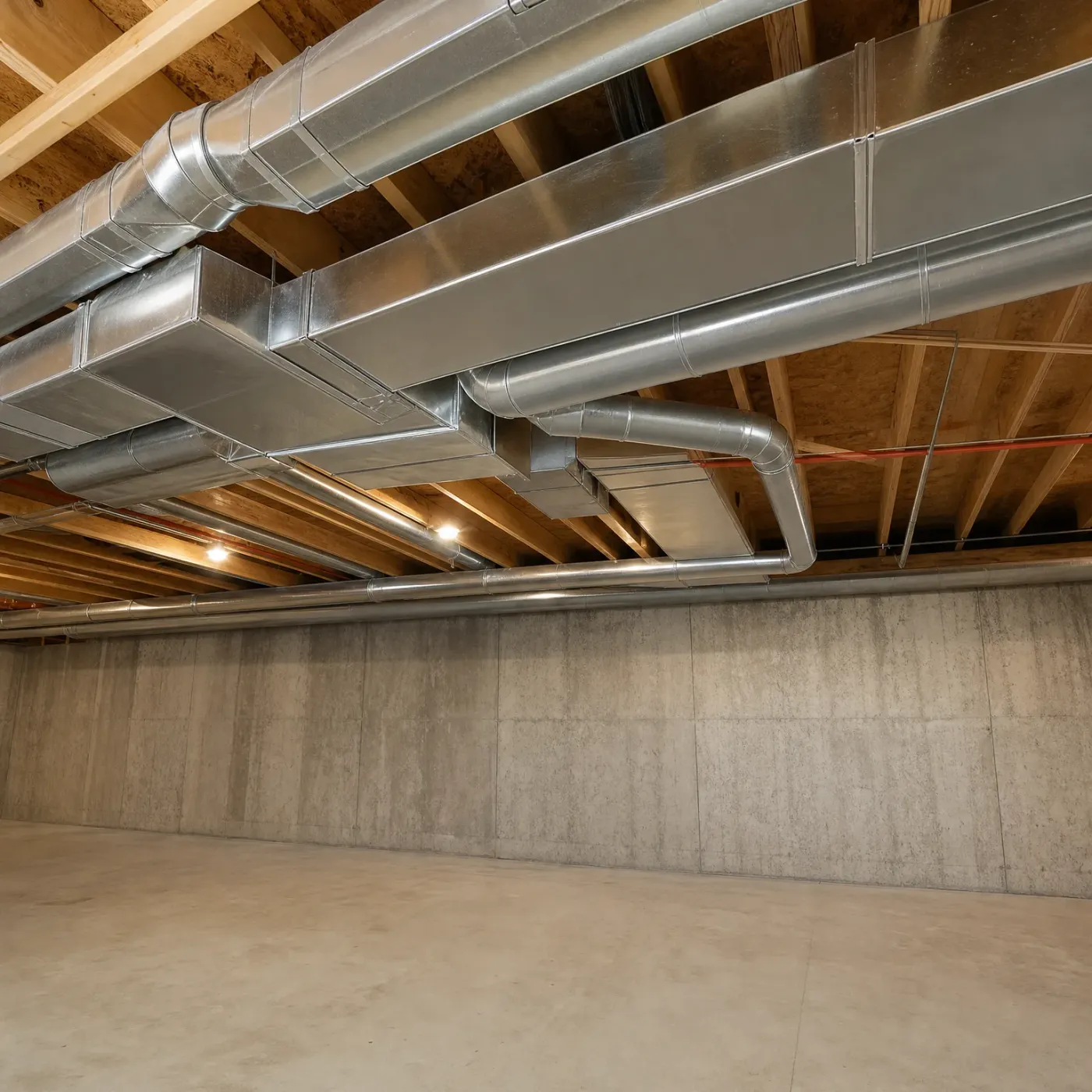
Unfinished basement with bare concrete walls and floor, exposed wood joists, and large sheet-metal HVAC ducts and pipes running along the ceiling.

Ductwork doing its job

This is what a duct system looks like when it's moving air clean. The runs carry heat to every room all winter and cold air all summer, and what comes out the register is just air. Nothing on the walls inside to shake loose, nothing to feed back into the room.


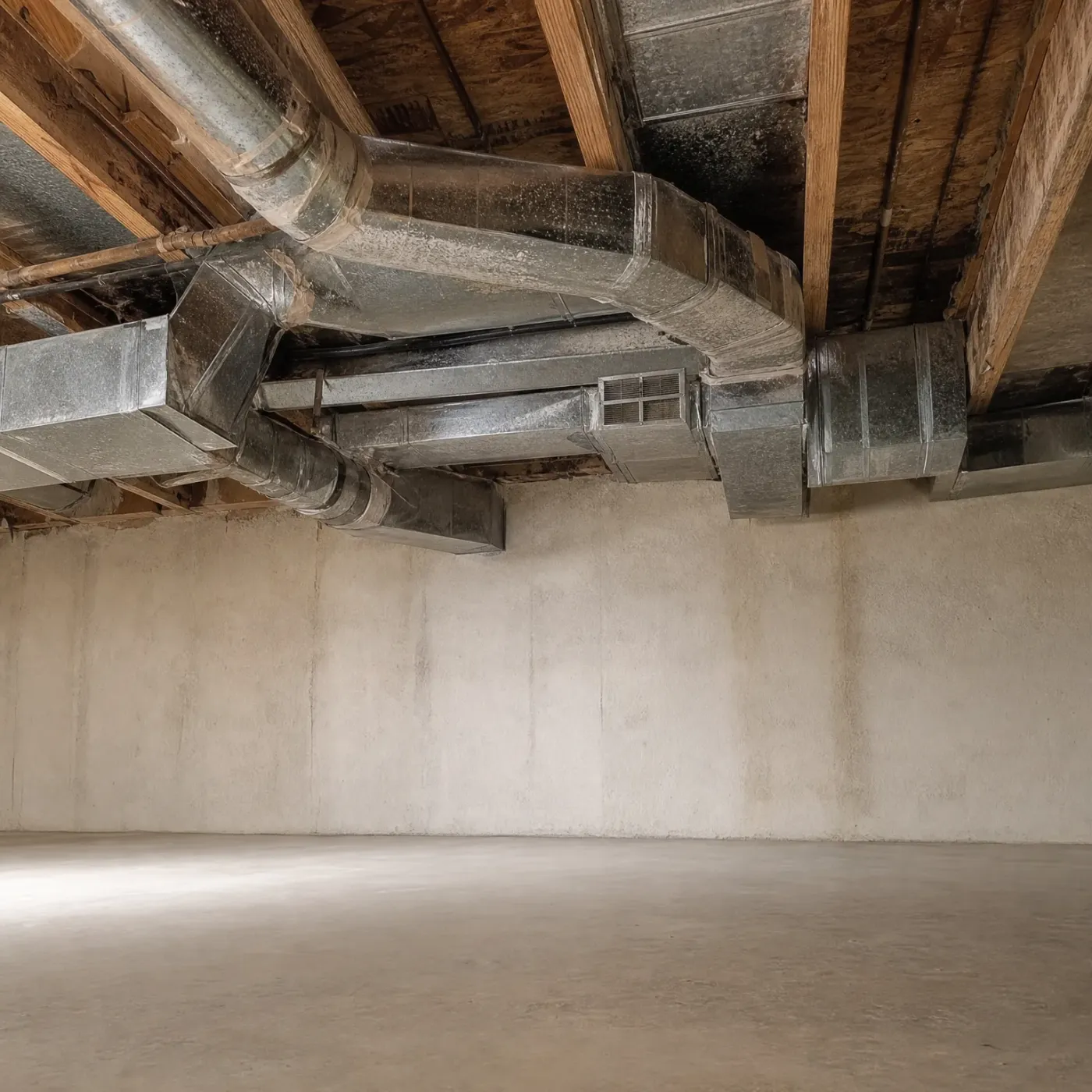
Basement interior with galvanized rectangular and round sheet-metal ductwork and copper piping running below a wood-joist ceiling, above a concrete wall and bare concrete floor.

Ductwork feeding dust back

Same kind of ductwork, but years of buildup line the inside now. Every time the furnace or the AC kicks on, that buildup stirs and some of it rides the airflow out through the registers. You can clean the house all you want. It keeps coming from here.

A wooden table in the foreground holds a closed laptop and a ceramic mug of coffee, with a spindle-back wooden chair behind it, a beige wall with paneled wainscoting, a window at left, and a kitchen counter with a cutting board, bowl of fruit and greenery at right.

What this does to the actual rooms you live in

Think about the rooms you use most. The vent in the living room, the one over the kitchen table, the one in your bedroom where you breathe all night. If the ducts feeding those rooms are carrying buildup, that's where the dust lands hardest, and it's the same rooms you already wipe down most often. Furniture gets a film faster near a supply register than it does in a room you keep the door shut on. If you've noticed one room always seems worse than the others, the duct run behind that register is probably why.

Finding someone to deal with this usually means calling around, explaining the same problem three or four times, and sorting through quotes that don't say the same thing twice. This page connects you with one licensed contractor local to St. Joseph County, someone who cleans duct systems in homes like yours every season and knows what a system this age usually has sitting in it. You explain it once.

A mug and a small round vase sit on a wooden windowsill beside sheer and heavier curtains, with blurred autumn trees seen through the rain-speckled window and a sofa with cushions and a throw in the foreground.
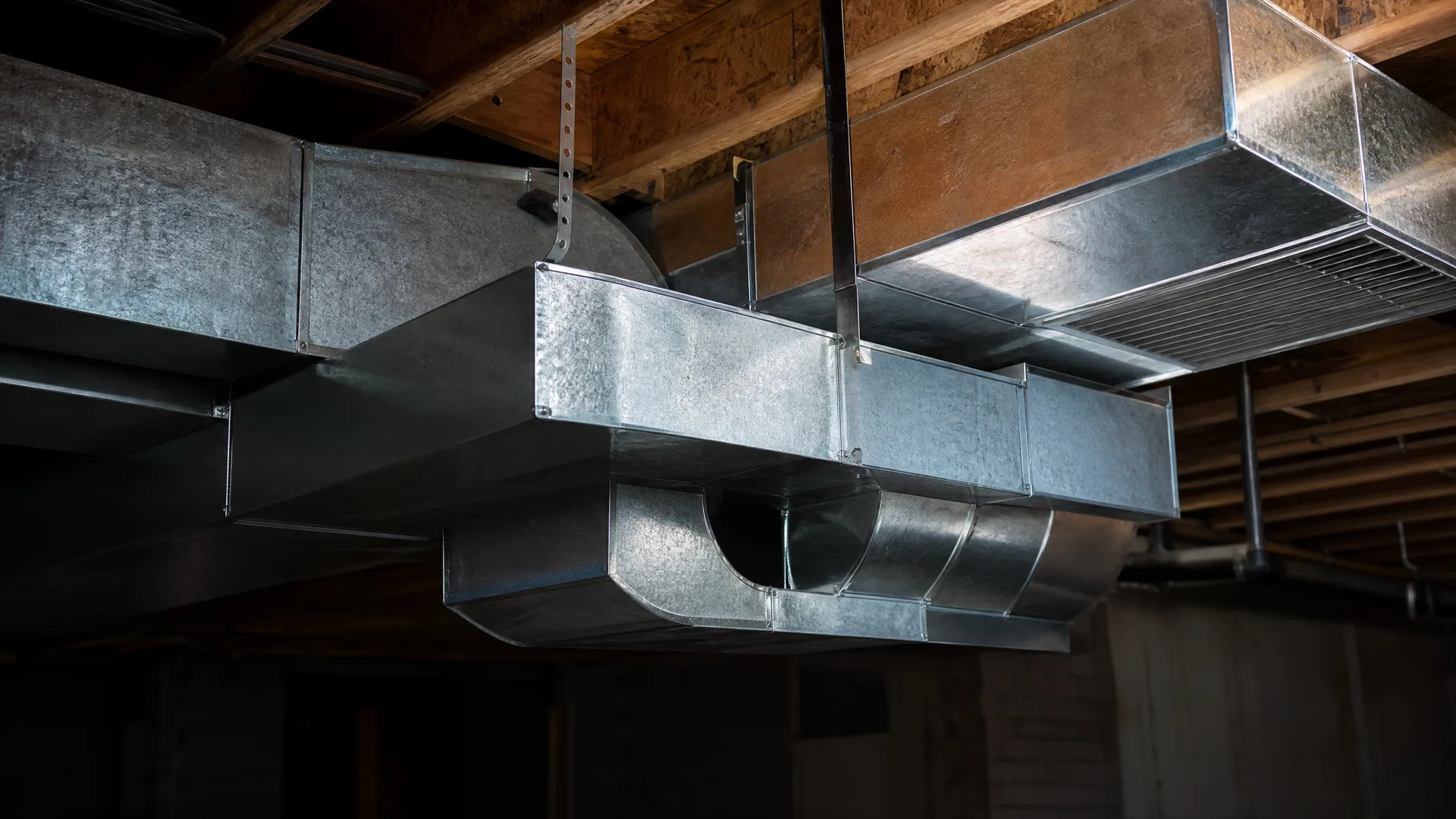
Unfinished basement with bare concrete floor and walls, showing galvanized sheet-metal HVAC ducts, pipes and recessed lights beneath a wood-joist ceiling.

Clean duct, clear air

This is what the inside of a healthy run looks like. Galvanized metal, joints tight, nothing clinging to the walls. Air moves through it all winter and all summer and carries nothing extra into the room with it.

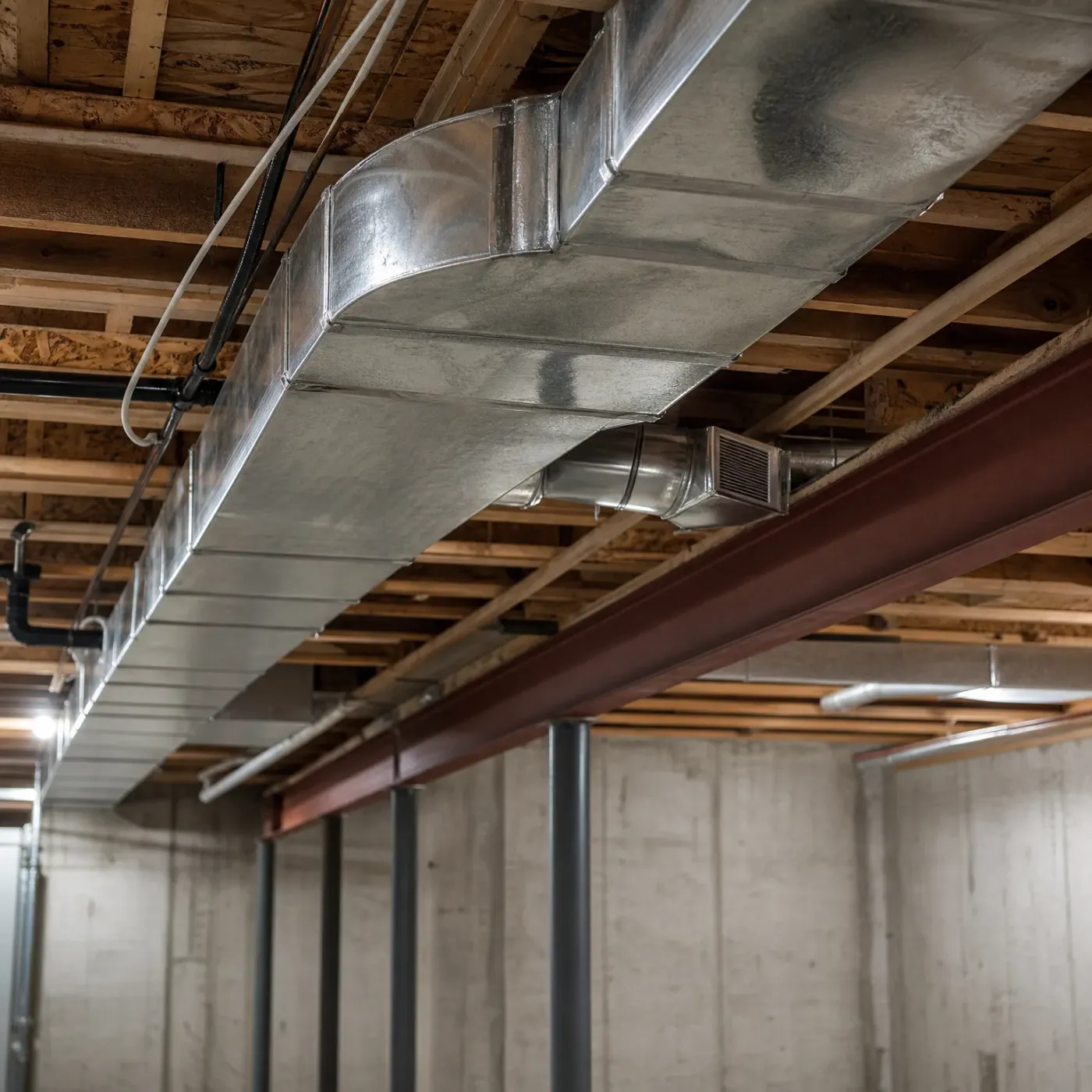
An empty basement room with bare concrete walls and floor, with galvanized sheet-metal HVAC ductwork and a vent grille running along the wooden joist ceiling.

Duct feeding the problem

Same basement, same joists overhead, but the metal is gray with buildup and dark at the seams. Every time the blower kicks on, that layer is what's landing back on your shelves a day or two after you clean them.

Empty unfinished basement with bare concrete walls and floor, showing exposed wooden joists, galvanized sheet-metal ductwork, pipes, and a white vent grille overhead.
Before you get your ductwork cleaning
Unfinished basement with concrete floor and walls, exposed wood joists, galvanized sheet-metal ductwork, a furnace unit, a steel support column, and a small window.
After you get your ductwork cleaning

Power here costs 16.62 cents per kilowatt-hour

At 16.62 cents a kilowatt-hour, running the furnace blower or the AC fan to push air through dirty ducts costs more than it should. A clean system moves the same air with less resistance, so the blower isn't working harder than it needs to just to clear a path.

EIA-861 2025

  1. A technician seals your registers and return grille except one.

  2. A negative air machine hooks up to that opening and pulls a vacuum.

  3. Spinning brushes or air whips knock buildup loose inside each run.

  4. Loosened dust and debris pull into the vacuum before they can settle.

The dust on your shelves is coming from the ducts that heat and cool your house all year, and cleaning them is the only thing that stops it for good. You could spend an afternoon calling around St. Joseph County, explaining the gray film and the Saturday-to-Wednesday cycle to one company after another, then sorting through whoever calls you back. Instead this sends your request to one licensed local contractor, someone who services duct systems in this county every winter and every summer and knows what a run full of buildup looks like before the brushes even go in. No flood of calls from companies you didn't choose, just the one who actually works on this equipment near you. You still have to let them in and let them do the job. But you stop being the one who has to find them.

Galvanized sheet metal HVAC ductwork with rectangular trunks and round takeoffs suspended from wooden floor joists in an unfinished basement ceiling.

Explain it one time

Duct and vent cleaningDucts or ventsSt. Joseph County, IN
Step 1 of 2

What ZIP code is the job in?