Mini Split Installation in Kokomo, IN
A new system here will heat from October through May and cool from June through August every year. Tell us about the house, and a licensed contractor who covers Howard County will get in touch.
Tell us about the job
It takes about a minute.
What Kokomo winters and summers ask of a mini-split
Kokomo needs heat or cooling 11 months of the year. Winter nights average 21°F from December through February, and a mini-split's outdoor unit has to keep pulling heat from that cold air every one of those nights. Summer afternoons average 82°F, so the same system switches over and holds up through three months of cooling on top of eight months of heat.
Any mini-split installed new has to meet the federal minimum for a split-system heat pump. That means at least 14.3 SEER2 for cooling and 7.5 HSPF2 for heating. With this many months of run time ahead of it, that rating is not a formality. It is what the unit leans on most of the year.
- 8 months
- October through May, your system heats
- 3 months
- June through August, it cools
- 21°F
- the average winter night it heats against
- 82°F
- the average summer afternoon it cools against
NOAA nClimDiv, 1991–2020 normals
In Indiana, HVAC licensing for homes is left to the counties and cities.
Howard County sets its own rule for who can do HVAC work there, since Indiana leaves that decision to cities and counties instead of testing and licensing contractors itself. That means there is no state record of who is qualified to install a mini-split. Whatever protection exists comes from whatever Howard County itself requires of contractors working within its lines, not from a license issued in Indianapolis.
For a mini-split installation, the piece most likely to stand in for that is the permit. In most cities and counties, putting in a new system like this needs a permit from the local building office and an inspection once the work is done. That inspection is the check on the job, not a license.
Sources: Indiana Department of Workforce Development · State of Indiana
- Is a mini split worth it?
- For the right room or addition, yes. A mini split handles space that ductwork never reached, and it heats and cools without losing air through duct runs. Kokomo winters push down to 21°F on average, so check that the unit you're looking at is rated for cold-climate performance if it's carrying real heating load. A contractor can look at the space and tell you whether a mini split or another option fits better.
- How many rooms can a mini split cover?
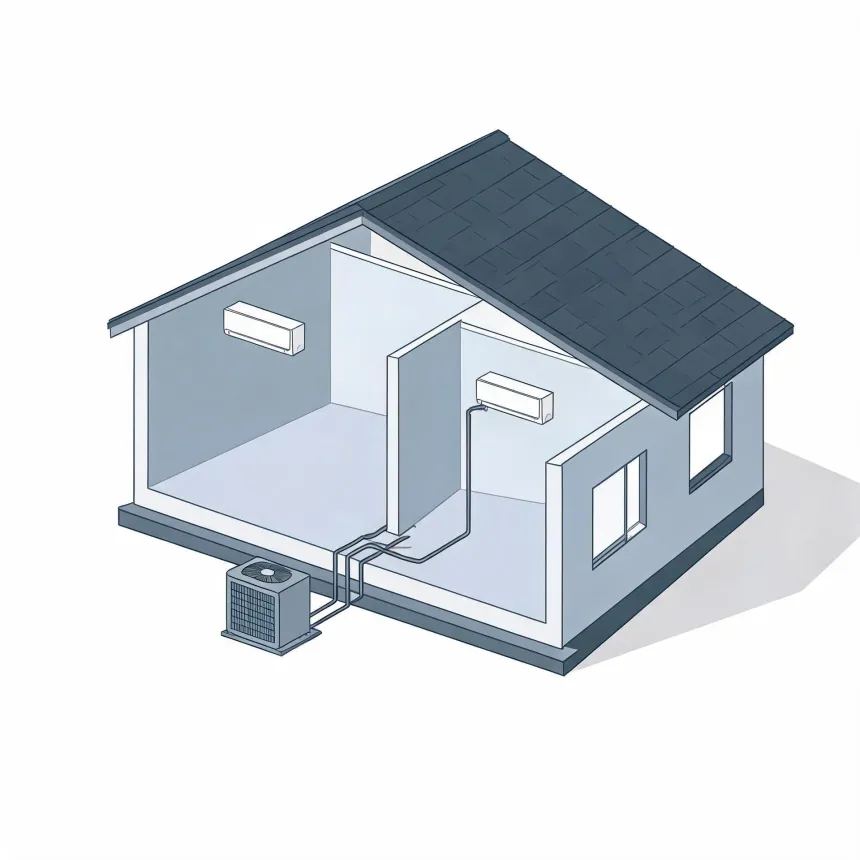
- A single-zone mini split covers one room or open area. If you need more than that, a multi-zone system runs several indoor heads off one outdoor unit, and each head can be set to its own temperature. How many zones one outdoor unit can run depends on the model, so a contractor will size that against the rooms you want covered.
- Can a mini split heat a whole house?
- It can, but it takes the right number of zones placed in the right rooms, not one indoor unit trying to reach the whole house. Homes here need heat from October through May, eight months of the year, with winter nights averaging 21°F, so the system has to be sized for that cold, not just for a mild fall day. A contractor can work out how many indoor units your house needs and where they go.