Mini Split Installation in Fort Wayne, IN
A new system here will heat from October through May and cool from June through August every year. Tell us about the house, and a licensed contractor who covers Allen County will get in touch.
Tell us about the job
It takes about a minute.
What Fort Wayne winters ask of a mini-split
Fort Wayne needs heat eight months a year, October through May. Winter nights average 21°F from December through February, and a mini-split has to hold up on those nights, not just the mild stretches between them. Summer only runs three months, with afternoons averaging 82°F, so the unit spends most of its life heating, not cooling.
A mini-split is a split-system heat pump under federal rules, even without ducts. Units built now have to meet 14.3 SEER2 for cooling and 7.5 HSPF2 for heating. That's the floor. A properly sized unit meeting it is built to carry both the long heating season here and the short summer that follows it.
- 8 months
- October through May, your system heats
- 3 months
- June through August, it cools
- 21°F
- the average winter night it heats against
- 82°F
- the average summer afternoon it cools against
NOAA nClimDiv, 1991–2020 normals
In Indiana, HVAC licensing for homes is left to the counties and cities.
Allen County sets its own rule rather than following a state license, so what protects you here comes from the local building office rather than a state board. Whether a mini-split installer needs a local license or registration in this county is a question the county answers, not the state.
Whoever installs this needs to handle refrigerant under federal rules that apply everywhere, not just here. Beyond that, most cities and counties require a permit for a mini-split installation and an inspection once the work is done. That inspection is what checks the line set and the electrical work were done right, and here it stands in for the license this job would otherwise carry.
Sources: Indiana Department of Workforce Development · State of Indiana
- Is a mini split worth it?
- For the right room, yes. A mini split gives you heat and air conditioning in one unit without ductwork, and it only conditions the space you're using instead of the whole house at once. Fort Wayne winters push down to 21°F on average, so check that the model you're looking at is rated for cold climates if you want it carrying real heat load in January. A contractor can look at the room and tell you whether it makes sense there or whether your situation calls for something else.
- How many rooms can a mini split cover?
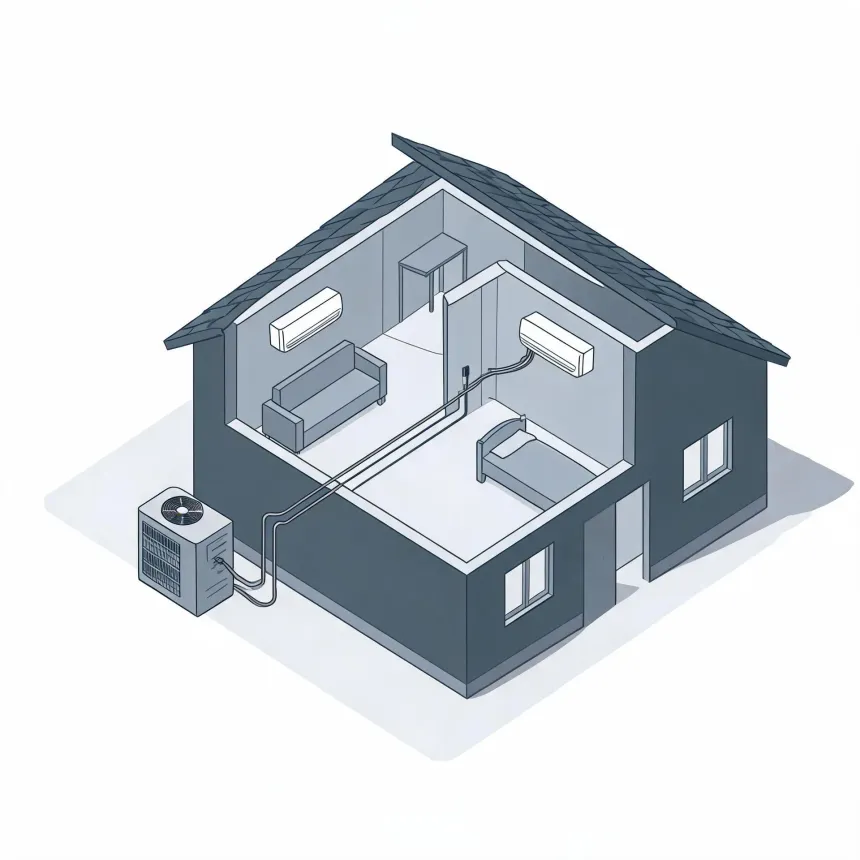
- A single-zone system covers one room. If you need more than that, you install a multi-zone system, which runs one outdoor unit to several indoor heads, each one heating or cooling its own room. Most multi-zone setups handle somewhere between two and eight rooms, depending on the outdoor unit's capacity. A contractor sizing the job will look at the square footage and layout of each room before landing on how many zones it takes.
- Can a mini split heat a whole house?
- It can, if you install enough indoor units to cover every room, but that's a bigger job than most people mean by a mini split. Fort Wayne needs heat from October through May, eight months of the year, so any system carrying the whole house has to hold up through nights averaging 21°F. A contractor can walk through whether whole-house coverage makes sense for your layout or whether it works better alongside your existing heat.