
2,900 home dryer fires a year
That is the national count the U.S. Fire Administration tracks each year, most traced back to lint that was never cleared from the vent.
A clogged dryer vent is one of the more overlooked fire risks in an Indianapolis home. Lint builds up inside the duct every time the dryer runs, and once airflow is restricted, heat has nowhere to go. You searched this because something made you wonder, maybe a dryer that takes two cycles to dry a load now, or a laundry room that feels warmer than it should. That instinct is worth acting on. Checking a vent yourself only tells you so much, since most of the duct run is hidden behind walls or in a crawlspace. Finding out what is actually built up in there, and getting it cleared, takes someone who does this work regularly. Answer what's asked below and you'll be matched with a contractor near Indianapolis who handles dryer vent cleaning. They will reach out to you directly. From there, you're not the one tracking down who's available or chasing a callback. That part is off your plate.
Yes, a clogged dryer vent is a real fire risk, and it works the same way in every Indianapolis home. Lint is fuel. When it packs the vent, the dryer's heating element keeps firing against air that cannot get outside, so the duct runs hotter than it was built to run. That heat has nowhere to go but back toward the lint sitting right there. Indiana winters mean dry indoor air for months at a time, and dry lint catches easier than damp lint. A vent that clears itself fine every summer can sit packed tight by January without anyone noticing, because the dryer still runs, just slower, with longer cycles and a warm laundry room that was never warm before. Those are the signs the vent is restricted, not just the dryer getting old. The fix is getting the duct cleared out, not replacing the machine.
2.4 people per household on average
The average home in Marion County holds 2.40 people. More people usually means more loads a week, and more loads means lint building up faster between cleanings.
Half the homes here were built by 1973
Half the homes in Marion County were built in 1973 or earlier. Ductwork that old may run longer or through tighter spaces than what's made today, giving lint more places to catch.
Power here costs 14.77 cents per kilowatt-hour
Power here runs 14.77 cents per kilowatt-hour. A duct choked with lint makes the dryer run longer to finish a load, and that extra run time shows up on the bill.
ACS 2020-2024 · EIA-861 2025
Some households stay on top of this. The vent gets cleaned on a schedule, the lint trap gets wiped out after every load, not just scraped, and the outside hood gets a look often enough to catch a flap stuck shut by lint or a bird's nest. A dryer in this kind of home runs the way it was built to. Hot air moves out through the duct in seconds, the heating element cycles off when it should, and the motor doesn't strain to push air through a duct half full of lint. Dry times stay short and predictable. The risk here is not zero, because any dryer vent can gather lint between cleanings, but it stays low, and it stays that way because someone is watching for it.
Other households don't think about the vent until the dryer stops working the way it used to. A load that took forty minutes starts taking over an hour. The top of the dryer feels warm to the touch, or the laundry room smells faintly hot partway through a cycle. These are signs of a duct that's already restricted, and in a home where nobody has checked it, they tend to get explained away rather than looked into. Lint keeps packing in behind the clog, the heating element keeps firing against air that isn't moving, and the duct keeps running hotter than it was built to. A clogged vent in a home nobody checks is not a different kind of risk than one that gets cleaned. It's the same risk, just not caught yet.




That is the national count the U.S. Fire Administration tracks each year, most traced back to lint that was never cleared from the vent.
A clogged vent traps the heat the dryer's element is putting out. The longer that keeps happening, the more it dries out the duct and whatever lint is packed inside it.

It's a Tuesday evening and you're pulling the second load out, still damp after a full cycle. You run a hand along the top of the machine and it's warmer than it should be. The towels sit there in a heap, not dry enough to fold, not wet enough to look wrong at a glance. You start the dryer again, figuring it needs another twenty minutes. Down in the basement or over in the mudroom, whichever it is, the vent hood outside sits half shut, the flap barely lifting when the dryer kicks back on. You go back to whatever you were doing before, leaving it running, because it's just one more cycle.
You've read enough here to know this isn't something to leave for next weekend. A vent that's running hotter than it should and taking extra cycles to dry a load is already telling you the airflow is restricted, and that doesn't fix itself. Cleaning the vent is a straightforward job for someone who does it, but it means getting into the duct run, not just the trap, and most homeowners don't have the brush or the time to do that properly. Send the request and a contractor who handles vent cleaning in your area will reach out to you about it. You won't be the one tracking down who's available or comparing schedules. That part is off your plate once you hit the button, and the warm spot on the dryer and the damp towels stop being something you have to think about on your own.
A vent cleaned once a year keeps the dryer's exhaust path clear enough that lint never gets the chance to pack tight against the hood flap or sit against hot metal.
A vent left alone for years builds up layer after layer of lint until the duct is doing the opposite of its job, holding heat in instead of carrying it outside.

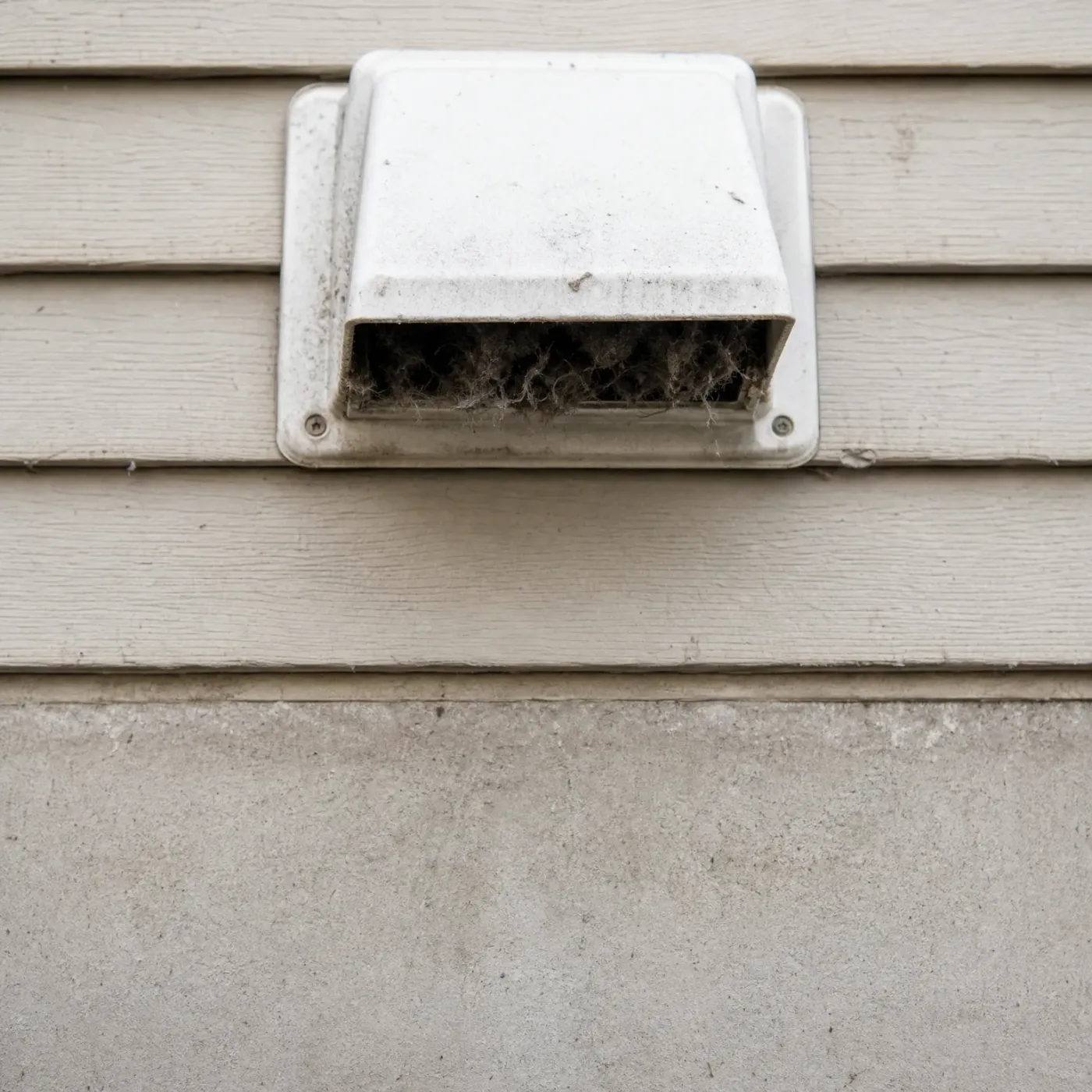
A dryer does not just blow hot air and hope. The heating element switches on and off based on what a thermostat reads inside the duct, so the whole system depends on air actually moving past that sensor. Lint changes that. As it packs into the duct, the air behind the blockage slows down and the thermostat keeps reading exhaust as cooler than it really is, even while the metal around it keeps heating past where it should ever sit. There is a backup for this, a thermal fuse or high-limit switch meant to cut power once the duct runs too hot. But lint buildup can make that switch trip over and over, or let heat pool somewhere the switch cannot reach. Lint itself ignites at a lower temperature than most people would guess, and the worst of it collects right where the duct narrows, closest to the element, which is exactly where the heat is worst. Gas dryers carry a second risk on top of this. A blocked vent does not just trap heat, it pushes combustion exhaust back toward the drum instead of letting it vent outside. The last point in the system is the hood flap on the outside wall. Once lint packs that flap stuck, or even wedges it half open, neither the heat nor the exhaust has anywhere left to go.


With 2.40 people the average household here, most homes are running a load every day or close to it. That pace keeps the dryer going often enough that lint has little time to sit before it's added to, so the vent needs checking on a schedule, not just when something seems off.
ACS 2020-2024

Warm, moist air pushes past the louvers and out, and the force of it is enough to swing the flap open on its own. Screws stay snug against the siding, nothing sits in the opening, and the duct behind it has nowhere to trap heat.
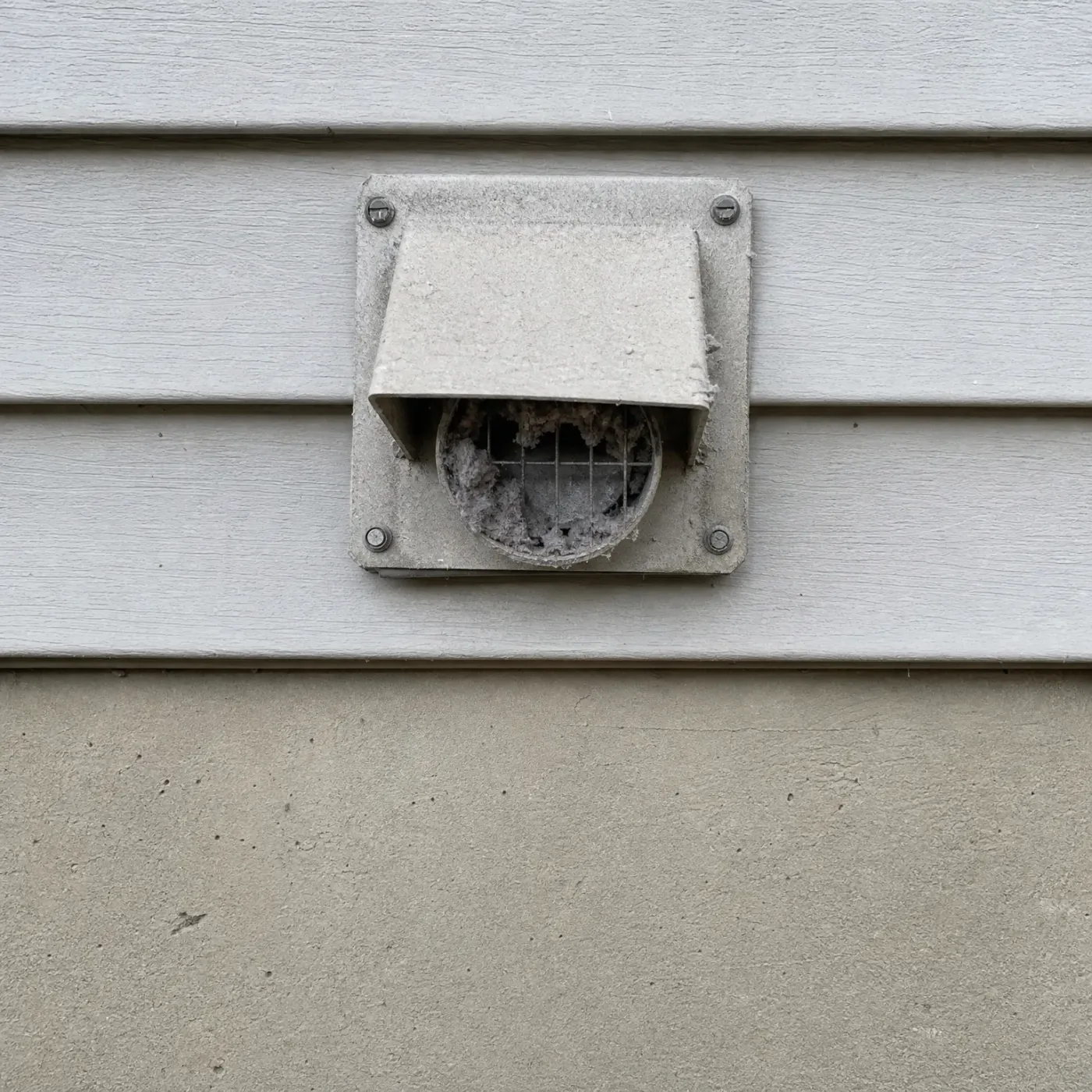
Gray lint has packed in across the opening, thick enough that air has to fight to get through what's left of the gap. The dryer behind this one is pushing hot exhaust into a duct that can't clear it fast enough.



The answer hasn't changed from the start of this page. Lint blocks the vent, heat builds where it shouldn't, and the dryer keeps running hot against a duct that can't breathe. That's true in every house in Marion County, whether the dryer runs once a day or a few times a week. The signs are the ones already covered: longer dry times, a hot shell, a flap that won't swing free. None of that goes away on its own.
What happens next doesn't have to be something you sort out alone. A contractor who handles dryer vent cleaning in Indianapolis can take it from here, matched to your home and what you've described, and reach out to you directly. You've done the part that mattered, which was paying attention. The rest is a call away from being off your plate.


A local pro for your dryer vent cleaning