
Duct Cleaning in Hammond, IN
Tell us about your home, and a licensed contractor who covers Lake County will get in touch.
Tell us about the job
It takes about a minute.
Step 1 of 3: Equipment

Eight months of heat means eight months of buildup in your ducts
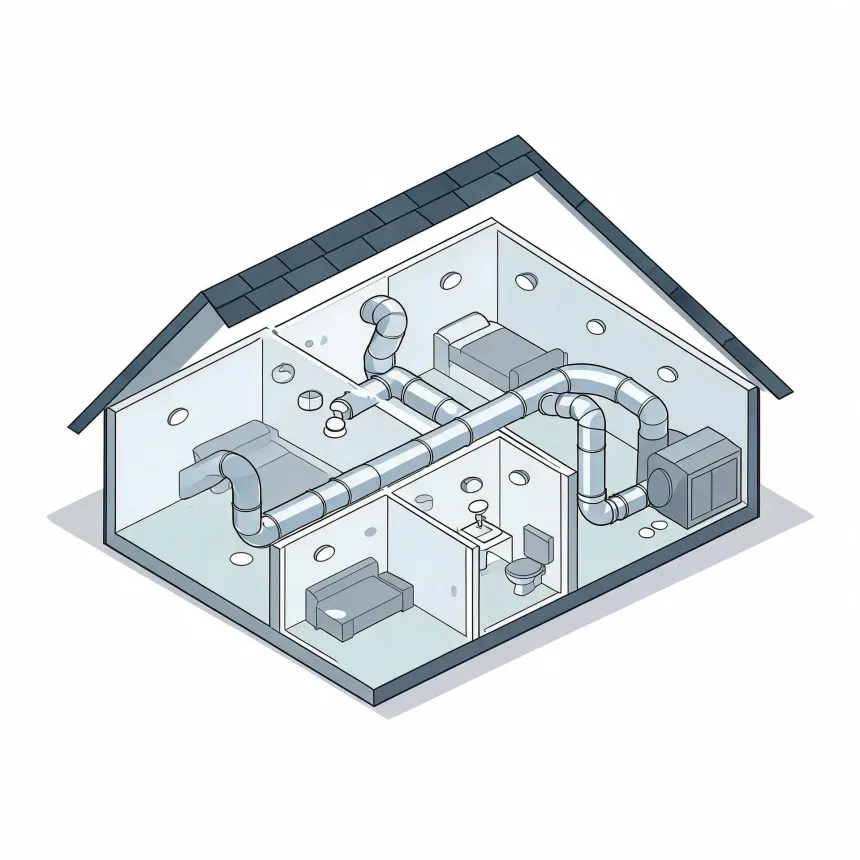
Your furnace runs October through May here, close to eight months a year. That's eight months of air pushing through the same ductwork, carrying dust and whatever else settles in the return before it gets pulled through and blown back into the rooms.
The county has seen 11 winter storms and 121 damaging wind events over the past ten years. When wind knocks out power, the furnace stops moving air until it comes back on, and dust that would have kept moving through the system settles in the ducts instead.
- 8 months
- October through May, your furnace pushes air through your ducts
- 3 months
- June through August, your air conditioner does the same
Jan
Feb
Mar
Apr
May
Jun
Jul
Aug
Sep
Oct
Nov
Dec
NOAA nClimDiv, 1991–2020 normals
- How often should air ducts be cleaned?
- A contractor can tell you by looking at the ductwork, but most homes don't need it on a strict schedule. If anyone in the house has allergies, or you've had a remodel or new duct runs put in recently, it's worth having them checked sooner rather than later. Homes with pets tend to need it more often too, since pet hair and dander build up in the ducts faster than dust alone.
- Is air duct cleaning worth it?
- It's worth it if you can see dust coming out of the vents, if a room fills with dust faster than it should, or if it's just been a long time since anyone looked inside the ducts. It won't fix an allergy problem on its own, and it won't lower a heating bill by itself. What it does is clear out what's built up so the air moving through your house isn't carrying it into every room, and it lets a contractor check the ductwork itself for gaps or damage while they're in there.
- What does air duct cleaning involve?
- A contractor hooks up a vacuum system to the ductwork and uses brushes or air tools to knock loose dust and debris from inside the duct walls, then pulls it out through the vacuum. They'll go duct by duct, including the supply and return lines, and check the vent hood and registers while they're at it. A full job usually includes cleaning the coil area near the furnace or air handler too, since dust collects there as well.