







Side profile of a bearded man wearing a faded dark blue baseball cap and a matching dark T-shirt against a plain light gray background.

Why your house is so dusty in Hammond, IN

Duct and vent cleaningDucts or ventsLake County, IN
Step 1 of 2

What ZIP code is the job in?

Dust that builds up fast usually means your duct system is spreading it instead of carrying it away. Ducts pick up dust from inside their own walls, especially if they haven't been cleaned since the house was built, and every time your furnace or AC kicks on, that dust blows back into your rooms. Gas furnaces run hard through Hammond winters, and that long heating season means more cycles pushing air through the same dirty ducts, month after month. Humid summers add to it too. Muggy air lets dust stick to coils and vent covers instead of settling out, so it keeps recirculating rather than dropping. If your filter is clean and you're still wiping down surfaces every few days, the dust is likely coming from inside the ductwork itself, not the air in the room. A duct cleaning clears that buildup out at the source instead of leaving your system to keep blowing it around.

A smiling man in a green sweater stands at a kitchen counter with a dark mug, with an open-plan dining area and large windows behind him.
A smiling man in a dark green sweatshirt sits at a kitchen island with a gray mug, with cabinets, plants, and a dining area near large windows behind him.
A smiling bearded man in a green sweater sits at a white marble kitchen island with a mug, potted plant and bowl of fruit, in a bright white interior with open shelving and an arched doorway.
A smiling man in a gray long-sleeved shirt stands in a kitchen looking to the side, with open shelves of dishes, a white mug on the counter, a potted plant, and a view through a doorway into a living room.

Air moving through a duct doesn't move at the same speed everywhere. It slows at the low points and wherever the duct turns, and dust drops out there instead of riding along to the vent. It sits until the blower kicks on again, and then it gets thrown right back into the air moving through your house. In Lake County that happens a lot, because a gas furnace runs often through a long winter, and each cycle stirs up what settled since the last one. The duct material matters too. Flexible duct and fiberglass liner have a rough surface that holds dust, while smooth sheet metal lets more of it pass through. The blower wheel itself can be a source, since dust clings to its blades and comes off with every rotation, filter or no filter. And any joint in the duct run that isn't sealed tight is pulling in air from wherever it runs, attic, crawl space, or the gap behind a wall, and carrying whatever is in that space along with it.

How ducts end up spreading dust

  • Dust and debris settle inside the ducts at the low points and the bends, where moving air can't lift them back out.
  • Every time the blower starts, that loose dust gets pushed back into the air instead of staying put.
  • A furnace blower built for a gas system in Lake County runs often all winter, so it stirs that dust many times a day.
  • Fiberglass duct liner and flexible duct both hold onto dust more than smooth sheet metal does.
  • A dirty blower wheel throws dust off its blades every time it spins, even with a clean filter installed.
  • Leaky duct joints pull dust from attics, crawl spaces, and wall cavities straight into the air you breathe.
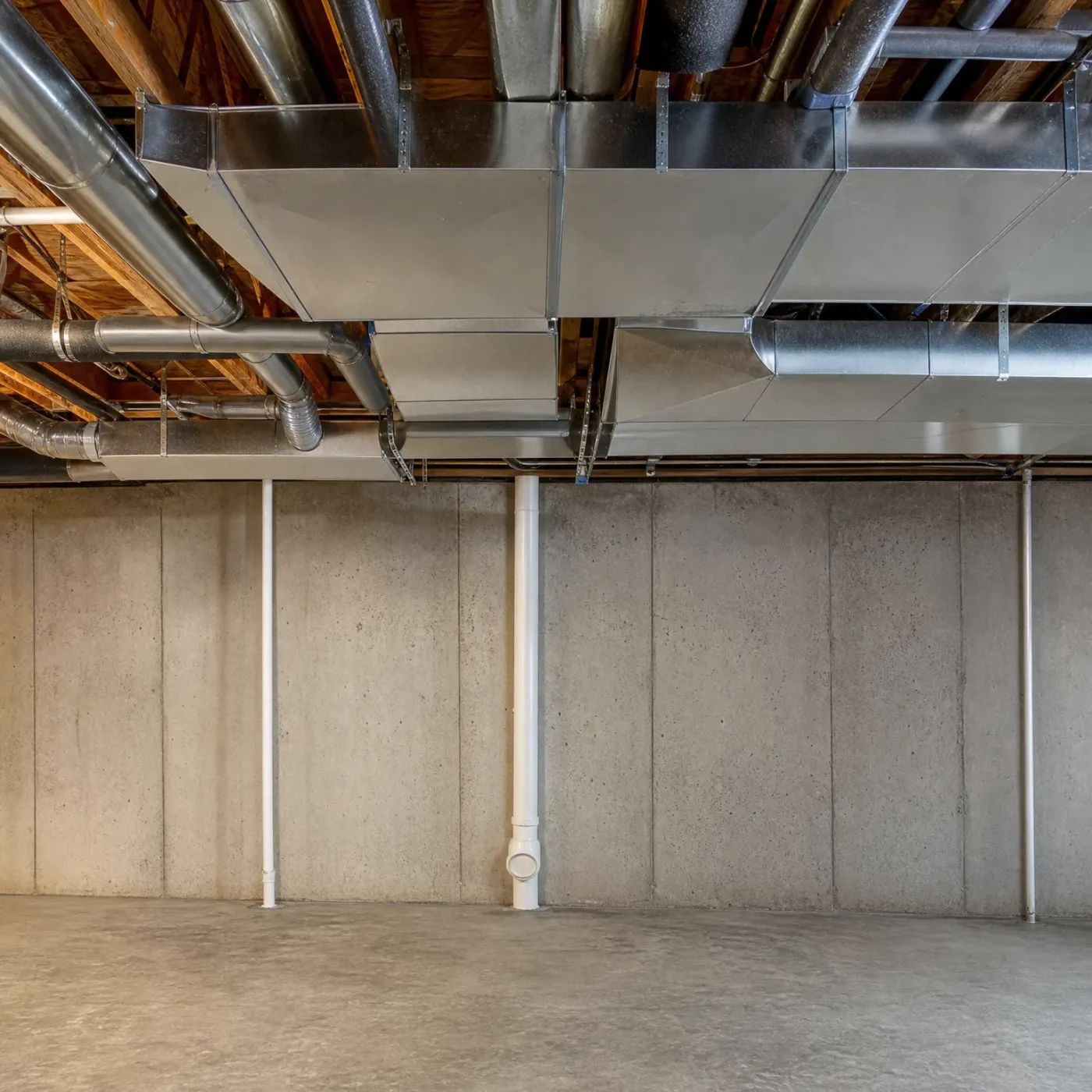
Unfinished basement with poured concrete walls, a bare concrete floor, white PVC pipes running down the wall, and exposed sheet-metal HVAC ductwork beneath wood floor joists.
Air moves through here without picking anything up. The metal is clean enough that the blower just pushes air, not dust.
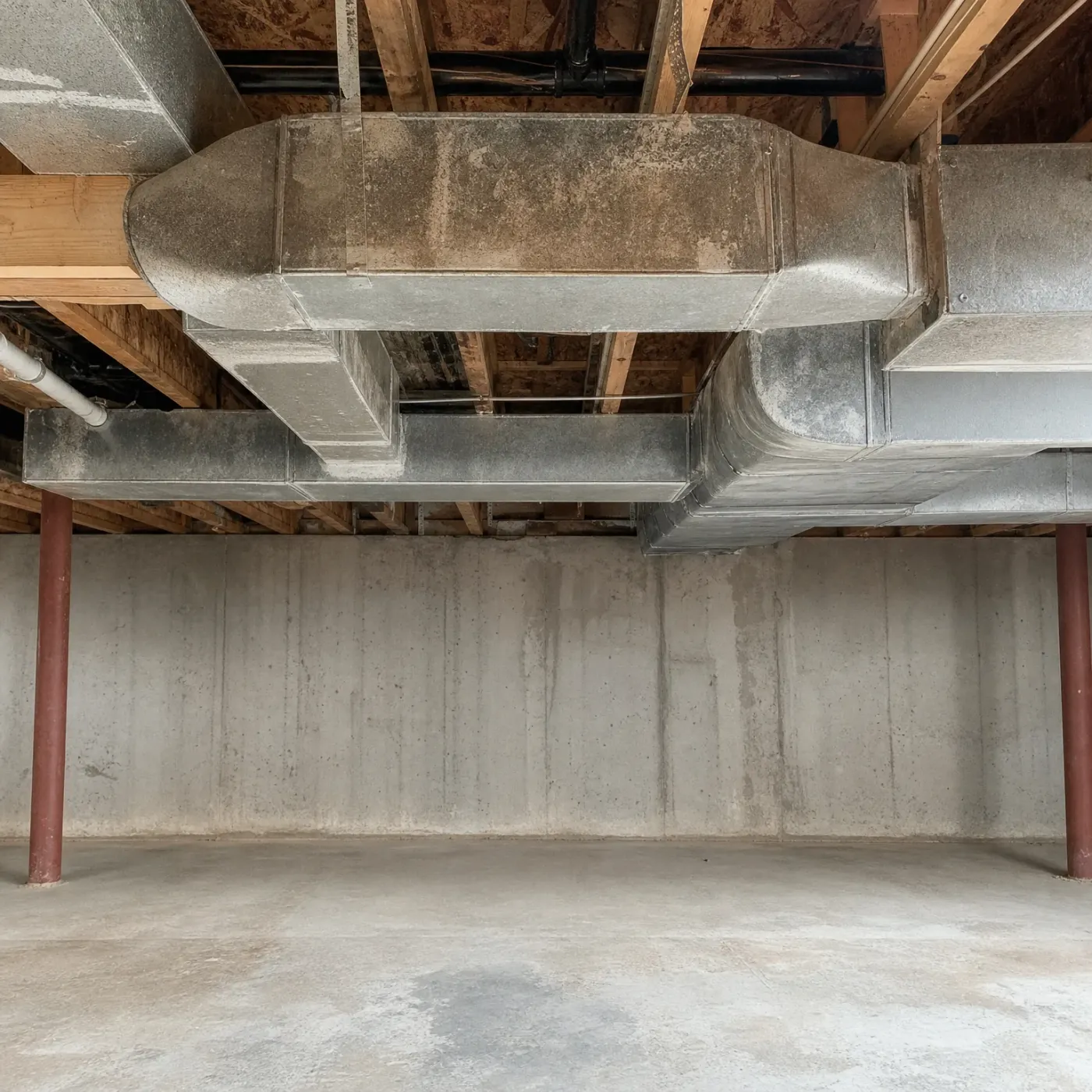
Unfinished basement with bare concrete walls and floor, galvanized sheet-metal HVAC ducts running beneath wooden floor joists, and two red steel support columns.
Dust has settled along these runs and the joists nearby. Every time the blower kicks on, some of it gets carried back into your rooms.
A dimly lit interior wall with a ceiling air vent above a wooden sideboard holding a potted plant, a shallow bowl, and a table lamp beside a curtained window.

It is early afternoon in April, sun coming in low across the living room. You notice it on a pass through with the laundry: a gray film along the ceiling vent grille, thick enough to see the slats are uneven with it. The furnace kicked on a few minutes ago, warming up the last cool snap before summer sets in, and the air coming through stirred some of it loose. It settled on the TV stand, on the lamp shade, on the dark wood of the coffee table, the kind of layer that comes back a day after you wipe it. You run a finger along the grille. It comes away gray. The room looks lived in, not dirty, but the dust says something is moving through that duct that shouldn't be.

Does my furnace filter matter if the ducts are dirty?

You change the filter every month or two, the way you're supposed to, and the dust still shows up on the shelves within a week. It makes you wonder if you're buying the wrong filter or if the filter even matters at this point, since the dust keeps coming back no matter what rating you put in there.

The filter only catches what passes through it, not what's already in the ducts

A furnace filter sits in one spot, usually right before the blower, and it only catches dust from the air passing through that spot at that moment. It does nothing for dust already sitting in the duct runs behind your walls and under your floors. That dust gets stirred loose by the blower before the air ever reaches the filter, so it goes straight into your rooms. A higher rated filter won't fix that, since the problem isn't what's getting through the filter, it's what's getting picked up downstream of it. Changing the filter on schedule still matters for your furnace and your air quality, but it won't stop dust that's coming from the ducts themselves.

  1. A technician opens the supply and return ducts at several points along the run.

  2. A rotary brush or air whip loosens dust stuck to the duct walls.

  3. A vacuum sealed to the system pulls the loosened debris out as it's freed.

  4. The furnace or AC blower runs to carry trailing dust into the vacuum.

Why does Lake County dust seem to come back no matter what you do?

  • Half the homes here were built by 1968

    Half the homes in Lake County were built in 1968 or earlier. Ducts that old have had decades to collect dust nobody has ever cleaned out.

  • Heat runs October through May

    Heat runs here from October through May, about eight months of the year. That's eight months of the blower pushing settled dust back into your rooms.

  • Cooling runs June through August

    Cooling runs June through August. Even in summer, the same ducts are moving the same dust every time the AC kicks on.

ACS 2020-2024 · NOAA nClimDiv 1991-2020

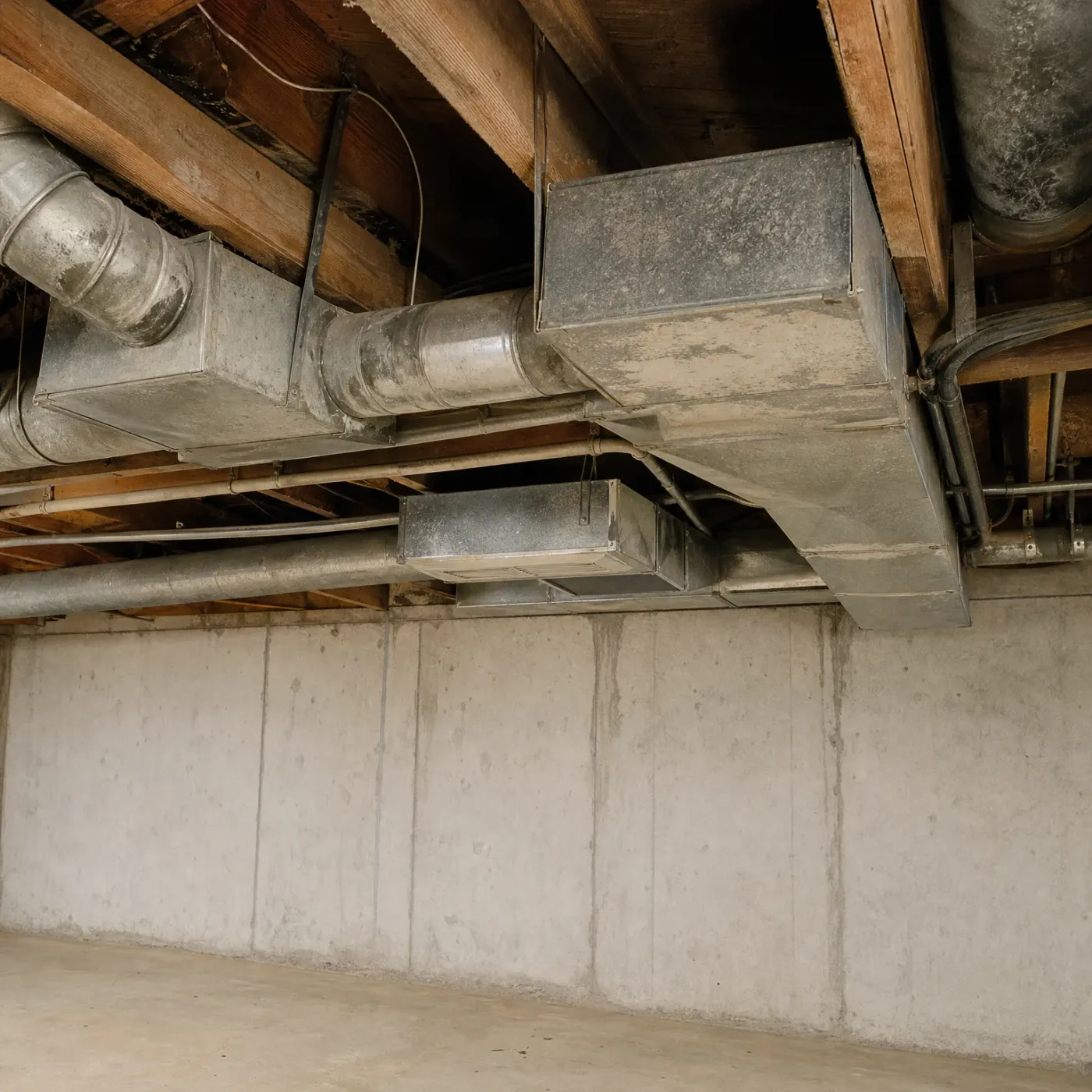
Basement ceiling with galvanized sheet metal ductwork, round pipes and rectangular plenums running between wooden joists above a bare concrete foundation wall and floor.
Before you get your ductwork cleaning
Empty basement room with bare concrete walls and floor, and an exposed wood-joist ceiling carrying sheet-metal ductwork, insulated pipes, and recessed lights.
After you get your ductwork cleaning

Done looking for a duct system pro

You have already read through why the dust keeps coming back. Knowing the cause does not get it out of your ducts. That takes someone opening up the supply and return runs, running a brush through them, and pulling what's loose out with a sealed vacuum, work a homeowner cannot do with a shop vac and a stepladder. In Lake County, that work falls to someone who services furnaces and ducts built decades apart, in houses that heat on gas through a long winter and run AC hard through a muggy summer. They know which duct runs collect the worst of it and why a filter alone never solves it. Sending the request through this page puts it in front of one local, licensed contractor who does this work, not a handful of companies competing for your callback. You've seen the gray film on the vent grille. The next step is getting it handled instead of wiped off again next week.

Gas furnaces push a lot of air

A gas furnace built for Lake County winters runs long and often from October through May. Every cycle moves a full house of air through the ducts and back again. The more hours the blower runs, the more chances it has to catch dust sitting in the ducts and carry it into your rooms. A furnace that barely runs stirs up less. One sized and run for a hard winter stirs up more, cycle after cycle, all season.


Humidity changes what settles

Sticky summer air carries more moisture into the ducts than dry winter air does. That moisture lets dust stick to the metal instead of blowing through, building up along the seams and low points. When the system switches over and the air dries out again, some of that stuck dust loosens and starts moving. So the dust problem in a lot of homes here isn't steady. It shifts with the season, building through the humid months and shaking loose once the furnace takes over.

Power here costs 21.86 cents per kilowatt-hour

At 21.86 cents per kilowatt-hour, every extra hour your blower runs costs more here than in most places. A furnace fan working harder to push air through dust-coated ducts is pulling that power the whole time it runs, not just moving your heat around.

EIA-861 2025

Leave the ducts alone and the blower keeps running the way it has been, pushing air through dust it picked up from the duct walls themselves, all winter and into next summer.

Get them cleaned and the air moving through is just air. Nothing left in the bends or the low points for the blower to stir up every time it starts.

A bearded man in a blue T-shirt sits on a gray couch smiling while looking down at a laptop screen, with a houseplant and window in the blurred background.
A bearded man in a dark plaid flannel shirt stands indoors looking out a window at a snow-covered yard, with a dark gray mug on the windowsill and kitchen shelves behind him.

Where the dust was coming from

  • Dust that keeps coming back after cleaning the house points to the ducts, not the housekeeping.
  • A licensed local contractor who works on Lake County duct systems every heating season knows which bends and low points collect the most buildup.
  • Cleaning pulls loosened dust out through the supply and return runs instead of leaving the blower to push it back into your rooms.
  • One contractor takes the job, so you are not fielding calls from several companies about the same request.
  • Once the ducts are clear, the air moving through them is just air, all winter and into next summer.

The dust was never about how often you clean. It was in the ducts, caught at the bends and low points, and every time the blower ran it moved some of that buildup back into your rooms. That cycle repeats on its own, winter after summer, until something physically pulls the dust out of the runs instead of just pushing air past it.

A contractor who works on Lake County duct systems through a full heating season sees the same pattern house after house: the low spots in the runs, the bends near the furnace, the places a gas system's long winter cycles pack the tightest. That is the kind of knowledge that comes from doing this work locally, not from a general checklist. One contractor takes the request and handles it, so you are dealing with a single visit from someone who already knows what to look for, not a round of calls from different companies sizing up the same job.

Once the supply and return runs are open and the loosened debris is pulled out with a sealed vacuum, what is left moving through your ducts is just air. The blower is not carrying buildup back into the house anymore, and the film that kept showing up on shelves and vent grilles stops having a source. That holds through the months the furnace runs hardest and into next summer when the AC takes over the same ducts.

A dark wood cabinet with a paneled door and a ceramic pot of green foliage on top stands in a beige-walled room with white baseboard, a window at left, hardwood floor, and a patterned area rug.
A dark wood glass-front cabinet holding folded towels, woven baskets and a ceramic vase stands in a bathroom corner beside a window, with a potted fern and stacked towels on top and a freestanding tub partly visible at left.
A woven basket holding a green cushion and a cream fringed knit throw sits on a wood floor in a room corner beside a window and a dark wooden cabinet.
Corner of a room with a dark wood cabinet topped by a round vase, a linen curtain at a window, white baseboard, oak plank flooring with sunlight patches, and a woven jute rug in the foreground.
A dark wood sideboard against a pale wall holds a shallow stone bowl and a round ceramic vase with leafy branches, with sunlight from a curtained window falling across the wall, wood floor and woven rug.

It's off your list after this

A licensed pro who works in Lake County gets your request.

Get one local pro

It costs nothing to send, and you don't have to hire anyone.




