
Water Heater Installation in Bloomington, IN
Tell us about the house, and a licensed contractor who covers Monroe County will get in touch.
Tell us about the job
It takes about a minute.
A water heater here works through a long, cold season
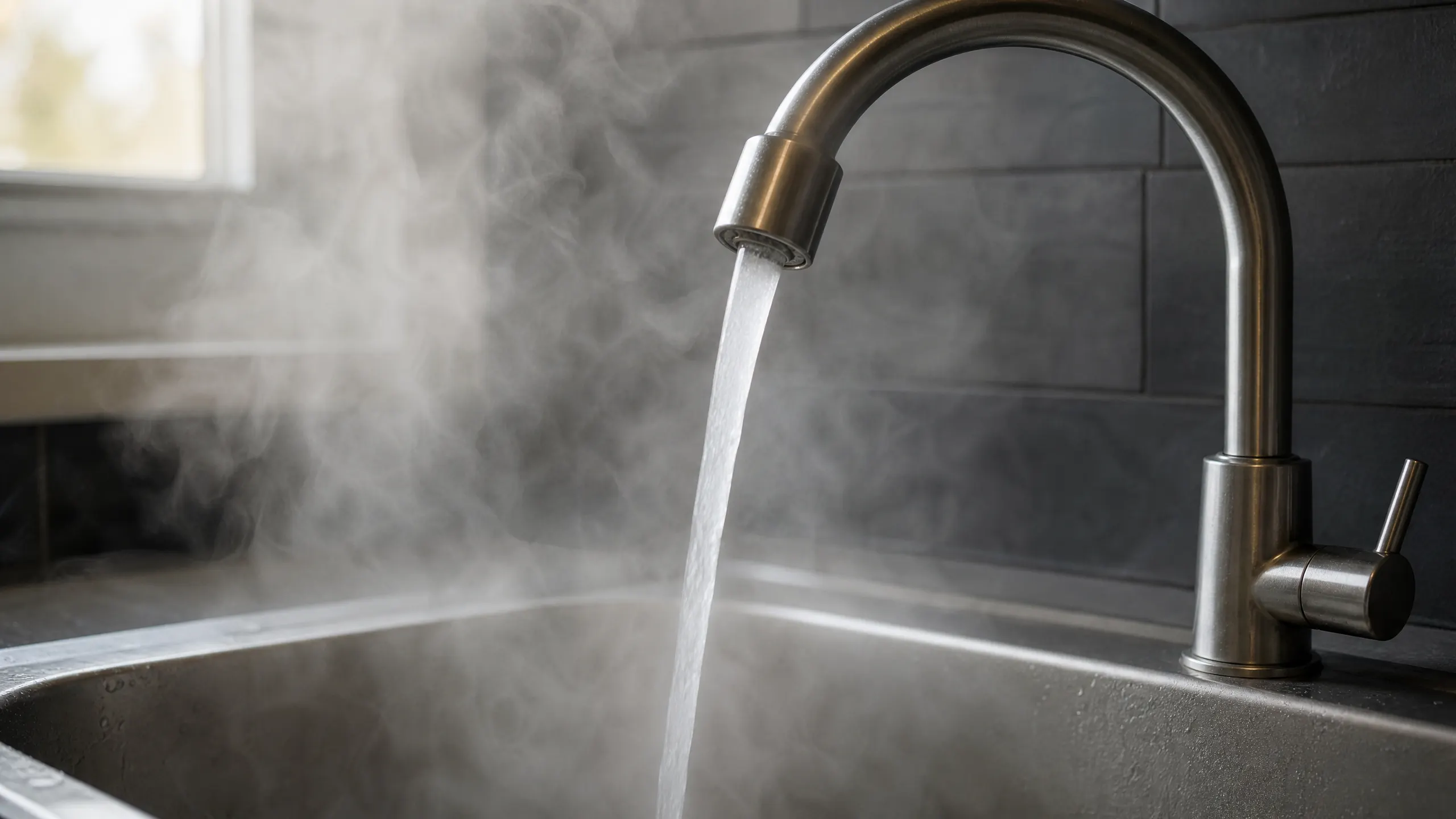
Bloomington homes need heat from October through April, seven months of the year. Winter nights average 24°F from December through February, and incoming water runs cold right along with the air.
Power is part of the picture too. Statewide, 17% of households went at least a day without power in 2024, and Monroe County has seen 9 winter storms and 44 damaging wind events over the past ten years. Most storage water heaters come back on by themselves once power returns, which matters here. Whatever gets installed also has to meet the federal minimum efficiency for storage water heaters, a standard that scales with the tank's size rather than one number for every unit.
- 24°F
- the average winter night, and colder incoming water means longer heating
- 7 months
- October through April, the months homes here need heat
- 17%
- of Indiana households lost power for a day or more in 2024, and a heater with an electric element or electric ignition stops without it
NOAA nClimDiv, 1991–2020 normals

A heat pump water heater would save about $350 a year to run in Indiana compared with an electric water heater.
Estimates for a typical Indiana home, from EIA household energy data and Indiana fuel prices. Your home will differ.
- How do I know it's time to replace my water heater?
- The clearest sign is age, so check the date on the tank's label and ask a contractor what's typical for a unit like yours. Past a certain age the tank itself is more likely to fail than any part in it. Look for rust colored water, a tank that's damp or sweating around the base, or water pooling underneath, since that means the tank is leaking rather than a fitting. A water heater that runs out of hot water faster than it used to, or makes a rumbling or popping sound, is working through sediment built up on the bottom of the tank. If yours is showing any of these signs, have a contractor look at it before it fails outright and floods the area around it.
- Should I switch to a tankless water heater?
- It depends on what you want out of it, not on any rule that says one type is better. A tankless unit heats water as it flows through rather than storing a tank full of it, so you don't run out partway through a shower with several people using hot water back to back. It also takes up much less space than a tank. The tradeoff is that a tankless unit needs a gas line, venting, or electrical service sized for it, which a storage tank may not need, so the install itself is more involved. A contractor can tell you whether your home's gas or electrical setup is ready for one or what it would take to get there.
- What changes when you install a tankless water heater?
- The biggest change is what feeds it. A tankless unit needs enough gas flow or electrical capacity to heat water on demand, which is a bigger draw at that moment than a storage tank asks for, so the gas line or circuit often needs to be sized up. Venting changes too, since tankless units vent differently than a tank does. You also gain space back, since the unit mounts on a wall instead of taking up floor space. None of this rules a home in or out on its own. A contractor can check your home's gas line, electrical panel, and venting to see what the switch actually requires.